Episode Transcript
[00:00:00] Speaker A: Foreign.
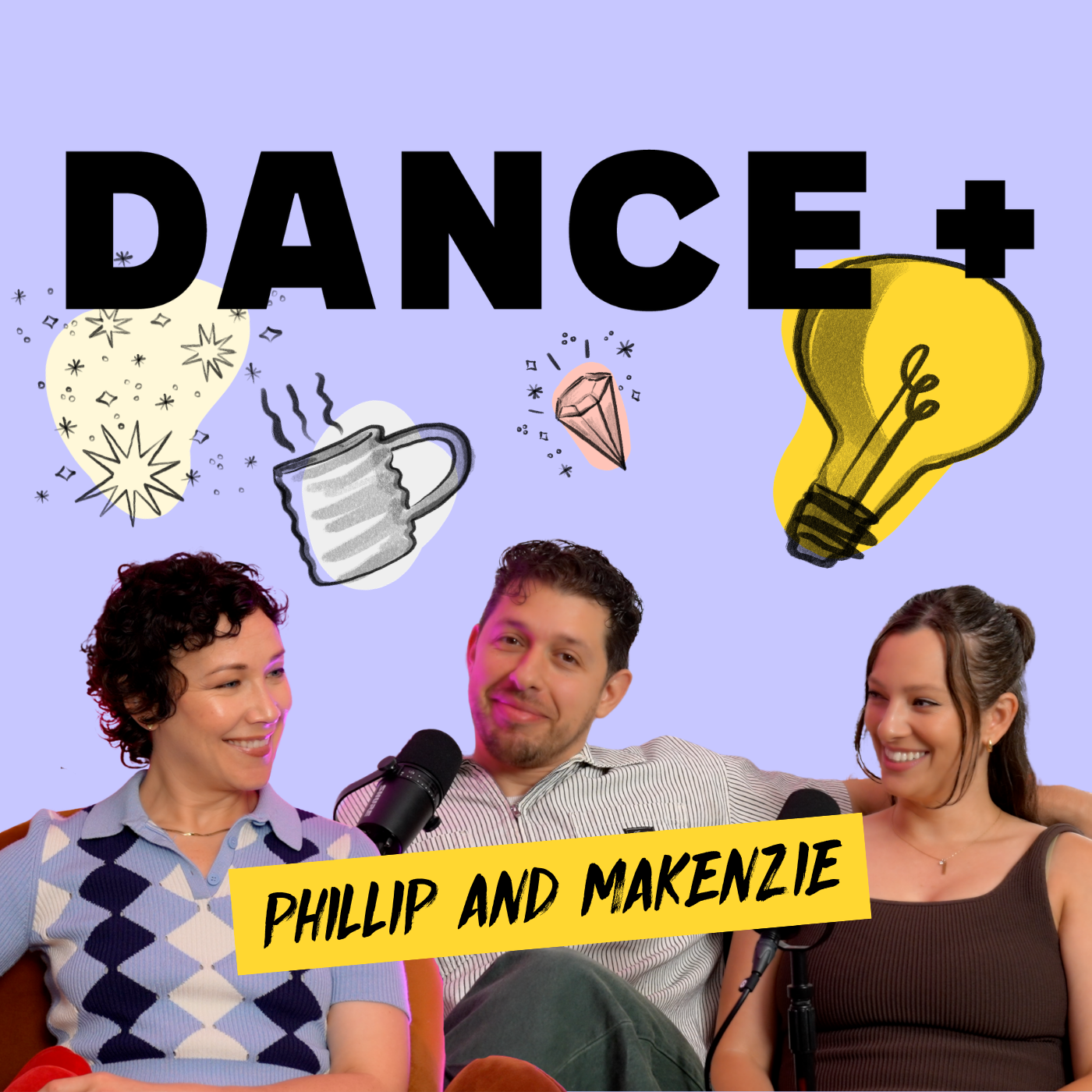
[00:00:04] Speaker B: Hey, everybody, I'm Dana. This is Dance plus. And I am stoked for this conversation with Philip and Mackenzie Shabib. You guys, what did I do to deserve friends and podcast guests like these? I'm rocked. This conversation centers around leadership, around making work, the work of your dreams, around teams, around work, life balance. I mean, we. We go deep on a handful of things, but we also leave no rock unturned.
Is that a saying that people say, I don't know. This is one of my favorite conversations. You guys. I'm really excited to share. But first, we do wins. Today I am celebrating a recent trip to Mexico with Riley Higgins. We were celebrating her 30th and my 40th birthday. We went to go see Harry Styles. And I had the super sweet delight and pleasure of seeing one of my students, one of my favorite dancers. Even. Asia, you crushed it. You belong on stage with Harry Styles, but you belong on stage, period. It was such a treat to watch you shine. Hats off Ryan Heffington for the choreography. It was. It was exactly as it should be. And I. I felt incredible for days after seeing the show. It really stuck with me.
Congratulations, Asia. Happy birthday, Riley. And thank you, Mexico City. Ooh, I can spend a lot of money there.
I did exercise restraint.
There was a ring.
I did not get it. I have thought about it every day.
That's me. That's what's going well in my world. How about you?
Yay.
Congratulations. I'm so very glad that you're winning and I'm so very glad that you are here.
To learn from these two is a gift because they love learning.
So get your notebooks and pens and papers and phones ready because this is Philip and Mackenzie Shabib.
This is Mackenzie and Philip Shabib. Yes. And we just discovered that the Alphabet song, A is a complete, direct, total ripoff of Twinkle, twinkle.
And B is being reformatted to accommodate the elementop kerfuffle that people seem to be struggling with. And so it's just a real child development kind of morning over here.
[00:02:45] Speaker A: Really important things that we're talking about.
[00:02:48] Speaker B: Thank you guys so much for being here and for being you and for I. I do regret that we don't do more of this as humans in the world, but thank you for being down to have a catch up chat.
[00:02:59] Speaker A: Of course.
[00:02:59] Speaker B: In captured for no pressure. Just red lights everywhere.
[00:03:04] Speaker C: Yeah. It's very casual.
[00:03:06] Speaker B: It is super casual.
[00:03:07] Speaker A: Thank you for having us.
[00:03:09] Speaker B: We miss you, Honor, and a pleasure. I miss you back. I do want to tell you about something. A job That I was on recently.
[00:03:16] Speaker C: Oh, yeah. It has like a job that I
[00:03:19] Speaker B: was on recently that I felt very well prepared for because of our last working experience together. So I will go into that.
[00:03:25] Speaker A: I want to hear all about it.
[00:03:26] Speaker C: I'm excited. Yeah.
[00:03:27] Speaker B: But we will begin with maybe the most challenging, maybe the most fun. I don't know. Introduce yourselves.
[00:03:33] Speaker A: What if we did this, which is really hard.
[00:03:34] Speaker B: Could you introduce each other?
[00:03:36] Speaker A: Yeah, I thought that could be fun.
[00:03:37] Speaker C: Oh, interesting.
[00:03:38] Speaker B: Love it.
[00:03:38] Speaker A: You go first.
[00:03:40] Speaker C: Yeah, that's interesting.
That was a good setup. That was excellent. I. And then there's nothing I can do. I can't dodge it. All right, so this is Mackenzie Shabib. Yes.
She is a lovely person.
Also quite talented and capable at a number of different things that I will now list.
[00:04:03] Speaker B: Enumerate them for us.
[00:04:04] Speaker C: Yes, yes, yes. So, well, I guess most.
[00:04:09] Speaker A: Yeah, this is my idea.
[00:04:11] Speaker C: I think more recently she has proven herself a quite impressive mother of our now close to two year old son, which is amazing and it's a story in itself. And then she's also a very talented mover and choreographer.
She has danced on a number of different things that I won't list because that will take a long time. But she has a very successful dance career that behind her. And she also choreographed for several people that the audience might care about.
And yeah, probably some of you guys might care about that. And I think that's perfect.
[00:04:52] Speaker A: Yeah, I think you did so she
[00:04:54] Speaker C: might explode if I go on.
[00:04:55] Speaker A: You did so good.
[00:04:57] Speaker B: This is a tough thing. It's tough to do, even for yourself.
[00:04:59] Speaker C: Yeah.
[00:05:00] Speaker B: But I love the couple's version. This is great.
[00:05:02] Speaker A: I thought it was going to be better, but I'm more uncomfortable than I expected with that.
[00:05:06] Speaker B: It sounded good.
[00:05:06] Speaker A: It sounded good in my head.
This is Philip Shabib. Best person on earth that you will ever meet. 100%.
[00:05:13] Speaker C: I'll let you.
[00:05:13] Speaker B: I'll let you go again after.
[00:05:16] Speaker C: I'll need to immediately. Yeah, I was trying. I was trying to downplay us. And she's like, oh, no, I'm going to gas him up like crazy.
[00:05:24] Speaker A: Very grounded.
Yeah. No, he is best human alive.
Wonderful husband, incredible father. He is also a writer. On top of being one of the best, one of my favorite choreographers in the world. And I'm so grateful that I get to work with him and that we get to do this marriage and art thing together.
Two time Emmy nominated, which is pretty exciting.
He has.
[00:05:51] Speaker B: That's how it works.
[00:05:52] Speaker A: Yeah, yeah. It's okay.
[00:05:53] Speaker B: Sometimes. Sometimes people just introduce themselves as like, I'M a human in the world and dance lights me up.
[00:05:59] Speaker A: That's way better.
[00:06:00] Speaker B: That's fine.
[00:06:00] Speaker A: Than what we're doing.
[00:06:01] Speaker B: No, no, no. This is.
[00:06:02] Speaker A: That feels way more honest.
[00:06:03] Speaker C: Well, we're covering our bases.
[00:06:05] Speaker A: I'll include the bells and whistles in
[00:06:06] Speaker B: the show notes if people should like to do their digging.
[00:06:09] Speaker A: Great.
[00:06:10] Speaker B: But, yeah, this is wonderful. I love how you're explaining each other.
[00:06:13] Speaker C: Yeah.
Together. That makes, like, a decent intro, right?
[00:06:16] Speaker A: Yeah.
[00:06:16] Speaker B: That's gorgeous.
[00:06:17] Speaker A: I mean, there's a lot more. There's so much more. But, you know, that's the surface level stuff.
[00:06:21] Speaker B: Okay. Okay. How about coffee orders?
[00:06:24] Speaker A: Ooh.
I mean, I'm just. I'm a matcha lady. Yeah.
[00:06:28] Speaker C: I'm a matcha guy.
[00:06:29] Speaker A: Oh, my God. Unsweetened, unsweetened ceremonial grass.
[00:06:32] Speaker C: Grass, grass, grass in a cup, baby
[00:06:35] Speaker B: liquid grass all day.
Cold, iced, cold liquid grass with a foamy top.
[00:06:42] Speaker C: Oh, yeah.
[00:06:42] Speaker A: Yep.
[00:06:43] Speaker C: 100% spot on Exquisite. Yeah, we can agree on that.
[00:06:46] Speaker B: Cool.
[00:06:46] Speaker C: Okay.
[00:06:47] Speaker B: Well, welcome back to the podcast. It's been a while. Philip, you were on a over a year ago.
[00:06:51] Speaker C: Yeah, it was a while.
[00:06:52] Speaker B: We're going to link to your episode. It is one of my favorites. You have a gift with words, a gift with moves. Really, always just love talking to you guys about what's going on in your worlds. And right now, you have something very exciting going on in your world. Release of a feature film in September.
[00:07:06] Speaker C: Y.
[00:07:08] Speaker B: The film is called the Best of the Best, but I know that there is no such thing as a process that is just the best. So I want to hear about the highs, what you learned from the lows, and everything in between. But a question I want to start with is a question that I want to normalize.
And I asked it to my guest yesterday, and I. I want to ask it in a gentle way, because sometimes when people hear, how did you get that job?
The undercurrent is you. You didn't deserve that job. So how did you get it? Yeah, and that is not at all what I mean when I ask that question, but I fully did an entire podcast episode about how dancers and choreographers get work, and there's so many different ways. And so I'm always curious to hear if they found you through your website, if they were referred to you from Paula Abdul, if you had a meeting and then another meeting and then another meeting, and then it went to someone else and then they fell through, and so it came back to you. I am fascinated with the way that things come to be. So tell me about how best of the best came to be for you.
[00:08:10] Speaker A: Yeah.
[00:08:11] Speaker C: Yeah.
[00:08:11] Speaker A: It's actually of a pretty long process.
[00:08:14] Speaker B: Was it?
[00:08:15] Speaker A: So back in 23 is when we first interviewed for it. Wow. Do you remember how Lena found us? Lena is the director of the film.
[00:08:25] Speaker C: I'm not 100% sure. I think our agent was incredibly communicative with them and, like, reminding them, you know, consistently, like, hey, we're still around, you know, So I think I give a lot of credit to Alyssa. She did. She did a lot of great work, just, like, making sure we were available for these meetings whenever they were ready to talk about things.
[00:08:44] Speaker A: I do think that they found us through socials and that they were really well versed in your work, because I remember Alina bringing up a lot of like.
Like your okay, go. Music video that you had recently done. So I know that she was tapped into a lot of the music videos that we had choreographed and directed.
So I think that's probably how she was like. I can see an overlap of skill set with what I'm looking for.
And so our initial meeting was in 23, and we were really nervous because it was really our first official feature film as a couple duo choreographer. Choreographers.
[00:09:20] Speaker C: And as department heads.
[00:09:21] Speaker A: As department head, which is.
[00:09:22] Speaker C: We worked on projects, but we never broke that barrier where we were, like, associates.
Yeah.
[00:09:29] Speaker A: Choreographers. And I feel like a lot of people don't always know where to put us. And even ourselves sometimes we don't. They don't really know what. They know that there's something valuable, but we're not, like, super clear. I feel like.
[00:09:42] Speaker C: I think people add us a sauce a lot.
[00:09:44] Speaker B: Okay.
[00:09:44] Speaker C: So they're like, hey, I. I get that they have a specialty skill. Let's throw some sauce.
[00:09:48] Speaker B: We need a little bit of this flavor.
[00:09:49] Speaker C: Yeah. Yeah.
[00:09:50] Speaker A: But it's never. It's never us.
[00:09:52] Speaker B: Hey, guys, will you do our thing?
[00:09:53] Speaker C: Yes.
[00:09:53] Speaker A: Yeah. So this was.
[00:09:54] Speaker C: It was big for us a lot of times.
[00:09:56] Speaker B: That's simply because you haven't yet.
[00:09:58] Speaker C: Yeah.
[00:09:58] Speaker B: And once they see that you can. Then they're like, okay, great. We'll have a really saucy thing. And they can bring in different flavors of.
[00:10:04] Speaker C: Yeah, exactly. Exactly.
[00:10:05] Speaker A: And I think that's what was really cool about Lena was that I don't know how she knew that we were capable of more without ever working with us before. It's actually very similar to Paula, too, because she.
She hired us as creative directors, and that was one of our first times ever doing that. So I think it's really valuable when whoever is hiring you has this sense and ability to be like, I know that whatever skill set I'm seeing, there's something a lot more that they're capable of and they're willing to take that chance on you.
And so I felt like Lena had that ability.
[00:10:35] Speaker B: People with vision, people who can see
[00:10:37] Speaker A: a potential, people and see how it can translate.
[00:10:40] Speaker B: Sure thing.
Willing to take a risk because they have instincts and they can see. They can read between the lines. They know that whoever created that couldn't have done it without great leadership, without great planning, without all that.
[00:10:53] Speaker C: Yeah. And it was interesting. She did that across the board too, Even with Adam, our dp. He is incredible at music videos, but it's really common in the film industry to kind of prioritize people who only do film. And she really fought for all of us that haven't worked in that capacity, but obviously have shown that we have ideas that would be valuable in that world. And she fought for us. She fought for him.
[00:11:17] Speaker A: And.
[00:11:17] Speaker C: And it actually made the work experience even more exciting because all of us had a lot to prove.
Which was cool. Is like, it felt like a, like, strategic also. It was great.
[00:11:28] Speaker A: That's hungry. We were all hungry.
[00:11:30] Speaker C: Her team building was incredible because it really was like a group of people that were all ready to be like, hey, and we're around the same age. It was like we had all, like, paid our dues, work wise.
[00:11:40] Speaker B: Yeah, we're not rookies.
[00:11:41] Speaker C: Yeah, we're not. But we haven't gotten the shot. So she was like, oh, I'm going to give all these people their shot.
[00:11:45] Speaker A: And.
[00:11:46] Speaker C: And then kind of like, put them out in the world, like, hey, prove yourself. Yeah. And it was amazing. It was like. It was the opportunity you hope you get when you're ready for it.
[00:11:54] Speaker B: Totally. I've never been more excited to see this movie. Good job. That's.
[00:11:58] Speaker A: That's a good sales pitch to go back to timeline. So that was 23.
And then radio silence after our first meeting. And we were like, okay. We did not get it.
And it's because the strikes started. The writing strike started. End of 23. And all the films, all. Everything paused. And for us, all of our work paused. I don't know how this went for you, but we were like, holy shit. Like, we have never experienced such so many.
[00:12:24] Speaker C: Oh, the dry spell was crazy.
[00:12:26] Speaker A: And it was terrifying. We had just gotten married and we were so excited to, like, start this, like, legacy as a household together even more so. And everything stopped. And we were like, okay. I guess the movie's not gonna happen. I. There's not other work coming in. And so we decided to sell our house and start Fable, which is our business that we've been working on the last three years. And that's something. So it was. We had that one interview and then for a year we had not heard anything. And we went full entrepreneurship mode. Completely pivoted from.
[00:12:59] Speaker B: I'm just laughing because I know where this is going.
[00:13:02] Speaker A: Yeah.
[00:13:02] Speaker B: It's going into everything goes all at the same time.
[00:13:05] Speaker C: Oh, yeah, yeah.
[00:13:06] Speaker B: Stable, baby. Movie.
[00:13:07] Speaker C: Yes. Yeah. And it was. And it was funny how by like we decided to do a career change because we, we were like, all right, so yeah, the industry doesn't work. It's broken. Yeah. Time to run to everything else.
[00:13:17] Speaker A: So I guess we're not going to be choreographers. The thing that we've been doing, you know, the last 10 years, all of that skill sets are relevant. Let's just click into.
[00:13:23] Speaker B: Click into business. Entrepreneurial.
[00:13:25] Speaker C: Yeah, exactly.
[00:13:26] Speaker A: And so we started doing that end of 23 and because it was the really the beginning of us planting long term seeds, which is something we hadn't really done before because usually we're doing these short term projects in the industry, the business started rewiring our brain.
Oh, let's. This is long term. This is gonna be long term. It's not gonna be short term. Gratification, Hard mindset. Yes. And I think something that went along with that was the idea of having a child.
It started making more sense with that kind of longevity and us thinking 10 years down the road, not a month ahead, and we're like, we would regret not trying for a child if, you know, so let's do it at this insane time. So right as Fable was opening was when we were literally giving birth to our child as well. And that was also compounding. Paula was our first job back from that strike time. And that was also compounding at the same time. And that's when we overlapped with you. So all of the things that were like planted years prior all of a sudden started coming to the surface. And then we hear back from Leena and Prashanth, which is the writer, and Hassan, which is, you know, the writer and producer. And everything started happening at once or. Yeah. At the same time. And we were like, holy. All right, let's drop in to this.
[00:14:49] Speaker C: It was also interesting. The shift to long term investments was we were in. We were a little crazy and we like overshot our capacity, but we realized there was no short term investments available. So we started like, we got a farm we thought was going to be, like, our legacy property. We thought we were going to give our. Our kids down the road. And then we built a business and then we, you know, had our baby. And then we were only, like, doing long term, so it was a ton of quiet suffering for, like, some long term goals. We had to take some of those away. We realized we overshot.
[00:15:20] Speaker B: Farm is gone.
[00:15:20] Speaker C: Farm is gone. Thank goodness. Which, that's a whole different story. But essentially the. The story of long term investment really did rewire our brain. It was really fascinating how much owning a business actually just not sharing our journey as much online and just being like, quietly in the dirt.
The. I know it's weird. It's like you're falling forever and you're, like, wondering whether you're going to land on your feet or you're just going to crash. And we had never experienced that because usually you're so. You're close enough to the ground to know you're like, oh, I'll be fine.
[00:15:52] Speaker B: You're taking little jumps.
[00:15:53] Speaker C: Yeah, yeah, yeah. These leaps were outrageous. I mean, there was points where like, every day we were like, is any of this gonna matter at all ever?
[00:16:03] Speaker B: Yo, Freefall.
[00:16:04] Speaker A: Free fall.
[00:16:04] Speaker C: Completely and for years across all of those things.
The beautiful part of the story is obviously that we did land. And when you do, you're like, oh, that was a completely doable distance.
[00:16:15] Speaker B: Right.
[00:16:15] Speaker C: But prior to jumping, you're absolutely terrified you're gonna die.
[00:16:18] Speaker B: Yeah.
[00:16:19] Speaker C: Right. And I, by the way.
[00:16:20] Speaker A: And you can have not. Yeah. And you can't see where you're falling. Yeah.
[00:16:24] Speaker C: You're just doing this on the way down.
[00:16:25] Speaker A: But I just want to say, like, realistically, we found around like a month ago.
[00:16:29] Speaker C: Yeah. You know what I mean?
[00:16:31] Speaker A: Like, it's that it's been that long. That's true. That's true of falling aimlessly.
[00:16:35] Speaker B: Wow.
[00:16:36] Speaker A: But also to be able to do it in tandem with someone, to have
[00:16:39] Speaker B: a teammate, very, very lucky because that
[00:16:42] Speaker A: really is your only sense of where, what direction am I falling in? It's like, okay, maybe we don't know, but at least we're falling.
[00:16:49] Speaker B: At least we're holding hands. Yeah.
[00:16:50] Speaker A: Yeah. At least you have that.
[00:16:51] Speaker B: Yo, the visual, the image that I always see and I bring up in my classes sometimes, it's, wait, she'll find it. I always think this, that, that I can't recall right now.
[00:17:04] Speaker C: Every time.
[00:17:04] Speaker B: It's not. I couldn't remember the name of the film. Gravity. Sandra Bullock. Gravity gets spoiler untethered. From the ship and is fucking in
[00:17:16] Speaker A: space just all in terrifying.
[00:17:19] Speaker B: And I have felt that way before. And what I'm hearing from you guys is that you were that, but you had each other. So both of you are just.
[00:17:27] Speaker C: Yeah, yeah, yeah, in the free fall.
[00:17:28] Speaker B: But you've got your astronaut mitts and
[00:17:31] Speaker C: you're holding on to each other. It's a lot, a lot of commiserating.
[00:17:34] Speaker B: So there's that. There's the partnership of that 100.
[00:17:36] Speaker C: Well, actually to your point, because I think the question actually was about the job itself, so.
[00:17:41] Speaker A: And the process and how we got it.
[00:17:43] Speaker C: Yeah, yeah, I liked where it went, but the. So essentially, yeah, we obviously had the interview. We had a second interview right around the time she was pregnant already at that point, I think mackenzie was pregnant. And then weirdly, they started an R D period and everything was drawn out and every stage of it was more or less a test. Not it. Obviously it's not said to be a test, but you're never fully booked. I think it took. I think we were like in an R D period, which was like a month or two. Then we had a training period and getting the contract for the actual film kept getting pushed. Push, push, push. There was phases of trial and error and I think it's. It's good they're giving themselves an out if they need to. And like, they're also testing us. So there was tons of periods of like, who are these guys? How are they contributing? Are they valuable? And at every stage we just powered through and eventually got to the point where they're like, okay, I tried to make yourselves.
[00:18:38] Speaker B: Yeah, so it was valuable, irreplaceable.
[00:18:40] Speaker A: Right. And we. And you don't want to assume. So we just didn't. We didn't assume that we had it. And so we were just really present as much as possible to be like, okay, what are they asking of us right now? And it was really hard because we had lumen and three weeks postpartum, we jumped into our first pre production meeting. And spiritually and physically it was really, really crazy for both of us. Yeah, for both of us.
[00:19:02] Speaker B: It was very kind of you.
[00:19:04] Speaker A: And yes, but, oh, no, physically speaking, really insane. Yeah, really, really, really insane.
[00:19:11] Speaker B: And.
[00:19:11] Speaker A: And honestly, yes, physically, like the actual healing process from giving birth is way more insane than I ever imagined.
But even more so mentally, like, you start from zero, you, but you're in a body that has been here for longer. So you're like, wait, I've been alive, I've been here.
[00:19:36] Speaker B: Hold on. I wasn't born three weeks.
[00:19:39] Speaker A: Yes.
[00:19:40] Speaker B: But you feels like.
[00:19:42] Speaker A: Yes. And then you're in this. You're in these meetings, and you are supposed to be a solid person that creates certainty.
And it is so complicated because you feel scrambled.
[00:19:57] Speaker B: You are scrambled, and you want hard boils, and that is very difficult.
[00:20:04] Speaker A: It's. I don't know know how to do it.
[00:20:06] Speaker B: I piece myself together.
[00:20:07] Speaker A: But I'm very lucky. Like, I'm very lucky. Like, you know, he's the heat. So he was, you know, making. Making us hard boiled eggs, which is also really difficult.
[00:20:18] Speaker C: Just the dial, because the dial.
[00:20:20] Speaker A: Yeah.
[00:20:20] Speaker C: You had so much to process.
And it's funny that the physicality gets brought up first, but really, it is like your attention is so divided from, like, making sense of a life you just created. Like, just. What does that even mean?
[00:20:34] Speaker A: Yeah.
[00:20:34] Speaker C: And then having to pretend like that's not the most important thing in the world for a few hours a day while you're talking to people is that part I felt like. I mean, it was complicated and I didn't go through the actual process.
[00:20:46] Speaker A: Yeah.
[00:20:46] Speaker C: Well, I was there watching you do it, but, like, it's insane for you to have to actually process what you just did.
[00:20:53] Speaker B: Yeah.
[00:20:53] Speaker C: And then also have to jump into meetings.
[00:20:55] Speaker A: Kind of compartmentalize.
[00:20:57] Speaker C: But so I just adjusted the dial so it was like, when it was time for her to shut off, I was like, okay, go and handle all of that stuff you're carrying for a second. And then while I go handle the work.
[00:21:07] Speaker A: Yeah.
[00:21:07] Speaker C: Yeah.
[00:21:08] Speaker A: But it was a. It was a really. I mean, it was a good moment in time where we were starting this new way of prioritizing our attention. Because I think up until then, we could handle a lot.
[00:21:23] Speaker B: Yeah.
[00:21:23] Speaker A: And we could also do a lot of things ourselves.
Like, we could execute. We could be the choreographers and the assistants. Like, we can show our choreography and we can. We can also, you know, do that. Well, we're doing the business at the same time.
[00:21:34] Speaker C: Cool.
[00:21:35] Speaker A: But then there was actually a point where we started feeling. And I started feeling. I'm like, oh, I can't do everything. I.
[00:21:41] Speaker B: The.
[00:21:41] Speaker A: The quality of my work is going to be sacrificed now, and we can't do that if we actually want to, like, keep this job and actually get the job.
Greater work. Yes. So this was kind of the beginning of, you know, when we started feeling like, oh, this job isn't completely ours yet, and we're still in the process of, I guess, deserving it.
[00:22:02] Speaker C: Yeah.
[00:22:02] Speaker A: There was like a. Okay. On the. On the back End. We have to really organize our life so that we're not doing everything. We get help, and that way we can really show up to these meetings. We can show up to, you know, these rehearsals and the skeleton crew and everything and. And be really good at our job and not be so spread happy, hard boiled and not so spread thin that we're like 20% of what they need us to be.
[00:22:26] Speaker B: Cool. That makes sense.
[00:22:27] Speaker A: Yeah.
[00:22:27] Speaker B: And you found that support in expanding your team, calling on family, community.
[00:22:32] Speaker C: It's gonna be all of it.
[00:22:33] Speaker A: All of it.
[00:22:33] Speaker C: I mean, family on the. On the baby side, definitely having family support.
[00:22:38] Speaker B: Yeah.
[00:22:38] Speaker C: Game changer. It was.
[00:22:39] Speaker A: We called all four grandparents, and we're very grateful.
[00:22:42] Speaker C: We had them cycle out.
[00:22:43] Speaker A: They heard the Batman signal. They saw the Batman signal and they
[00:22:46] Speaker C: all, you know, they came, which was actually brutal. It was wonderful as an ego death for us, but it was because we.
When you get out of the house and you made a life for yourself, you kind of get. You take for granted that you're self sufficient.
[00:22:59] Speaker B: Yeah.
[00:22:59] Speaker C: So then having to just be like, all right, I can't handle my own life. Like, life is. Either we're too ambitious or life is too much, whatever you want to call it.
We need help. And to have people that will actually come and help you is insanely.
That is the biggest privilege I think you can have, is to just have someone who will come to your aid when you need them. It doesn't matter if it's a friend or a family member. And we had a strong set of people that were willing to, like, cycle out even though they had their own lives. They were like, all right, we'll come for a week, and then the next parent will come for a week. And we just did that. So that way we can get this job done.
[00:23:37] Speaker B: Yo, that made me feel soft boiled.
Is that, like, hard on me? I said, gooey onion.
[00:23:42] Speaker A: Yeah. Yeah.
[00:23:42] Speaker B: That's 100% beautiful. And very cool to have that proximity and ability to do that. Yeah.
And assistance and things.
[00:23:53] Speaker A: That's a great.
So I think the beginning of us being able to, like, call on our parents and again, kind of like have an ego death with that because it's also quite inconvenient living with family and.
But there is a point where you're
[00:24:08] Speaker B: like, mom watches these all the time. I'm looking at her.
[00:24:13] Speaker A: My mom will probably be watching it too. She knows this already. We all felt it.
Yeah. Everyone feels it. But there is. Yeah. An inconvenience with the proximity. But when life is so big and you're like, I have to show up in a way that's way bigger than me. Like, I have to sacrifice my comfort with this. And I need. You might not be doing this in the way that I prefer, but I have to let that go. And I think that was also the beginning of being able to learn how to trust and curate a team for this job.
Because we had never had to do that before. Like, as department heads, you know, we had never had to bring in an associate, an assistant. We had a co choreographer and choreography consultant, cultural consultant. So there was a lot of.
And with our business as well, like hiring employees, like, that's something that we really never had to do before.
[00:25:03] Speaker C: Trusting our partners to handle it while we're gone. There's just a ton of diversification. We've never had to have more arms than we have. And it was very clear in that moment we needed, like, 10, 12 hands.
[00:25:13] Speaker B: Yeah.
[00:25:14] Speaker C: And we had to be really careful. And we realize now that a lot of system building is choosing the right people to cooperate with and actually potentially all of it. I think the director actually taught us a lot of that because it was very clear that one of her superpowers was selecting the right people.
[00:25:29] Speaker B: Casting.
[00:25:29] Speaker C: Yeah.
Yeah. For just different positions. Yeah. And if you do that well, your job gets a lot easier. If you do that poorly, it gets a lot harder. So. Well.
[00:25:38] Speaker A: And you end up, you know, micromanaging and becoming a leader that you don't want to be.
[00:25:42] Speaker C: Don't want to be.
[00:25:43] Speaker B: Yeah.
[00:25:43] Speaker C: Yeah. So I think. Oh, man. There's so much to say about the job itself, but for the team building aspect of it, I think we realized that there's certain criteria we were looking for for a team. And I don't know if this is directly relevant to your question, but it's interesting.
On a job like this, and I'm sure you've experienced it on many jobs, you don't have a lot of time to regulate the emotions of your team like you. You need people that can handle themselves. Themselves. Yeah, exactly. Regulate themselves, regulate their emotions. They also. There's, like, a number of criteria that I think became really obvious in this job that was important.
One, you need people who will be honest with you.
If you have, you know. Yes. Men and women all the time, you will not get your best work. But you also need someone who's capable of hearing no.
And that balance is really hard. You can find honest people that can't hear or hear no. Or people that can be told what to do all the time, but can't be honest. Back with you. And finding the combination of the two incredibly valuable. And we had our associate.
Our associate and our assistant were Billy, Mustafa and Tamrap were.
[00:26:51] Speaker A: We had the best.
[00:26:53] Speaker C: They were the best of the best. Wonderful. Also, like, emotionally regulated, but also understood that the work takes.
Takes work.
[00:27:02] Speaker B: Yeah.
[00:27:03] Speaker C: So it was. It was really great to have a team that we could just trust with, like, hey, no, not this. This. Yes. Okay. Like, because you're. You're operating on shorthand, you don't have the time for all the luxuries of, you know, the pleasantries you have in
[00:27:13] Speaker B: bubble wrapping, the feedback with.
[00:27:15] Speaker C: Yeah, right. Yeah, exactly. Because even in a podcast form, like, we can all be like, we are we. Human, civilized, everything. On a job like this, you. You don't sleep for multiple months in a row. You have to get across an idea in, like, seconds. And sometimes you're on set and something needs to change. Like this. It has to change right now or this whole scene is potentially going to be destroyed because of one decision.
So you need people who can respond quickly and they don't get emotionally triggered. Yeah, By a task.
[00:27:45] Speaker B: So that the work stops when criticisms come. Yeah, when criticisms come, work has to go versus exactly getting caught up.
[00:27:54] Speaker C: And it doesn't mean that, like, any of us were, you know, in, I guess.
I guess, invulnerable to getting hurt. Our feelings hurt. But it was like, we were really good, and I think the team was really good about, like, hey, we're gonna chat about this after the stress time is done.
[00:28:09] Speaker B: Right.
[00:28:10] Speaker C: And then we'll talk about it. Hey, you probably didn't enjoy the way you were spoken to. Or, like, I can say this differently. And we would have this conversation after having people who just have the awareness to know when to have that conversation was incredible.
Also another piece. I mean, I'm just gonna rattle off some things, but I thought this was valuable for teams too. Is that having people who empathize with your position.
I think a lot of times you'll find that it's okay to. And I'll say this to anybody, but I think it's okay if you don't necessarily love your boss. There's some bosses that genuinely don't have great social skills, and they're going to say a bunch of things they're. They probably should regret. And they're not the greatest, but you have to empathize with their position. One, because obviously that position is why you got your position. But separate, you probably want to be in that position at some point. And if you're constantly hating on or villainizing or villainizing all of their problems that they have to deal with, you're not gonna be able to solve them yourself one day.
And that, I think, is something that is, I think, sorely lost in a lot of work environments where everyone kind of enjoys hating on their boss.
And I think, like I said, it's not always unjustified, but I think the problem is it's not helping you by doing it.
[00:29:22] Speaker B: You are them or the project.
[00:29:24] Speaker C: Yeah, exactly.
[00:29:25] Speaker B: All three suffer.
[00:29:26] Speaker C: Yeah. And a lot of times, there's great artists who work under other great artists, and they have differing visions. And because they're not in a place of service, they're only thinking of how they would have done it. They end up destroying the project by trying to diverge from the vision that isn't yours in the first place. And that's another thing. It's like not making it a service position. Pretty much everyone is in service of the story, and the story is royalty. Right. Like, that's what everyone's serving. And you have to be in service to that story, not to whatever your preferences are all the time. And I think those things, I think, are really helpful because it puts you in a spirit that can actually allow you to work as cohesively as possible with a boss that maybe isn't your favorite person. Yeah. Luckily, in our situation, we really did love our bosses, so it actually kind of worked out great anyways.
[00:30:15] Speaker A: Very, very lucky. Just nice people, creative team from, like, everybody. Every. Every single person was. It was really weird how that lines up, because you have, obviously, so many experience. So many different kinds of experiences where you. We've been in that position where we're resentful, and we think we should be the directors or we think we should be the one leading the ship. And to be honest, we never made anything good from that process.
And what's really. What's really special is this is, like, one of those projects where we came out of. And it felt like everybody in the position, the team that we had supporting us and that we were able to support, we're all in service of something so much greater than whatever our individual departments were trying to do. And when that comes together and aligns at all, you know, the same time, you're like, whoa, that's miraculous and very rare.
And it's really hard to not just feel so grateful for that opportunity, especially after coming off, like, three years of, like, no work and no opportunity. There was just this sense of, like, there was no way that we were not going to be grateful. Waking up every day. Right. Even though, you know, we're juggling parenthood, juggling other things, like, there's a lot of pressure and stress.
There was not one day where we looked at each other through, like, watery eyes of like, this is. This is the stress that we want.
[00:31:30] Speaker B: We choose.
[00:31:31] Speaker A: Yeah. And we know the other kind of stress, and this is the one that we've been praying for.
So it felt really good to just be.
[00:31:38] Speaker C: Yeah.
[00:31:39] Speaker A: And experience that after not for so long.
[00:31:43] Speaker B: Said both of you that. Thank you for helping explain that dynamic, the dynamic of a team in a very succinct way that I think even in best case scenarios, even when you really love your boss, there will be moments where learning stops and progress stops because you cannot get over shoulds and shouldn't.
And that was really well said. Thank you guys for offering up.
Can we talk about cultural consultant? Because I cannot help but notice you two are both white, very extra yota bien and choreographed a Bollywood film. So what? How did you relate culturally to the story and to the project?
And how did this person help? And who is this person?
[00:32:31] Speaker C: Got it. So there's a number of things to say on this topic, but I think what is first and foremost, I think one of the things we did to kind of lay the groundwork for us to be successful in a position where we're serving a culture that isn't necessarily ours is. And I think this is also good for anyone who's in this position because I think there's been a lot of great choreographers who've been in this position.
I think first is trusting the people that hired you and looking and be like, okay, how tapped in are they to the culture and how aware are they of the sensitivities that might, you know, follow from us being a part of this?
Fortunately, Hassan and Prashant, the ones who wrote it, it was their life. They were literally speaking from personal experience, and they were the ones vouching for us. And it was very clear that what they wanted for the film was something we could provide. So that was like the first thing that was like a check mark for us. We're like, okay, we trust our bosses. They're not gassing us up for no reason. We're not set up to fail. Okay, that was good. The next thing was we were very open about what we wanted as support.
So in the early interviews, I was like, okay, we definitely need a support choreographer. We need somebody. And that ended up being our co choreographer, which is awesome. She. Her name is Joya Kazi, by the way, and she was incredible.
So we were like, okay, there's. We want to know the traditions and the parameters within which we can get creative. Right. Because it was like, obviously we're known to get pretty out there and weird, and we want to make sure we don't overstep any boundaries. If we do include a style, we want to make sure we include it in a way that is appropriate not only to the style, but also to the zeitgeist of that culture. So that way, you know, people don't feel like, oh, you just don't do this with this. That's just. Wow.
[00:34:13] Speaker B: Right.
[00:34:15] Speaker C: And so once we had those pieces in play, we were like, all right, now we're super confident and we can jump into it.
[00:34:22] Speaker B: Cool.
[00:34:22] Speaker C: The process of. And also, I mean, the other thing, too, because I think this comes up a lot. I think it's worth at least chatting about, is the idea that there's a sensitivity about working in service of a culture that you're not a part of,
[00:34:36] Speaker B: that you didn't live.
[00:34:37] Speaker C: Yeah. And I think to some degree, what's most valuable is that we are. I think art is a bridge.
And if you get enough different people to serve one culture, even if they're not part of the culture, you create a ton of artistic bridges for people to empathize and understand a culture that they otherwise wouldn't. And I think that's a really powerful tool. So I think as long as the story is represented properly and it is guided by people who really understand the culture, I actually think it's really beautiful to see people of different cultures. And throughout all the departments, you could see a bunch of different cultures involved. And I thought it was beautiful that all of us came together not only to educate ourselves on a culture, but also to contribute whatever skills we have from our life to it.
So I think it's actually one of the beautiful parts of art, and I would hate for that to be seen as negative. I think the only thing that, you know, is justified is if it's misrepresented.
[00:35:33] Speaker B: Yeah.
[00:35:33] Speaker C: Right. Which I think they were.
[00:35:34] Speaker A: So they were very careful, obviously, so important to get proper casting. And. And. And they did. Yeah. The cast is incredible.
[00:35:41] Speaker C: Yeah.
And also. And also the. The truth is it's not technically a Bollywood film. This is just, like an extra detail, but it wouldn't matter. But it's interesting to know about is because it's technically Americanized. So you're looking at the American collegiate Bollywood dance world. So what's interesting about that world is that they mix Western and South Asian styles, right? Like crazy. I mean, they're bouncing around from style to style. So they'll literally do hip hop.
[00:36:05] Speaker B: There's contemporary.
[00:36:07] Speaker C: They'll do Kathak and Bharat Natyam right next to it.
[00:36:10] Speaker A: And that's the point, which is what's really cool about it.
[00:36:12] Speaker C: Yeah, it's kind of like there's. There's no limits.
And. And, I mean, there is in the sense of certain styles are being represented,
[00:36:18] Speaker A: but it's the Western and South Asian styles. Like, there's those limits that you're, you know, trying to. You're trying to thread the.
[00:36:24] Speaker C: Preserve it, but.
[00:36:25] Speaker A: And I feel like Joya was. She just had her finger on the pulse. That was also her experience growing up, too, you know, like, going to college, being a part of those teams. Like, so she just understood exactly what it was. And the way that she.
It's. It's really crazy, like, the parameters in which we would put and give her and the way that she would deliver. Like, okay, you need something classical, but then we also need, like, a little bit of Western influence in this moment, because the music is layered with a bit of this beat. So it's like she's doing Kathak, and then she's adding in a little bit of, like, BAE influence, which is where she's from.
And she's just doing it so well. And you're like.
[00:37:07] Speaker C: And we threw her in some really tough scenarios in the sense that. Because we would map out the whole piece and then try to map out where it was most effective to drop the cultural moments. So that way, like, they actually hit, like, one of the ones that I think is we love was Kathak typically is done without shoes, and hip hop is obviously done with shoes. We had a moment where we were gonna do Chicago footwork and then immediately go into Kathak, and then she obviously said, she's like, well, you can't wear shoes. So then.
[00:37:35] Speaker A: And then he's like, ah. But doing, like, you know, that would
[00:37:38] Speaker B: have been one of those fully unacceptable arms of audiences fold. And we're like, we do not accept this. Yes, that would have been one of those.
[00:37:47] Speaker A: And she knew that.
[00:37:47] Speaker C: Yeah. And she was saying, it's not going to look right. They're not going to. It's not going to work. And I had randomly suggested. I was like, what if we had them just jump out of their shoes and we, like, basically velcroed the shoes to the floor and just literally, they jump out and they're suddenly barefoot.
[00:38:02] Speaker A: And she was like, hell, yeah, let's do it.
[00:38:04] Speaker C: So. But that was an interesting mix of ideas where it was like, okay, this is beautiful. What's happening. Because there's, like, the constraints are actually creating new results.
[00:38:13] Speaker B: By honoring both, you get something totally different that's never been done, which I
[00:38:17] Speaker C: think is good for people to know if they're ever in this position. Is that if you have. I mean, obviously you need a good collaborator. But constraints can make you more creative, actually. And a lot of times that is the case. It's like having less options actually produces creative ideas more than having infinite options, if anything, that will drive you crazy. So it was really cool to have her because she would create these, like, boundaries, and we could work within them, and it was really fun.
[00:38:39] Speaker B: So, epic.
[00:38:40] Speaker C: Yeah.
[00:38:40] Speaker B: Okay. Other than Joya and Tam and our very dear friend Billy.
[00:38:45] Speaker A: Yes.
[00:38:45] Speaker B: Are we missing anyone else from the team?
[00:38:47] Speaker A: We have many. So Manya was her assistant, and she was so special because also, with building a team, I think we had incredible perspectives, not only from, like, unique dance style history from each dancer. Like, all of us had our own individual upbringing with dance, and we were, you know, inputting all of our different perspectives and watching that collide and overlap with each other. Very special. But there's also a really diverse age range. And so Manya was the youngest. I think she literally just graduated. Older than. A little older than that. But I think she just graduated or is in college. Epic.
And her having her. Her finger on the pulse generationally of just, like, what is current, what is relevant, was so fun, y'. All.
[00:39:28] Speaker B: We are already skirting out of touch.
[00:39:32] Speaker A: Very much so.
Very much so.
[00:39:36] Speaker B: It was yesterday that I was the youngest person on set. Always.
[00:39:39] Speaker A: And now I am weird.
[00:39:40] Speaker B: Almost guaranteed older than the director.
[00:39:44] Speaker A: Yeah. It was really fascinating. So she was. It was really cool because even though she was the youngest on the Choreo team, her ability to just be like, yeah, not, not, not, not super cool, guys. And she would just say it, and we're like, okay, fair. Wow.
[00:39:57] Speaker C: Because a lot of times, especially when we were tapping into, I guess, Bollywood tropes, we would. We would push random things just to see reactions. Right? Because, like, what is. And it is very different, like, what is cool in traditional Western culture versus what is cool in South Asian culture. And then finding a cool that is for both requires, like.
[00:40:17] Speaker B: So the cool that is this collegiate competitive.
[00:40:19] Speaker C: Yeah. It has to be appropriate.
[00:40:21] Speaker B: And we haven't said this yet, but I'm assuming what my brain is distilling this movie as. And not to make like, with like the. That isn't like. But it feels like pitch perfect. But dance.
[00:40:30] Speaker C: Yeah.
[00:40:31] Speaker A: It's like, yeah.
[00:40:32] Speaker B: Competitive teams doing the thing. And we are. We are embracing that.
It's.
I feel like acapella groups, there's a thing that's cool about how uncool they are.
And I don't get the sense that that's the case with this. I do think it's, like, genuinely cool. Like, if you're on this dance group, then that's cool.
Like, the way that we see teams here, like, to be on Cabba Modern or Choreo Cookies is like.
[00:40:57] Speaker C: Yes.
[00:40:57] Speaker B: So it feels like that level of cool.
[00:41:00] Speaker C: Yeah.
[00:41:00] Speaker B: But in a acapella group.
[00:41:03] Speaker C: Yeah.
[00:41:03] Speaker B: Type of forum.
So it is important that somebody be able to be like, yo, that's not cool.
[00:41:09] Speaker C: Yeah.
[00:41:09] Speaker A: Yeah.
[00:41:10] Speaker C: And it was. It was great. It was great. It was great to just get the. The South Asian perspective on. Like. Oh.
And honestly, what's really cool. I mean, this is something. This is more in the weeds, so we don't have to get into it too much. But texture differences are so interesting between cultures.
Like, Manya's dancing is so cool. Like, it is incredible. But the way she moves is completely textured differently than a Western approach would be to a lot of these styles. And we loved it so much. There was, like, so much play and excitement around realizing that there's a completely different texture.
[00:41:44] Speaker B: Yeah.
[00:41:44] Speaker C: To the same movement.
[00:41:45] Speaker B: Can you explain it? Because I'm trying to imagine. I've. I've only seen the trailer. You guys haven't shown me the edit of the film. Whatever.
[00:41:52] Speaker C: Well,
[00:41:56] Speaker B: I, I. Arms and hands.
[00:41:58] Speaker C: Yeah.
[00:41:59] Speaker B: Arms and hands seemed of tremendous importance. And I feel like a lot of times arms and hands are an afterthought to choreographers out here. It's like whatever you want with your upper body. This is what our legs are doing.
[00:42:11] Speaker C: Yeah.
[00:42:12] Speaker B: And it felt, like, jarringly different in that regard.
[00:42:16] Speaker C: Well, one of the things I think that's immediately obvious isn't necessarily texture, but it's immediately obvious is that when it comes to arm angles and leg angles, they.
We tend in the west to find the full limit and they find a like. So, for instance, if you can fully extend it. Yeah, you fully extend it or you fully bend.
[00:42:34] Speaker B: We fucking love a hyper extend.
[00:42:35] Speaker C: Yeah. We love, like, perfect angular shapes.
[00:42:38] Speaker B: Yeah.
[00:42:39] Speaker C: It's so beautiful the way they'll. They'll stop at a particular point that they are perfectly aware of. That isn't the full extent on either way. And it's done deliberately. And when it's done in conjunction multiple times in a row, it feels like a puzzle is being solved in front of your face.
[00:42:54] Speaker B: I think I'm gonna really jam on this because to me, that says also awareness and restraint.
[00:42:59] Speaker C: Yeah.
[00:43:00] Speaker B: I choose not.
[00:43:01] Speaker A: Yes, yes, yes.
[00:43:02] Speaker B: And I eat that all the way because it's conscious.
[00:43:05] Speaker C: Yeah. And there was. There was. Oh, man. That was one of the really cool things to see.
But anyways, I could go on her own about that, but that was a particular one.
[00:43:14] Speaker B: Okay, maybe. Maybe we pivot really quick because I do want to talk about other. Other things.
[00:43:19] Speaker C: Sure.
[00:43:22] Speaker B: Tough lessons learned from this one.
Or can you tell me a story of a day on set where things did not go according to plan?
[00:43:33] Speaker C: Well, I can tell you a lot of days like that.
[00:43:36] Speaker B: Almost every day.
[00:43:38] Speaker C: Yeah. I mean, every day was a. Oh, sorry.
[00:43:39] Speaker B: You're good.
[00:43:40] Speaker C: Yeah.
[00:43:40] Speaker A: Well, I think actually what was really cool about this is I think we. We usually expect going into these things that there will be more days where we don't know what's going on. And we're like last minute adjusting things. But we actually, because we were, you know, in pre production with them, like almost a year before we even started filming, we had built and crafted these dance scenes. We had pitched the prop ideas and the concepts of what we wanted to do. And so all of those things that we had had already been in our head stayed. Stayed a majority of it, which is really cool.
[00:44:12] Speaker C: And for them to even change shape, obviously, of course.
[00:44:15] Speaker A: But for them to want to so deeply integrate us into the process of building out the dance scenes is something we had never experienced. Because usually you're kind of just walking in and they're like, here's your parameters, here's your concept. But we were actually the people that kind of created those, which was really exciting.
So once that started happening, a lot of the time everything was actually going quite well because we were just executing the plan. But I think specifically you can talk about some of the days you're like,
[00:44:44] Speaker C: wait a second, it got pretty crazy. Well, I'll go into all the. Okay. So the first thing I was gonna say right when you answered, right when you asked us, was that one of the hard lessons was being okay being slightly abrasive, which was a weird thing that we have never experienced. Like, we're actually probably the most docile choreographers in the industry.
[00:45:08] Speaker B: Very gentle.
[00:45:10] Speaker C: And we realize that there is a certain amount of communication that can't happen because there's no time. So we started to realize that there's actually a little bit of a requirement to cut things off more sharply and to make, like, very harsh decisions. Like, sometimes you have to. Someone just worked on something for, you know, who knows how many hours, and then you have to scrap it within a second of seeing it.
[00:45:36] Speaker B: You're saying, we're not doing that anymore.
[00:45:38] Speaker C: Yeah. And those type of, like, kill your darling moments, I think, are far more brutal and consequential in a. You know, in a situation where everyone's spending a lot of money for every second everyone's there. I think that became a really power. I'm glad we. We rose to the occasion in those situations. But it was really hard for us, I think, spiritually, to have to potentially be disliked too. Yeah.
[00:45:58] Speaker A: In those moments, that's hard.
[00:45:59] Speaker C: And fortunately, that wasn't the reputation we left with, but it was one of those things where to serve the film sometimes we had to make really hard decisions. Like, sometimes, you know, a section everyone loved had to get just chopped or completely reworked because it didn't work with the story or the film. And obviously that's what we're serving. So we had to change it.
Yeah, that. Those are hard. And I don't think every decision we made, fortunately, this isn't always the case because sometimes you're guessing, but was. It was great because it paid off. Like, it was the right decision in the moment, but it was very hard to make.
[00:46:33] Speaker B: Yeah.
[00:46:33] Speaker C: So those. And then, obviously, the really interesting thing about this film was just that we were pushing what the budget was allowing at every single turn, and every department was willing to do that. So we would all stay up till like, 1, 2, 3, 3 in the morning. And we would just figure out how can we stretch what little money we have to do the grand thing we want to do? But that also created insane time limitations. So every single dance was shot like a music video, which should take a whole day. But they needed to shoot the acting in the same days.
So what should take a full two, three, four days would have to happen in, like, half a day.
So we were get. Because the way we choreographed and we tend to choreograph this way is we choreograph for camera. So we choreographed for particular shots. It's like, okay, hide this. Show this. Hide this, show this. So you can't just shoot a wide and pray that it works. Because everything is dedicated to specific angles. So that means that they have to prep and reset several shots just to get through, like, 10 seconds. 10 seconds. 10 seconds.
And everyone was down. That Was the scary part.
[00:47:40] Speaker B: That's cool.
[00:47:40] Speaker C: The scary part is that we would pitch these ideas where.
And they were like, are you sure? Or they. I was like. I was like, we got it down to eight shots. And they're like, can you make it six? Because we have only half a day. Like, we would basically negotiate how many shots we could pull off.
[00:47:55] Speaker B: You're bartering.
[00:47:57] Speaker C: Yeah, yeah.
And all of that. And then.
[00:47:59] Speaker A: And then on top of it, the compounding.
The compounding obstacle of. And it wasn't an obstacle. It actually ended up being so special. But, like, we're working with actors that have not danced before, and this is their first time integrating professional dance with acting at the same time. And it is so complicated. And they're. The amount of pressure for them, not only culturally, to represent the traditional styles in the way that they want and need to, but to also be able to fuse their acting ability and not feel like a whack actor.
Yeah. Because a lot of the time, like, mending those mediums and being good at both is really difficult because you can execute dance wise, but then you lose all your ability and your nuance in your face when you're acting or you
[00:48:47] Speaker B: simply forget the note. The. The director said, actually this line, if we want to do it a little bit more like this, and you're in this 7 and 80, and then the moment comes and you're just not there for it.
[00:48:59] Speaker A: And you only have. And you only have, you know, three shots at that.
[00:49:03] Speaker C: Yeah. And that was the thing that was crazy for them. And I.
I absolutely adore everyone on this film for going through what they went through, because not only do they not dance professionally, but they had to do the acting. They had to do the dancing. And then they had to be thrown into the most intense situations where notes were getting flown at them for dancing too. Sometimes we'd be like, this doesn't work. You now have to change your mark. You also have to, like, move. Yeah.
[00:49:27] Speaker A: You have to, like, can you. Can you. I need that to be mirrored now. You need to do it on that.
[00:49:32] Speaker C: Yeah. And in real time. We would be teaching actors the art oppos on set. It was crazy. They were doing a reset. We're like, we need to switch the choreography on the spot.
[00:49:40] Speaker B: Fully asking people to mirror stuff on the day.
[00:49:42] Speaker A: Yes.
[00:49:42] Speaker C: This is real. This happened because there was just situations where we were asking too much of the day every day. And so what would happen is you would.
[00:49:50] Speaker B: That is one reason to be disliked.
[00:49:52] Speaker C: Yeah.
[00:49:52] Speaker B: And I'm glad that you guys are Sensitive to that. Yeah, yeah, yeah. It's like, oh, here we go.
But, yo, listen, show me a project where that's not the case. Like, if you have a problem with that, you will have a problem with that.
If you accept. Oh, that's what our day is. Full overflowing. Like, the way I made your matcha today, the foam came off the top.
[00:50:15] Speaker A: Yeah.
[00:50:16] Speaker B: And I was like, I thought it was going to be a cold foam, cold top, but now it's a cold sides. It's a swoopy loop. It's a cold foam, cold bottom on my counter. And I was just okay with that.
[00:50:24] Speaker A: Yeah.
[00:50:25] Speaker B: I. I'm not suggesting that people be passive when productions are not respectfully managed, but what I am saying is, when you think it's a problem, it is.
[00:50:34] Speaker C: Yeah. And truthfully, the. Everyone was highly respectful to the talent for what they were doing. Our days were just packed down to the second.
We would. There were some. There were some scenes genuinely, where just the time got cut off and we were like, did we get it?
[00:50:50] Speaker A: I think that was one of the hardest days when we were. There's a specific scene where the UCLA team is at a frat party.
[00:50:58] Speaker C: Oh, yeah, that one.
[00:50:59] Speaker A: And it's actually one of the only scenes that we are not in a space where they're dancing on stage because everything is taking place.
[00:51:08] Speaker B: Wings.
[00:51:09] Speaker C: Exactly.
[00:51:09] Speaker A: Right. Yeah, yeah, yeah. And that was also another factor that was really hard in making the dance scenes really different because we had the same environment.
Yes. And there's like eight to 10 dancing. So that was really difficult. But this one was particularly exciting but also challenging because we had a real environment to work with. We're also, you know, overlapping with a lot of extras, not able to give them any type of direction.
But we need everybody to be on the same page.
[00:51:35] Speaker C: It was kind of like walking into a space you'd never been in and then being like, make a dance go. And you only get two shots.
[00:51:43] Speaker A: That was it.
[00:51:43] Speaker C: That was actually wild.
Two times. They got to do it twice. And it was made on the spot pretty much like we. There was. So you don't have to know the whole. The scene is silly, but, like.
Because all the other pieces are constructed deliberately.
[00:52:02] Speaker B: Right.
[00:52:02] Speaker C: Like. And actually, there's part of me is okay with this because it contrasts all the other ones so much. But it was. That was probably our, like, most. Like, did anything just happen? Like, we have no idea what just happened.
[00:52:13] Speaker B: Was it also designed to look like it was choreographed? Because everything also is. That's another thing I. That's unique about this film, and something like Pitch Perfect is that they. We are accepting that these are choreographed dances, right?
[00:52:26] Speaker C: Yeah. Yeah.
[00:52:27] Speaker B: So it's just.
[00:52:28] Speaker C: So this one. This one was kind of not, like, the whole point.
[00:52:31] Speaker A: I think that's why we got away with it.
[00:52:32] Speaker C: Yeah.
[00:52:33] Speaker A: It was supposed to be chaotic. Everyone's supposed to be drunk, you know, and. And the two girls are. Are Mains and Priyanka are. Are integrating themselves in this, like, charismatic way of, how do I get the audience to kind of watch us do these gags and things?
Taking the attention away from somebody else. Somebody else.
[00:52:53] Speaker C: But, yeah, it was messy. It was. It was like a messy spectacle. Like, I'm just pulling attention to myself in a. In a public space. But anyways, it ended up being what the scene needed. Yeah. Yeah. Surprisingly works fine. But it was one of those things at the time where we. We were like, was that.
Was that the worst thing or was
[00:53:15] Speaker B: that okay, are we gonna be reshooting?
[00:53:17] Speaker C: Yeah, Yeah. I was like, back. Yeah. Yeah. So. So that was a really fun. And then there was, like, moments where, oh, man, the team was. Had our back. There was. There was a piece that I. I mean, some of it is in the movie, and a few things got cut out that are incredible. But maybe I'm gonna. I'm gonna try to fight for a dance edit of it later. But there's a piece where there's this, like, giant mountain set piece of.
And we had worked on it for a long time, and we had a piece that we thought was, like, almost perfect, but there was some, like, prop things. Whatever. Anyways, we ran out of rehearsal time is the point.
[00:53:48] Speaker B: Okay.
[00:53:48] Speaker C: And I had enough, I guess, tokens of credit with the team because they had seen. They had seen that the pieces. They had seen enough good pieces by this point.
[00:53:58] Speaker A: They knew that the chaos was at least leading up to good product.
[00:54:00] Speaker C: Yeah. So, like, we were halfway through the shoot, and, like, Netflix had, like, come and done a show, and. And they were really happy with it. And we were like, okay. I was like. I was like, I'm gonna use all of them here. Can I please.
Can I please buy one rehearsal day to make this what it deserves to be? And it is. First they did it, which was insane. And people don't understand how expensive an extra rehearsal day is with, like, 30 talent. It was. And not to mention, like, all the set pieces I have to move, they have to get the location, which costs, like, several tens of thousands of dollars.
[00:54:29] Speaker A: And we're also, like, running rehearsals while we're shooting. So, like, I'm in. I'm. I'm shooting, you know, one piece, and then he's, you know, asking for another day to rehearse this piece anyways.
[00:54:39] Speaker C: But we got it, which was incredible. And then.
And even, like. Like, we were like, this has to be even scary. It was like the. The. The villain crew or whatever. It was like, we need to be even scarier. They're like wire work. And we just asked the stunt team is like, you cool with that? And they were like, yeah, sure.
[00:54:58] Speaker B: And love that.
[00:54:59] Speaker C: A lot of the conversation, a lot of it got built in real time, which was really weird. Obviously, we had concepts before, but a lot of times we were like, those
[00:55:05] Speaker A: additions, it was like, yeah, all right, let's get a tricker. Then he's not even gonna be a dancer. He's just gonna trick, and we're gonna put him on wires, and we're gonna have him fly around.
[00:55:12] Speaker B: Amazing.
[00:55:12] Speaker C: It's like, can we make it snow? I was like, oh, make it slippery. Okay, we can snow wire work. A lot of it was just throwing stuff at the wall.
[00:55:17] Speaker B: Things can't fall from above.
[00:55:19] Speaker C: Maybe we can fly. Exactly.
[00:55:22] Speaker A: And everybody being down for that is so cool.
[00:55:25] Speaker B: Gorgeous.
[00:55:25] Speaker C: They're like, if we can afford it, we'll do it. And I was like, yeah, it was
[00:55:28] Speaker B: really cool, you guys.
[00:55:29] Speaker C: Yeah, it was.
[00:55:30] Speaker B: I cannot wait to see it. I'm sincerely so excited. And I'm not shocked that the trailer is primarily dance. It really looks like a dance film, y'.
[00:55:39] Speaker C: All.
[00:55:40] Speaker B: Like, it looks. You said 10 numbers.
[00:55:42] Speaker A: Close to.
[00:55:42] Speaker B: That's a lot.
[00:55:43] Speaker A: Yeah, Yeah.
[00:55:44] Speaker C: I think total, like, with. With some of the. More like, personal scenes, but I think there's like, seven, like, major dance scenes.
[00:55:50] Speaker A: Something that's so special about it being a dance, because obviously, I feel like the idea of dance films for dancers and choreographers, it's a very, like, loaded feeling because we're like, oh, gosh, is it gonna be whack or is it gonna be inspiring? Or, like, what? You don't know what it's going to be. I think what's so fun about what it is is that it is a comedy. So there's a levity to it. It doesn't necessarily take itself so seriously the whole time. And the writing and when we got the script, we're like, this is so fun. Which, you know, you don't always feel that way. So that was a really exciting thing to feel. And then I mentioned earlier the way that they integrate us, integrated us into the actual process of Building the dance scenes was so special, but every dance scene was pushing the story and the characters forward. And for us, that's actually why I think we were so comfortable taking the job, is because that's what we do. We love telling story through dance, especially
[00:56:44] Speaker C: through, like, filmmaking, like, visual metaphors and stuff.
[00:56:47] Speaker A: Yes.
[00:56:47] Speaker B: Question.
[00:56:48] Speaker A: Yeah.
[00:56:48] Speaker B: How often was there dialogue within the dance?
[00:56:52] Speaker C: A little bit.
[00:56:52] Speaker A: A little bit. So, like, one of the pieces that was actually one of the most exciting moments for me was watching our number one Maitrey act, doing her lines and mending what I was talking about earlier, like, mending her incredible ability to act with dance cues because there was a lot of storytelling that she had to do. It was actually a specific piece where he designed this dance.
[00:57:18] Speaker C: Have to go wrong.
[00:57:18] Speaker A: The dance has to go wrong, but there's a lot of nuance with it because it starts out really promising and really creative and innovative. And you're like, oh, they're gonna win this. And then it has to start tapering off. But in a way that isn't super obvious.
[00:57:33] Speaker C: You have to believe that these are actually a professional crew. It's not like they suddenly start tripping all over themselves.
It's kind of like a character making a decision they would never make. So even in dance, we were trying to make it believable that this really talented group would make. Or this could go wrong.
[00:57:49] Speaker A: Yes. And watching the. I mean, building that process was really difficult, but it was also really fun doing it with Prashanth because he was also always trying to find the right words of what feels real and genuine. And we were going back and forth with that. But also watching Maitre just execute kind of again, like, the impossible of those balancing acts. Crazy.
[00:58:10] Speaker C: Yeah. It was really interesting because she has to make some really pivotal decisions within the piece while she's dancing. So she has to, like, there's a shot of her catching something in the crowd that. That makes her, like, think something while she's dancing, and that causes her to make a decision during the dance. And you have to read all of that through body language and facial cues while you're doing the choreography. And I thought that was. I think, honestly, for us, that was one of the more fun pieces because
[00:58:36] Speaker A: it felt like a true.
[00:58:37] Speaker C: It was actually just difficult of acting and dancing. Yeah, it was interesting.
[00:58:41] Speaker B: Did you find that eventually, like, by the time you were capturing that the lines were choreographed as well as the dance was. Are they falling in the same place every time? Are we are like, were you guys on a thump track? How. Because I have been tasked with choreographing, let's say, for example, for the morning show, a duet with Reese Witherspoon and Billy Credup. And they are fully in dialogue the whole time. But there is choreography, there's an eight count, and there's lyrics in the music. And the lyric of the music is happening when the spin is happening, and not all the time. Were they emotionally scene wise at the same line? Dance wise. So I'm curious about how that lined up that math in a more choreographed. Because you're. I don't. I. Yeah.
[00:59:27] Speaker C: No, no, it's a great question. No, that's a great question. Because there was a lot of be like water moments, because sometimes the director would need the line to take longer or they would have to do alts that take twice as long.
[00:59:38] Speaker B: And.
[00:59:38] Speaker C: And we had to basically create on the spot, looped choreography that would essentially
[00:59:44] Speaker B: start and stop the scene to take as long as it.
[00:59:46] Speaker C: Yeah. And you would have your end point before the line and your first point after the line be the same. And that way that would link you back up. And then they'd have to solve the music in post, because if they needed that line, they needed that line. So you needed to just create the scenario where they can cut it together.
[01:00:02] Speaker B: Yeah, you're giving them cushion.
[01:00:03] Speaker C: Yeah, yeah. It's just like you're. This is continuity, at least. And then we're gonna have to figure out the music later. And then when we jumped back into the dance, we would solve the angle that would allow us to jump back in if we needed to, or if that, like, section. So there was a lot of that every day in some capacity. Because honestly, a lot of times the lines would change on the spot.
[01:00:22] Speaker A: Yeah.
[01:00:23] Speaker C: So when that happens, basically, all the choreography you plan, it has to adjust.
[01:00:26] Speaker A: Yep.
[01:00:27] Speaker C: Yeah. Which I'm sure you experience the same thing. It's like, oh, yeah, okay, now you're gonna do this and this. Okay, good luck.
[01:00:32] Speaker B: Continuity can become a really difficult thing when. When you add scene and when there's dialogue, but when you have a good.
A good music supervisor or MD and you're able to make.
Because. Because you can't change. You can't give a choreography note as quickly as you can give an actor a note that says, hey, let that moment breathe more.
[01:00:53] Speaker C: Yeah, exactly.
[01:00:54] Speaker B: If I let this moment breathe for three eight counts longer than what happens to the three eights that are. To the three counts that I just removed. Dance wise. Like, you cannot change choreography as easily as you can change exactly a Beat in a scene is not equivalent to a beat of music.
So it can be really time consuming on the day to have to Change those things 100%. Oh, you guys, I cannot wait to see it. Thank you for your transparency about the process because the. There's no two film projects that are the same, so there's no one way to do it. But there are more successful and less successful ways of going about stuff. So thank you for sharing what was successful for you.
[01:01:32] Speaker A: Of course.
[01:01:32] Speaker C: We're excited to learn more. I mean, this was definitely a.
[01:01:35] Speaker B: A wonderful, solid first.
[01:01:37] Speaker C: Oh, yeah. And also just. Yeah, it was just like a very, like, loving experience for it being the first time stepping into this role. And we already, immediately when we left, we were like, okay, we know exactly how to do it even better. But it's. Yeah, we got lucky that it wasn't because some people have bad first experiences. But this was lovely and pleasant.
[01:01:55] Speaker B: So nice.
[01:01:55] Speaker C: Yeah.
[01:01:56] Speaker B: I am exhausted for you guys because I have been department head, I've been podcast host, I have never been a parent. And I can only imagine how having the business, having Fable, treating your marriage as also an important project in your life and taking on a new role at a new level must have been really trying and challenging. But I am looking at the reward that it is also.
So thank you and my applause to you. Thank you.
[01:02:28] Speaker C: Thank you.
[01:02:29] Speaker B: Do in your life, man. Oh, isn't it cool? Like our. Our, like our troubles are the best.
[01:02:36] Speaker C: Oh, yeah.
[01:02:37] Speaker B: Like, I definitely choose of all the things that could be going wrong. The things that are going wrong.
[01:02:42] Speaker A: Hell yeah.
[01:02:43] Speaker B: Are great.
[01:02:43] Speaker C: Yeah, yeah, yeah. It's amazing when you get to choose your struggle. It is a. Is a gift.
[01:02:48] Speaker A: It is a privilege.
[01:02:49] Speaker B: It really is.
Well, thank you for knowing that and for sharing with us all the things that you've learned. Of course. I. I could talk to you forever. And I would love to talk for you forever. But we will wrap it up at this point. Go find more Philip and McKenzie. I will link to them in our show notes. Enjoy. Best of the best. Go get a Fable membership also.
New cafe incoming. If you want a foam top matcha of some sort, click the bell for notifications. Subscribe. Subscribe. Leave a review or rating and go out into the world. Keep it very funky.
Dance is produced by me with the help of many Big big, big, big. Love to our executive assistant and editor, Riley Higgins. Music is by Max Winnie logo and brand design by Bri Reitz. Our communications team consists of Ori Vajadares and Sydney Richardson and we've got extra help from LMU intern Carly Clayton. If you're digging the podcast, please leave a review or rating on. Also, if you want to connect with me and the many marvelous members of the Words that Move Me community, visit dancepluspodcast.
[01:03:48] Speaker C: Com.
[01:03:49] Speaker B: If you're curious to know more about me and all the stuff I do outside of the podcast, visit thedanawilson. Com.