Episode Transcript
[00:00:00] Speaker A: Foreign.
Yes, yes, yes. Welcome to Dance Plus. I'm Dana.
Guys, you're so lucky. You're so lucky. You're really lucky.
I don't know how I keep banging out content like this. I do know it's my guests and it's my team.
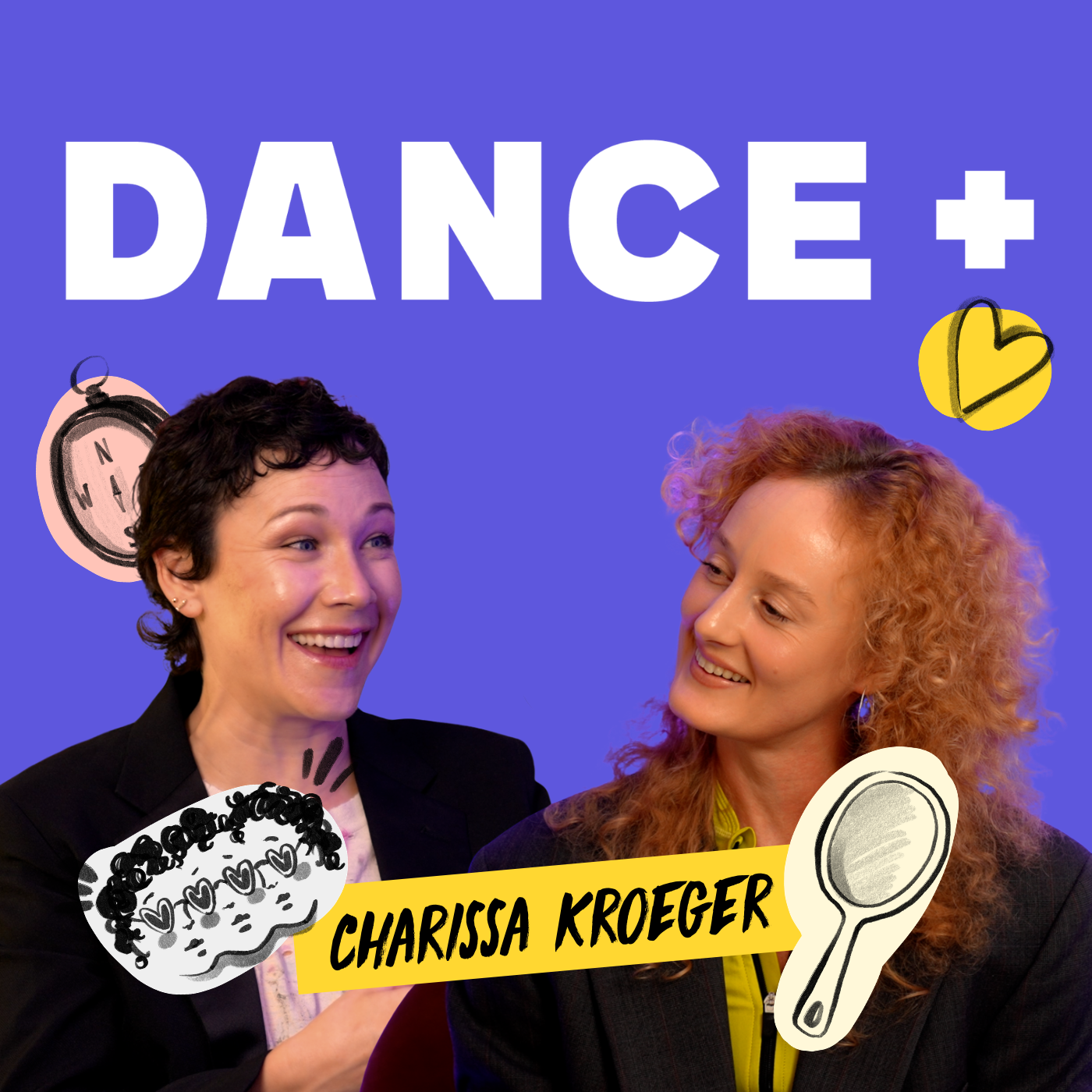
Today, Karissa Kroger is joining us on the podcast and she is rocking worlds and she is rocking blazers. She rocks a heel. We wind up barefoot, we change costumes. We are talking the ins and outs of making. We're talking about in being support roles of creative teams that are led by men whilst finding our womanness. We talk a lot about energy. We talk a lot about being deliberate in crafting your own path through these creative wildernesses. That's what we talk about, the creative wilderness. Everyone get ready for that. That's a big point, big talking point there.
Oh, we talk about her film spaghetti, the praise that she has won for it, what she is exploring with it, and some of the fabulous friends that were involved. So buckle up, my friends. This is Carissa Kroger. But first, we do wins. I forgot that I haven't done a win, guys. It's been kind of hard for me to recall the wins lately.
Ah. I'm going to recall unlocking a new thought.
Here's the thought. You all know I'm on a strength journey. You've obviously seen my biceps.
What you do not know is that most of the time when I enter workout type spaces, I go in with my workout knowledge, which I'm telling myself is less than my creative and emotional knowledge.
Today, in this episode, in real time, you will watch me unlock the realization that I can bring all of my emotional intelligence, I can bring all of my embodied knowledge of myself into the less familiar gym environments with me. And I think I'm about to have a whole nother relationship with working out after this conversation with Chris Up. So that's what I'm celebrating. What about you?
Congratulations, my friend. I'm so glad that you're winning and I'm so glad that you're here for this conversation with Carissa. Without any further ado, here she comes.
That was me yawning with my date at a movie theater and grabbing some popcorn and eating it.
Welcome to the podcast. By the way, this is Carissa.
That was a gorgeous, like, scooter segue. A burn. Yeah. Felt like a good, like, wrap up the summer moment.
[00:03:11] Speaker B: Magical summer. Magical.
It was fantastic. I mean, going to the bowl was great in the summer. It was still hot as balls, so it was even at night time we were really, really feeling it. But I've had a good summer. I feel like this is the first summer of my life where I wanted to intentionally feel like it's summer, and maybe that's just
[00:03:33] Speaker A: like. Give yourself a season. Yeah, like a. Like.
Like more play than work.
[00:03:39] Speaker B: A combo.
I think when I wanted to play, I wanted to feel totally off the grid.
[00:03:46] Speaker A: Nice.
[00:03:47] Speaker B: And I did a solo journey in my track up the coast because PCH is open now, and
[00:03:53] Speaker A: that
[00:03:54] Speaker B: was fantastic.
[00:03:54] Speaker A: What kind of truck you drive?
[00:03:56] Speaker B: Tacoma. 2013.
[00:03:57] Speaker A: 2013?
[00:03:59] Speaker B: Yeah.
[00:03:59] Speaker A: Okay.
Please don't be offended, but I took you as a kind of a vintage gal. I thought I was gonna be older,
[00:04:06] Speaker B: so.
[00:04:07] Speaker A: Because they make those for life, you can. I'm pretty sure my ex has a 83.
[00:04:12] Speaker B: Yeah, you ain't wrong. I. Honestly, the shape of mine was a little too bubblicious for me. I
[00:04:18] Speaker A: wanted
[00:04:18] Speaker B: it to be more.
[00:04:19] Speaker A: You wanted the vintage one. You want a truck, you don't want a marshmallow.
[00:04:22] Speaker B: Metal, not plastic. Thank
[00:04:24] Speaker A: you.
[00:04:25] Speaker B: Out of plastic. So we're driving around in these Barbie cars, but yeah, so vintage would have been the way, but I am not a mechanic, girly. So if something broke down, I did not want to deal with that nor pay for that. So I thought, let's get a little more trusted. And, you know, having Bluetooth and stuff is kind of the convenience sometimes, you know,
[00:04:49] Speaker A: so you truly have the best of both. I
[00:04:52] Speaker B: got to have my music. Yeah,
[00:04:53] Speaker A: I get that. Good for you. What's your car's name? Truck's name? Sorry.
[00:04:58] Speaker B: It's called twa.
[00:05:01] Speaker A: You know why. What. What I feel really tender about right now.
[00:05:05] Speaker B: TW uk.
[00:05:06] Speaker A: Guess what my ex's truck is called.
[00:05:10] Speaker B: Stop.
[00:05:10] Speaker A: Chuck.
T C H U C K
[00:05:16] Speaker B: Chuck. I mean, you know, sometimes. Synchronicity.
[00:05:20] Speaker A: I feel so unlocked right now. I feel so tender. Let's move through it. Vulnerable. I'm moving. Thank you.
Guide me. Charism.
Okay, cool. Usually. Usually this part happens at the beginning, but we've covered quite a lot already.
I would love for you to introduce yourself. I'm so curious to hear how you introduce yourself to people because a. It's just an interesting thing to hear what my thoughts about someone and how. How they might differ from their own thoughts about themselves.
So tell the good listener viewer anything you want us to know about you.
[00:05:53] Speaker B: Yeah, let's see. Has anyone introduced themselves, modeled off the pod and just said, I'm Chris A plus.
[00:06:01] Speaker A: No.
[00:06:04] Speaker B: Honestly. You know, I don't have to tell you this, but maybe people that don't know me that Tony Basil is my queen and yours.
[00:06:11] Speaker A: Yes.
[00:06:11] Speaker B: And so when you said the backstory of how the pod got rebranded.
[00:06:15] Speaker A: Yeah.
[00:06:16] Speaker B: And it was from her, I was just like, of course, of
[00:06:19] Speaker A: course, of course. And
[00:06:20] Speaker B: I resonated with it so, so deeply. Because you can be yourself plus.
[00:06:26] Speaker A: Right,
[00:06:26] Speaker B: whatever. And
[00:06:27] Speaker A: why would I further corner myself versus open and. And give myself even opportunities that I don't know that I want yet? It's plus.
[00:06:38] Speaker B: Oh, it's plus.
[00:06:40] Speaker A: So, yeah. Plus is opportunity, plus is options, plus is open, plus is growth.
[00:06:47] Speaker B: Plus
[00:06:47] Speaker A: is also already a lot of different hats which our lord and savior, Tony Basil also wears so many hats.
She is a producer, she is a singer, songwriter. She is a pillar of the dance community. She's a freestyler. She's a historian. She is history. She's, you know, she's so many things.
And so, yeah, there's. There was no questioning dance.
[00:07:12] Speaker B: It's so good. I love it.
[00:07:14] Speaker A: Well, it started as jazz. If you haven't listened to the episode that Chrissa is talking about, we will link it in the show notes. But the. The plus conversation happened when we're discussing my style of dance. She was like, what do you call that, you know, the you thing that you're doing right now? And I was like, I hate that question. Because the. The genre fication of things, the labeling of things. I get that we're. That we're humans and that compartmentalization helps our little human brains make sense of this big, complex world.
[00:07:42] Speaker B: Already. I know this, so it makes sense.
[00:07:45] Speaker A: Yes. Or I am introducing you to someone else in 30 seconds. It will help them understand you better if I'm able to say she's a this dancer, but I love. This is Carissa plus.
She's plus. She's many pluses. And you wear many hats and you wear them so wonderfully well.
I.
Yeah. I love it when my friends. And by the way, a lot of my friends are this way, that I don't think of them as a choreographer. I don't think of you as a choreographer. I think I might think of you as a movement director before I think of you as a choreographer. That's not to say don't do both, but I see you operating in between spaces a lot. This isn't quite eight counts, but it's also not typically movement direction. This isn't typically dance, but it also isn't fashion photography. Like, what is this thing? What is this place that you operate within? So Carissa plus makes a lot of sense.
[00:08:42] Speaker B: Yeah. The between spaces is My happy place for sure. That's. There's so much magic in there and I think that's where I like to live.
[00:08:50] Speaker A: Why do you think that is?
[00:08:54] Speaker B: I think I'm just a curious being. I think beyond artists and researcher, I'm just curious and I find that I was thinking about that in terms of kind of my creative career, artistic practice and whether it's in or as a performance artist or choreographer, creative movement, director, filmmaker, director.
I really just feel like everything I'm doing is research
[00:09:19] Speaker A: and there
[00:09:20] Speaker B: might be an end goal but it's really, it's really process based and rabbit hole based.
[00:09:25] Speaker A: That is a big unlocking component.
Instead of I'm defining this thing in the work, I'm discovering the next thing through this one thing. I'm researching right now. I'm on this project. Researching.
[00:09:40] Speaker B: Yeah. And it's not to lower the stakes of like, oh, it's a little loose or more. It's more casual. The stakes are still high. It's still we're all giving everything. My collaborators, myself, but it definitely feels like play and exploration are at the forefront.
[00:09:58] Speaker A: You know, curiosity is the great unlocker. It really is.
I think curiosity. I like what you said, that this isn't about releasing pressure or lowering the stakes. This is a lovely container for pressure. When I'm under pressure, curiosity helps me move. It doesn't mean the pressure goes away. It means I have more questions, which means more options.
It's again options plus curiosity plus
[00:10:26] Speaker B: the plus man
[00:10:27] Speaker A: the plus. The power of the plus
[00:10:30] Speaker B: plus.
[00:10:31] Speaker A: While we were doing our mic check, you also mentioned power of a different,
[00:10:35] Speaker B: of
[00:10:35] Speaker A: a different variety.
[00:10:37] Speaker B: Okay, so I have been. It revolved around the fist.
[00:10:40] Speaker A: Let's just, let's just context here. Best practice is once we sit down, I help the guest find a great microphone distance by making a measurable fists width from mouth and what. I can't remember the sentence that you said. It was like right as you were turning on the camera. So we might actually have it. You said the power of the fist these days or something like that. So where else has the fist been showing up for you, Krista?
[00:11:05] Speaker B: So it's very wholesome.
It has to do with this incredible technique called Klein technique that I discovered through my friend Nina Pearlman. Gyrotonic has been my complete bag the past year. I love it. It's helped redevelop my body and just created healthier fascial pathways but basically incline the first thing that my teacher and I've taken three classes so I am no expert
[00:11:33] Speaker A: but this is good. You should be explaining it to a beginner because you are one and it will help you understand it better.
[00:11:39] Speaker B: Yeah, go
[00:11:40] Speaker A: for
[00:11:40] Speaker B: it. So the instructor asked us to stay in a parallel position. We normally are standing with our feet under our hips. Right. And normally they're a little bit wider because we're like power stance people. And she said it's normally just a fist with distance. So if you put.
[00:11:58] Speaker A: Yes.
[00:11:59] Speaker B: This in between your feet, that's really your heels under your sits bones.
[00:12:03] Speaker A: Wait, one fist.
[00:12:04] Speaker B: One fist. So it's quite narrow.
[00:12:06] Speaker A: Yeah.
[00:12:07] Speaker B: But I really love that technique because a lot of the things I explore are poetic and really floral and exploratory, as I already told you. And this is so fact based. It. She will use language such as. And I'm forgetting the woman's first name who developed it. She's now in New York, and maybe she's always been in New York and has taught it to the Paul Taylor dancers. And it's just so good for any type of dance. But I can see how it would be great for modern dance.
And so the language of this technique is there are two lines of energy, two forces of energy, rather from your sits bones to your heels. And this is not a question, this is like direct fact.
[00:12:49] Speaker A: Okay.
[00:12:50] Speaker B: And there's language such as thrust or counter thrust.
[00:12:53] Speaker A: Okay. And
[00:12:54] Speaker B: that felt to my sensitive pony brain so much. I was like, what a thrust.
But it just felt so forceful. And I've just wanted to find so much softness in my physical body. But I loved it because it took out all the emotionality that lives in sort of the muscle fascial components of your system. And it was just bones. So it's bones lining up. These forces are not a question. They're permanent and fixed, and you're just working on that. And then there's points that go out the top of your body too. But that was Klein and it was revealed because I had to realign my feet and really find my true parallel and the bones. Your
[00:13:36] Speaker A: stack?
[00:13:37] Speaker B: Yes, my stack.
[00:13:38] Speaker A: Um, I would love to take a class with you sometime and then we'll do this episode again and I'll be freaking out about this.
[00:13:46] Speaker B: It's so crazy. You're literally doing roll downs for
[00:13:49] Speaker A: an hour,
[00:13:51] Speaker B: maybe two, because it's so slow. And then we'll talk about. And like I said, I've done three classes, so I've of course went on a YouTube rampage and was looking up how the developer would teach it in sort of like a ballet class or whatever. And it's it's along the same lines of the body.
[00:14:10] Speaker A: Okay.
[00:14:11] Speaker B: But through the Klein lens. So.
[00:14:13] Speaker A: And always working parallel.
[00:14:15] Speaker B: No.
So that's kind of how you would warm up. And honestly, after two roll downs, you are warm. Everything is connected. Your weight is so grounded. You are so present.
Yeah. There's a. You just have to explain.
[00:14:31] Speaker A: I'm gonna go ahead,
[00:14:33] Speaker B: I'm gonna take you guys.
[00:14:34] Speaker A: Yo.
Pilates changed me. And we, like, I grew up in a dance studio before there was a lot of cross training. Like on my way out, we had like some yoga incorporated into the warm up or cool down or like occasion. Like maybe right at the end. We're talking about like pelvic tuck and tilt. But never was there a reformer. We never had a band, we never had a ball. Like it was the way that.
[00:15:01] Speaker B: Oh my gosh.
[00:15:02] Speaker A: Right. The way that kids, you're
[00:15:04] Speaker B: gonna get bulky.
Yeah.
[00:15:07] Speaker A: That's the fucking patriarchy talking.
[00:15:09] Speaker B: Correct.
[00:15:11] Speaker A: Let's keep em weak. Let's keep em like little veals.
I am on a strength journey and I met with a coach this morning who was talking a lot about alignment and weakness and strength and compensation. And I really, I think, and I don't know if this thought serves me anymore, but I think I have a unique body. And anatomically, proportionately, I've got a relatively short torso, I've got relatively long legs. And as a result, I think certain parts of me have to work harder than others. And certain parts drive instead of. Instead of passenger seat.
And so today was like identifying a lot of what wants to go and having a closer relationship, a close, closer line of communication between what's firing and what's what should be firing and what is actually firing.
So these conversations are fresh at the front of my mind. I think I must.
[00:16:10] Speaker B: They're always. My
[00:16:11] Speaker A: dear friend Jason Parsons has been obsessed with gyro for a 100 years. 100 years. I'm sorry, Jason. I just gave away your true age.
He's a vampire.
Yeah. Okay.
[00:16:23] Speaker B: I love that journey. I.
I haven't been taking any dance jobs. One, I'm just transitioning into a different place creatively in my life. But two, I felt compelled to just kind of come into my body for myself. And part of that was getting rid of injury. Part of that was really listening instead of being amused, which I've loved for so much of my life.
But as a maker, I need to find my own impulses and I feel clear on that. But I feel like I owe it to myself to go even deeper and more true to that. So that's been my past year and I've recently started dancing again. It's felt amazing and also interesting to come about things in a different way. I think that's also with age, but.
[00:17:09] Speaker A: Oof.
[00:17:10] Speaker B: Yeah.
[00:17:11] Speaker A: Oof. This is unlocking some important stuff, my friend.
What would you say is the primary difference in. In the experience of being inside your body from being in muse mode and being in this other mode which you're stepping into now, which is as the listener, as the. As the one who is benefiting from the muse as. Because you're being your own muse. Right. And you're. What is the primary difference experientially like in your experience of your body?
[00:17:38] Speaker B: That's so interesting, I think. And I had to really dissect this because I kind of just live intuitively every aspect of my life. So I'm doing things and I'm thinking about them, but I'm also just feeling my way through. So I think in mus land. And this kind of goes to when I was assisting a lot of amazing individuals and artists, I almost felt like I was a plug. Like I would plug into them energetically and that was my way of feeling their creative impulses, anticipating their needs, knowing how to keep the energy cohesive and uplifted in the room and inspired. And so it really was kind of plugging in and going. And that would oftentimes leave me super depleted. And it wasn't because experiences weren't immensely fulfilling. Immensely.
I mean, life changing is such an eye roll, but when you love what you do, it is life changing and soul stirring. But a lot of those folks that I was using for were men. And I didn't realize that plugging into a male way of operating could deplete me so much if I wasn't in my full feminine form and energy and power.
[00:18:55] Speaker A: Yeah.
[00:18:56] Speaker B: So yeah, I really
[00:18:58] Speaker A: wearing a powerful men's blazer. For those of you listening, not watching, the shoulder is stacked and the shoulder is broad. And I know you put my
[00:19:08] Speaker B: shoulders just bone structure. So we just love this because it kind of
[00:19:12] Speaker A: emphasize it. Yeah. Don't minimize it.
I
[00:19:16] Speaker B: don't minimize.
[00:19:17] Speaker A: I wore this vintage beaded number to our friend Erica Sobels the other night.
[00:19:22] Speaker B: I need
[00:19:23] Speaker A: to see. I didn't real. Do you want to see? I will grab
[00:19:25] Speaker B: it.
[00:19:26] Speaker A: I didn't realize
[00:19:27] Speaker B: we should have a
[00:19:27] Speaker A: cult
[00:19:28] Speaker B: change
[00:19:29] Speaker A: that's happening.
I didn't realize until a friend put their arm on my shoulder to like greet me and like have a. A mom.
And I couldn't feel it. I Was like, oh, wow.
That. It's a really stacked shoulder force
[00:19:45] Speaker B: field.
[00:19:45] Speaker A: Borderline
[00:19:46] Speaker B: the 80s. Like the force
[00:19:48] Speaker A: field of the shoulder. The force field of the shoulder pad.
Oh, my God.
It's gonna. It's gonna happen. Do you wanna.
[00:19:56] Speaker B: No, Please. I kind of want a gossame change too, though. Do you want to come? Come? Yeah. Yeah.
The way this is, is kind of my normal day where this is why I have so many clothes in my bag because.
And I don't know how to pack. I need to know who I'm gonna be that day or
[00:20:15] Speaker A: the many different kinds of person you're gonna be. So we're back. We
[00:20:19] Speaker B: raided Dana's closet.
[00:20:21] Speaker A: And. And. And I'm wearing this vintage unit that was given to me.
[00:20:27] Speaker B: Unit is crazy
[00:20:28] Speaker A: because. Because it's not a shirt. It's not a dress.
It's its own unit in a way. It's its own universe because it's.
[00:20:37] Speaker B: The stars are alive.
[00:20:39] Speaker A: It's. It's. It is planets and stars. That's what this shirt is. You might need to watch this episode if you are just listening. And this is a visual. It comes with, like, NFL football pads as shoulder pads. And it weighs so much. And it's crazy because I had never worn it before Erica's birthday. It was given to me. I've had it for ages. Probably seven years. Six. Seven years. Had never worn it because it's quite fancy. I'm glad you didn't give
[00:21:08] Speaker B: it away.
[00:21:09] Speaker A: It's not. I know because I knew that I would, but I can't travel with it because it weighs 40 pounds and is delicate.
[00:21:17] Speaker B: In your toothbrush and your
[00:21:18] Speaker A: suitcase. Look at it. It's got wings.
[00:21:21] Speaker B: She got wings. It's
[00:21:23] Speaker A: bingo wings.
So now I've worn it two times in a week.
And it's paid for itself because my. I have some vintage friends and they saw it and they thought of me. They were like, we. We held on to this because we thought you would love it. And then I was like, I tried it on, and they're like, oh, take that. Like, you need to have that. Take
[00:21:42] Speaker B: that. But this with, like. I mean, it's gorgeous with my cargo. But no, I'm just. I'm thinking of the beat and the hair to
[00:21:51] Speaker A: come. Style me sometime.
Okay. We're gonna talk about fashion. Oh. But for then, tell us what you're wearing over here.
[00:21:57] Speaker B: This is a Dana P. We're trying to. I wanted to say it properly.
[00:22:01] Speaker A: Moschino. Moschino. Mo. This was not given to me. I bought that in Paris at a vintage spot in Paris. And it is one of my favorite items. I also can't get rid of it. I've worn it for a couple photo shoots. I have worn it to a couple events. But it's kind. It's so striking.
What are you. Is not your daily wear. It's also hot in there. It
[00:22:23] Speaker B: is. It's a little hotter than my.
[00:22:24] Speaker A: It's a little hot in there. Yeah.
[00:22:26] Speaker B: So
[00:22:26] Speaker A: you might. We might need to do one more part. Do the. We'll do one
[00:22:29] Speaker B: more change. This is so fun, though.
[00:22:32] Speaker A: But as we're in my. My room, we're talking about how our clothes inform our movement. And in that way, our closets are our toolboxes. Do you know what I mean? Like, so, yeah, clothing for dancers, maximum important.
[00:22:43] Speaker B: Not so much anymore. But I used to have all my shoes in my car. Because you never knew as a lady, if you needed the pump, if you needed the industrial heel. Because you're going to be doing some crazy.
If
[00:22:56] Speaker A: you're gonna be wearing a full blown combat boot. If you need a. Yes.
[00:23:01] Speaker B: The
[00:23:01] Speaker A: docks sneaker for quick pivots.
[00:23:04] Speaker B: Right. The little martial arts sneaker because you're doing some contemporary.
[00:23:10] Speaker A: Do you have a sneak. A martial arts sneaker for contemporary. There's
[00:23:14] Speaker B: one that I would wear the favor. Will
[00:23:16] Speaker A: you. Will you send me a link to it? Because I still struggle with what kind of sneaker I want to be dancing in. We've gone completely off agenda here. Does it feel okay for you? Because one of the things I really. I wanted to talk to you about being in supporting roles, especially to men, because I've spent most of my creative life doing that.
[00:23:36] Speaker B: I'm gonna switch gears because I can feel
[00:23:39] Speaker A: the sweat
[00:23:39] Speaker B: going down my.
[00:23:40] Speaker A: Yeah, let's do it. I'm also gonna take.
Okay. Back to supporting the men's.
[00:23:48] Speaker B: Yes. Do we dare? I love how you prefaced it.
[00:23:52] Speaker A: Yeah. In my email, I was like, do we do this?
Yeah, we definitely do. I was really attracted to more male choreographers and teachers than female. Don't know why. Like when you asked me today, my favorite teachers are women, but those that I gravitated towards, style wise, were men. And I would dress like them. And I would, like you said, kind of plug in to the energy.
Plug in to the request frequency, demands and frequency of that, of those spaces, of those people, of those rooms. And sometimes bigger than rooms, sometimes of those stadiums. Right. If you're dancing Marty Koudelko's choreography for Justin Timberlake, it the bubble of energy that you're tapping into is more than just one person's. It's like a lot.
[00:24:42] Speaker B: And it's spearheaded by a man. So there's a couple different layers of men in power, starting with the tippity.
[00:24:51] Speaker A: Several layers of men in power.
And I really enjoyed my time in those spaces.
I remember one time also asking Tony Basil, or actually, you know, there's kind of. This is kind of twofold.
There was a time when I got tired of doing, like, I Love youe and I was less inspired. And I mean, each Tour had like 100 plus shows. The 2020 experience, 153 shows. That's a lot of the same thing. So I ask my other mentors in my life. One of them, ironically, not a dancer, but JT's former trainer. His name is Jason Bonner, and he's also a podcast guest and dear friend and one of my favorite residual relationships of that time.
And he encouraged me towards my show.
This was just a show that I was working on, but in my show, which is code for my life, other things are important.
So he would ask me, like, what does your show need for you to do today?
[00:26:01] Speaker B: And
[00:26:01] Speaker A: sometimes the answer to that was this show. In order for my show to be okay out there, it's better that I not quit this show. Do you know what I mean? So staying in that place was good for the show of my life. That
[00:26:14] Speaker B: perspective shift is so beautiful. I love that.
[00:26:17] Speaker A: Just zoom out a little bit, Dane, because especially on
[00:26:20] Speaker B: tour, all
[00:26:21] Speaker A: I could see, so important, so huge. And then what Tony Basel offered is this.
The introduction of imagination, specifically from a woman's lens, where she encouraged for me to be. To pretend to be someone else and not a man, Pretend to be a cheerleader, pretend to be a vixen, pretend to be a schoolteacher, pretend to be a little girl, pretend to be some other kind of woman, but maybe to stop pretending to be the men that I was working for, because that got me there, working for those men. And if I wanted to get anywhere else, I would need new thoughts about myself. I would need a different kind of relationship to my body. I would need different shoes to wear and different pants.
And that was a beautiful unlocking of otherness.
And I. I don't beat myself up at all for spending most of my young lady life trying to be an old man.
I think it's kind of sweet.
[00:27:28] Speaker B: Totally. So many points resonated. The last one that you spoke upon of fantasy and becoming different characters, that's what gets me going as a dancer, is I can kind of be inspired just to be in my own flow. But. And I think this leads into the world building that I do as a creative. When I have a clear fantasy of color, soundscape, texture, ideation, and, like, rhythms in my inner and outer world, I feel so activated. If you just turn on some music and say, improvise, it's like, I want to do something weird. I don't really want to dance. Yes. Until I know how the character I want to be moves.
[00:28:12] Speaker A: Nice. And
[00:28:12] Speaker B: that takes time to feel.
[00:28:14] Speaker A: Yeah.
[00:28:15] Speaker B: So, yeah. Really, really love that. And in terms of growing up, I think there was a physicality I really enjoyed about male choreography. And that was kind of my in of, you know, wanting to be one of the boys. In terms of my movement, I definitely love moving hyper femme and sexy and all of that. But there was something when I'd be in the room with men on a job where when they'd get to the boys part, they were working their asses off. And then the girls part would be like, find. And it still takes technique, it still takes effort, it still takes extreme prowess in the body, but find a line versus the boys who were just eating it up and, like, guts everywhere. And that's where I wanted to come from. And I think that's why when I came across some of my early mentors in the dance space, like Tony Testa, I just. There's like a kindredness right away. And I was, you know, little blonde, didn't speak much. Always back cornering it up. Not out of.
I don't know, I guess it's a battle of. Of wanting to be seen or wanting to be in my own world. Stuff that I've worked on. But I think it was just, again, I wanted to be in my own fantasy. I didn't want to feel the energy of that front of room.
There's too many people around. I wanted to just explore my own thing. But, you know, he really, like, plucked me up when we first encountered one another. And that was so beautiful because I really felt at the time that that movement spoke to me. And it was like the effort and the power that I didn't feel in my early 20s, early teens, early childhood, that I could then always feel dancing
[00:30:00] Speaker A: nice.
[00:30:01] Speaker B: So that means that
[00:30:02] Speaker A: that word is key. Effort. And I feel like what I was most drawn to, let's say Marty, for example, was an effortlessness.
I loved how cool it looked. And as a kid who grew up feeling largely uncool, I absolutely desired to feel cool. Or as a person who. Who grows up being Encouraged to be soft or gentle or find the line. I can see how something that's opposite, something that looks hard, full of effort, could be attractive. I also am a big test of fan, and I. I love how much work it takes physically and otherwise to do his work.
Also a huge amount of imagination and introspection and. And world building.
[00:30:53] Speaker B: He is a digger, and I learned how to dig in the creative mud to really.
I don't know, this search of finding something that is pure and excellent, but also finding, like, the most rendered version of what could possibly be.
[00:31:08] Speaker A: Yeah.
[00:31:09] Speaker B: Produced or excavated.
[00:31:12] Speaker A: Okay, if Tessa is a digger, what are you
[00:31:18] Speaker B: in? When I'm working with in
[00:31:20] Speaker A: creation on your own,
[00:31:24] Speaker B: I definitely, like, have my hard hat on and my little
[00:31:28] Speaker A: shovel.
Yeah.
[00:31:31] Speaker B: Yeah. I would say I definitely. There's. I guess, like. And I'm so blessed for these three men and their influence on me, but Tony Testa, Ryan Heffington, and Stephen Galloway have been the three men in my more mature life as a dancer. I mean, I met Heffington and Tesla when I was early 20s, so that was, you know, still pretty young. But those have been the folks that have been printed the most.
The most on. Yeah. Yeah. And so, yeah, definitely digging from. From Tony, I'd say I definitely feel that. Yeah. The dig I'm trying to think of,
[00:32:10] Speaker A: I think I might be a roller. I think I, like, grab and roll and then push around. And I, like. I'm curious about what's under things.
[00:32:19] Speaker B: Crafter. Yeah.
[00:32:21] Speaker A: Yeah, yeah, yeah, yeah.
[00:32:22] Speaker B: I
[00:32:22] Speaker A: might chisel, too.
[00:32:24] Speaker B: I
[00:32:24] Speaker A: think, like, I'm. I'm less of a what's in there, like, deep down and more of a. Like, okay, let's chip away at what's in front of me.
I don't.
Yeah. I. I think I dig deep for feelings, which is where I unlock a lot of my creative power. I think just comes from, like, feelings.
But I. But I do think I roll around ideas a lot. I'm gonna. I'm gonna push back on this. I'm gonna pull a little bit this way. I'm curious about what's underneath that, but I don't think I'm a digger. Would you say that I'm a digger?
Yeah. I'm not a digger.
[00:33:03] Speaker B: Digging also requires being in the dark, and
[00:33:06] Speaker A: I think
[00:33:06] Speaker B: there's. There's something there of kind of the
[00:33:10] Speaker A: possibility
[00:33:11] Speaker B: and the curiosity. And I kind of intuitively am just like, here to here. And I will keep connecting dots and maybe a dot connector. Like, I always.
[00:33:20] Speaker A: There we go.
[00:33:22] Speaker B: Yeah. Curator. When people Are solving a case. I was always obsessed with those with
[00:33:28] Speaker A: the yarn line between the pins
[00:33:31] Speaker B: and photos and
[00:33:32] Speaker A: text. A headshot. Give me a little, like,
[00:33:35] Speaker B: sample of skin. Like, give me all the textures on the board and
[00:33:40] Speaker A: baggy. Yeah. Baggies with evidence.
Newspaper clippings. Yes.
[00:33:45] Speaker B: Coordinates.
[00:33:47] Speaker A: That's gorgeous.
[00:33:48] Speaker B: Yeah.
[00:33:48] Speaker A: That's the way that you make is by connecting.
[00:33:51] Speaker B: What is it? Cartology when you're making maps.
[00:33:54] Speaker A: Cartography.
[00:33:55] Speaker B: Cartography, yes. Yeah. Maybe something along that line.
[00:33:59] Speaker A: Gorgeous.
[00:34:00] Speaker B: But I love Dig too, that it's earthy. And I think something that is beautiful about working with male energies is that they tend to come from the physical space first and foremost. And I found less when I'm making. But when I've assisted other women who are also brilliant, they come from a very place that's up here. And I think leading with physicality and again, having that plug in.
When a woman is in her body, we are most creative, open, empowered. And so I think that when done correctly, the play of energies and of polarities can be really beautiful. And I think that's when the partnership of.
I guess we're thinking of like, yeah, just proto.
What's not prototype.
[00:34:55] Speaker A: Yeah, yeah, yeah.
[00:34:56] Speaker B: Archetypes versus. Versus, like being a man or a woman. I think it's more energetic archetypes that those can work hand in hand and create something beautiful.
[00:35:07] Speaker A: Nice.
I love this thought of being in your body enough that you could decide with which part you want to lead.
[00:35:18] Speaker B: If
[00:35:18] Speaker A: you want to be leading with heart, if you want to be leading with cerebral, if you want to be leading with power or mechanics or athleticism first, to have the option to do any of those, to be at the command center of that is very, very powerful.
[00:35:37] Speaker B: It's the command center. It's also like the spiritual command center, I think is through embodiment. So I think in order to get those sort of influences or just extensions of like, what you're trying to excavate, like, the embodiment part has to be fully
[00:35:56] Speaker A: alive. I think think I've been going into, like, the gym spaces, fitness spaces, we'll call them, without a lot of my emotional intelligence.
What I unlocked today.
And I got to. I have to give my coach credit for this because I said the sentences in my mind are not getting me that end result.
And he was like, say more about the sentences. And I was like, oh, I think sentences when I'm working out, I don't think inhale, exhale, kick. I think, throw that shit away.
I think, push through.
I think, like, there are sentences not Always complex sentences, tasks
[00:36:48] Speaker B: like.
[00:36:50] Speaker A: Yes. Tasks or cues.
But usually emotionally charged. Like if I'm doing a push up. Not to get crazy, but I'm thinking, get off of me.
Like, get off of me.
[00:37:01] Speaker B: Wait. I love that we all need to practice that vocal exercise. When I was in my vocal musical theater bag from Bob Garrett, Shout out Bob Industry. Yeah. Bless his soul. But there's one that's like, no, no, no, no, no, no, no, no, no. And I just walking through it. But the last one is no. And I will do this vocal exercise. It's 15 minutes long, but I will do that. And during the No. I practice how. No, no, no. Because I didn't have that in my body. It's so simple. But I didn't have that
[00:37:36] Speaker A: all the Yes. I had that
[00:37:38] Speaker B: in
[00:37:38] Speaker A: yes. Not much. No.
[00:37:40] Speaker B: Yeah. Or I had the okay, but what is that I needed the firm. No. And especially going to work.
Unfortunately, fortunately we just have to be equipped for whatever. Learn some crazy ways that I need to be equipped. Yeah. Never again.
[00:37:56] Speaker A: Yeah. Whether it be with shoes in the back or with. Or with sentences in your mind.
[00:38:02] Speaker B: Yeah. And you're like, get the fuck off. Energy.
[00:38:04] Speaker A: Get off. Yeah. So that helps like physically and emotionally for me to get stronger, to get through an exercise and to.
I don't know, I'm gonna like segue here and hope to wrap this up. Andy Blankenbuehler is a dear friend of mine and brilliant choreographer. He talked to me once about how he found it really hard to get warm for a show. When you're doing 10 shows a week on Broadway, your body wants to chill. Literally. You mentioned it like when you're talking about gyro. I think kind of sort of your body wants to do the easiest thing.
[00:38:40] Speaker B: Self sufficient.
[00:38:41] Speaker A: Yeah. The most efficient thing. And we're asking it to do 10 shows a week of crazy stuff. So there is some mental gymnastics involved. And he told me that he had to start acting his warm up. He had to be in character like acting his warm up or he wouldn't get warm.
[00:39:01] Speaker B: Yeah.
[00:39:03] Speaker A: Energy body. So I think what I learned today from my coach, whose name is Aaron and I will definitely tag in this episode that I have been turning off my sentences when I go into the gym. A lot of the time I'm just saying pull up.
And even in my push ups, sometimes I get lazy and I'm just like. And 1 and 2 and 3, those are the sentences. But when I'm thinking, get off me. Or when I'm thinking look out. Or when I'm thinking, like, truly the reason why I want to be able to do pull ups is so that maybe I could drum. I could jump from one tree house to another.
[00:39:42] Speaker B: That's the mom lifting the car when the baby's about to get hit. That's that energy where it's coming from something else.
[00:39:48] Speaker A: It's coming from something else. And there is a degree to which you cannot fake that adrenaline. But there is also a degree to which you can. I have been at what I thought was maxed out, and my coach, Jason Bonner, my friend from the JT days, will say, what are you going to do with those last three reps? You just going to leave them there? And I'm like, no, Jason, I'm maxed out. And he's like, no, you're not. You just don't know where to pull them from yet.
And so sentences is where I pull them from. Okay. I want to talk about your art really fast. And I want to talk specifically about the art that I just watched. I hadn't seen Spaghetti and Riley, my dear friend and assistant and podcast editor is in this film and showed it and showed it to me before you came over.
And so I would have watched it five times in a row because I was that wrapped by it and I. And. And it. There's so much to see. It's a very full frame almost all of the time. And so I. I wanted to look at everything. I want to watch it eight times. I don't know if that was part of your objective.
[00:40:48] Speaker B: Yes, it was.
[00:40:49] Speaker A: Okay, cool. Well accomplished. I'm so curious to hear what you were exploring with that because. Yeah, my favorite thing about it is like, oh, I know this space, but I've never seen it this way.
And that's different. And. Oh, that's different. Oh, I didn't see this going there.
And it was truly. Every frame is beautiful and not easy to shot. It's very.
Yeah. I have questions about the technical parts of it.
[00:41:17] Speaker B: Yeah. I have to give flowers to amazing DP Ian Code. Who he was my collaborator for Smokestack Lightning. And a lot of my film I'm in development for now, which I thought shot three years ago, and it's getting ready to be birthed into the world. He also shot that, so he's been an amazing teacher, amazing collaborator. And
[00:41:36] Speaker A: just build. Keep talking,
[00:41:39] Speaker B: do your
[00:41:40] Speaker A: thing. I looked right at her after I did that. Okay. Keep guys so tied. I sure it's gonna be fun. Go ahead.
[00:41:45] Speaker B: Lesley adds to it.
Yeah. Spaghetti it.
The movie theater as a stage that was just by.
Not convenience, but the resources I had. My dad's cousin, ex Long beach homicide detective from the 80s and 90s, like the stories this man has. And he's also a theater nerd. He is now Mr. Von Trapp in Sound of Music in plays, and just a bright soul that has a handlebar mustache and a lot of swag.
But he was managing this space in Long beach, and that's where I shot Smokestack. It's the same.
[00:42:30] Speaker A: Yes, yes, yes, yes. It's beautiful.
[00:42:32] Speaker B: So the theater, I really wanted to explore this idea of many bodies en masse and just this movement. I did not want it to feel like choreography. Every time I thought to make something of that ilk, I kept coming back to my true intention, which was human gesture, which was coincidence of people being in space together and doing things at the same time, or people from different walks of life having similar physicality.
And I wanted to sort of push. Push that into the most extreme. So instead of just everyday folks, they are my imaginary friends and very fantastical. So, yeah, the theater was a beautiful container. Obviously, the frame could be this. This perfect kind of square situation. And it was all about patterns and creating a 90s screensaver and seeing what routine socialization looks like as choreography.
[00:43:30] Speaker A: Cool.
[00:43:31] Speaker B: And I just happened to get all my homies, including my parents and my grandma and cousin. Tim was in it for a little bit. He didn't make the full thing, but he had a bounce. But he was sitting there at the beginning of the shoot day, bless his heart. For real.
So, yeah,
[00:43:48] Speaker A: Yeah, I saw some good friends in there. Good faces. Good faces.
[00:43:53] Speaker B: Yeah. But what do dancers look like? And the most.
You know, dancers are the most physical, intelligent, physically intelligent beings. And so I just wanted them to kind of do their thing. And I would have various degrees of tasks and how to turn up the dial on that or turn it down. But I really wanted it to be this oner that could be on loop.
[00:44:15] Speaker A: Yeah.
[00:44:16] Speaker B: Forever. Is
[00:44:17] Speaker A: that what you mean by 90 screensaver?
[00:44:18] Speaker B: Yeah.
[00:44:18] Speaker A: Because there were also some movement patterns that did feel like that Windows Desktop thing or Media Player. Windows Media Player. Did you have that? God dog. That was the coolest thing.
[00:44:30] Speaker B: That was fascinating. It was mind blowing.
[00:44:32] Speaker A: It was mind blowing.
[00:44:34] Speaker B: Our brain. Our braids hadn't rotted by that point. So things like that was like, oh, my gosh, Duck Hunt in Super Mario blowing my mind. And now I'm like,
[00:44:48] Speaker A: I got a computer so that I could watch his screensaver.
[00:44:53] Speaker B: That is honestly entertainment right there. I always.
[00:44:57] Speaker A: Media Player. Oh, My God, I'm crying.
[00:45:00] Speaker B: There's something about how over stimulated we are. And as much as spaghetti is like holy, there's so much to say. See, I think in the simplicity and the I can just sit and observe. I hope that there's an experience that's not crazy and that you can get transported. And that was very much my intention too. There's so many amazing makers who do like a 1E and a TUI so well and all of that. And I'll leave that to them. That's not what was fooling me for this project. It was to really stay true to my intention, my research, which was pattern making and gestures.
[00:45:42] Speaker A: Nice. Human
[00:45:43] Speaker B: gestures.
[00:45:43] Speaker A: Nice. I just had Nathan, Nathan Kim on and we talked a little bit about Spider Man. Sweet soul, bright mind.
And I told him about this idea that I had at the back of a plane that was going through turbulence, which was I could choreograph a plane crash on dancers. Easily, easily.
[00:46:04] Speaker B: That just terrified me.
[00:46:05] Speaker A: It's frightening, right? But that's all it is, is just everybody doing the same thing at the same time. Like I looked down the aisle and just everybody's heads were doing exactly the same thing.
[00:46:16] Speaker B: Spaghetti too.
[00:46:17] Speaker A: Yeah, I, I, I felt kindred in that I really, I really did think it was beautiful and, and such a cool reversal of perspective. Because we all know what it feels like to look at a screen but we don't know what it feels like for the screen to look back at us. And a majority of this film is the screen's pov. And I just also, that felt very, it made me not human in that way. I was like, oh, I'm the screen.
[00:46:47] Speaker B: Oh, that's an interesting.
[00:46:48] Speaker A: Yeah, it shifted my viewers perspective.
[00:46:51] Speaker B: Yeah. So I think that's why, and there's something where when I was showing spaghetti to a large group for the first time, it felt kind of like spiritual where having the film be viewed. Oh, excuse me.
A large group watching the large group that's on
[00:47:09] Speaker A: a, on a screen. That's my purest
[00:47:11] Speaker B: intention to have it be a mirror rather than a screen. So it feels like that collective experience is on both sides and yeah, you can really find yourself within it. But I love the soul experience is cool. But my artist's choice would be to have the viewing experience be en masse, which I think there's going to be more opportunities coming soon. Yes.
[00:47:34] Speaker A: Because you won an award for this film, right?
[00:47:36] Speaker B: I sure did.
[00:47:38] Speaker A: And does that come with more opportunities for the film or more opportunities for you? Obviously we love winning awards. It helps.
[00:47:44] Speaker B: Yeah. I think that was a applied. I took upon myself because I was on this job and. And I was movement directing. It was a campaign great. But the. They really wanted movement, of course. But they didn't know what they were doing. And I had researched them because every job I go on, I research everyone involved, the who's who. And these directors had won that award. And so.
[00:48:10] Speaker A: Which is Young Directors. The
[00:48:12] Speaker B: Cannes line. Young Director Award. Yeah. And Spaghetti won it for video art.
[00:48:16] Speaker A: Nice. People
[00:48:17] Speaker B: might sort of like, I wanted to just go for it myself for this project because I believed in it. But it also was. I believe dancers can do anything. And I was like, if these folks won this award, I'm submitting this, and I'm gonna go for it
[00:48:33] Speaker A: too. Yes. Charissa, that's beautiful. I'm obsessed with that
[00:48:38] Speaker B: because we're amazing, and we know. We know how to get things done and also get things done while treating people with respect and, you know, just enjoying ourselves and creating something excellent. So
[00:48:50] Speaker A: thank you for being an example of using competitive nature to your advantage and to the advantage of dance.
[00:48:56] Speaker B: I had to own it because I was always that person growing up, like, I'm not competitive and I'm my mother's daughter. Like, she was a D1 athlete in mini
[00:49:04] Speaker A: sport. You're competitive.
[00:49:09] Speaker B: If I see it and I know, I. I just will know in my bones, like, this. This is supposed to happen and to just go for it. So I had that reaction for this, and so
[00:49:19] Speaker A: that's epic.
[00:49:20] Speaker B: How to do it.
[00:49:21] Speaker A: Is there anything that is pulling you right now? What do you feel like you have to do right now?
[00:49:26] Speaker B: I really want to create this project or get. It's already created this film, but it's kind of developing and more so an installation direction where I don't necessarily want it to be experienced like my other works as a standalone film. I want it to be a whole world that the audience can be immersed in and explore.
[00:49:53] Speaker A: This sounds big.
[00:49:54] Speaker B: Yeah.
[00:49:55] Speaker A: You know, they say that in order to make a pumpkin.
Apple pie. Pumpkin pie.
[00:50:00] Speaker B: Oh. Both in
[00:50:01] Speaker A: order to make in or in order to make a pie. Insert whatever rhubarb. Fill in the blanks for you. In order to make a pie from scratch, you must first invent the universe.
If it's going to be from scratch, then it has to be from this, which means you have to make the that. Which means you have to make the that. Which means you have to make the that. And not to overwhelm you. But when you're talking about World
[00:50:23] Speaker B: one,
[00:50:23] Speaker A: when you're talking about universe. Yeah, yeah, yeah. When you're talking about world building, that's, that's, that's what it is. You're considering, you're considering all the pieces.
And that is why this entertainment art industry place is not a one man band type of town. It's based on collaboration. It is really takes the team because you can't have, you can't create the universe yourself in this one life.
[00:50:51] Speaker B: Yeah, girl, I tried like,
[00:50:54] Speaker A: yeah,
[00:50:54] Speaker B: I think that's what kind of led to creative exhaustion. I also, in that time that I was going for the award and creating Spaghetti, that was 2024 and that was my creative rampage year where I just had so much fire. I also something crazy happened on set when I was a performer that I just had this pillar and calling within me to create the rooms that I'd want to be in and be safe in. And so that was my year of just creating all these works mostly with enormous cast of dancers and artists. And yeah, I had so many amazing collaborators. But I think there was this. I had to learn. Oh, this role could actually be filled by a human instead of me trying to do it or even editing. I really love editing. I don't like the technical side, but I know what I want visually with music, with
[00:51:55] Speaker A: rhythmically,
[00:51:55] Speaker B: rhythmically font, like all of it I want my hands on. But I find it's so awesome and Riley is an amazing collaborator in the editing space to have that and not do that myself because it. I get so locked in the world and I don't necessarily want to do that. I think also going back to our kind of feminine way of doing things, there's a birthing process, I feel, where you just have to have space and allowance and when you have that space and allowance, you can feel supported rather than like manning your way through. And I didn't even mean to say manning, but it makes sense
[00:52:31] Speaker A: not know.
[00:52:32] Speaker B: Yeah, it makes sense. So I feel so much freedom with collaboration and with trusting the people around me. And I feel more inspired and less like I was thinking, I don't want to see another BTS photo of myself looking haggard as fuck.
I want to feel, I want to feel
[00:52:51] Speaker A: like free pregnant
[00:52:53] Speaker B: do from like being around and creating and, and just. Yeah, being in my body and not feeling just like adrenal fatigue and.
[00:53:04] Speaker A: Okay, so that was your art. Your. So your art rampage year led to the burnout or your rampage year came after your burnout
[00:53:11] Speaker B: led to. I think may, may have come from a performance.
Burnout led to a creative Burnout led to. I
[00:53:20] Speaker A: see full time performance entity or performance incident happens. You're like, okay, I'm going to make the spaces that I wish that I was working in. And then you did. You created those spaces. Then creative burnout happens. And how did you find yourself moving through and out of that?
[00:53:42] Speaker B: Yeah, I mean, one more thing to plug. It was also self producing right now, which I think we should all do it. It's such an amazing thing to self produce your own project. It is so hard, but it is so rewarding. You learn a lot. Your business side. I've always, I think as dancers we can be more business oriented and how we talk about our art and how we show up. And I'm learning every day how to be better about that from folks like yourself, from peers that I just admire the
[00:54:14] Speaker A: way you walk the talk
[00:54:15] Speaker B: and from doing it. Yeah. So I'm. I went on a full tangent.
[00:54:22] Speaker A: Self producing, you think people ought to do it, but that maybe is what led to the burnout.
[00:54:27] Speaker B: Oh, yes. And then how to get out of it.
[00:54:29] Speaker A: Yeah. How did you move through that? Yeah,
[00:54:31] Speaker B: I think that was really when I was starting to have kind of thoughtful awareness about what it means to be a feminine leader and how to cultivate that. I think we're in the rise of that collectively and as a society. But in my own universe, how to do that for myself and feel supported. And I have a lot of beautiful folks. I'm really big into energetic practices, prayer practices and ways to refill my cup in a way that's from the soul and not from like, I need validation. That stuff is. Does not fuel me whatsoever.
It is a quarter in the piggy bank. But I'm not full and I'm not like
[00:55:15] Speaker A: juiced or charged. Or
[00:55:16] Speaker B: charged. Yeah. So that has been huge for me. And yeah, that was also when I started kind of going on this. Rebuild my
[00:55:24] Speaker A: physical body.
[00:55:26] Speaker B: Yeah.
[00:55:26] Speaker A: I'm seeing that as a through line. Like invest in self, pour into self. And that might mean a spinal roll down for 45 minutes.
Or that might mean laying on a hard surface with hand to belly breathing.
That might mean
[00:55:43] Speaker B: talking with your homies.
[00:55:44] Speaker A: That might mean talking with your homies. That might mean doing some pushups with some sentences behind them. But one of the main reasons I wanted to certify as a coach is to help people get through burnout. I know there's a lot we can do to avoid it,
[00:55:59] Speaker B: but
[00:55:59] Speaker A: a lot of, a lot of us are because of the nature of what lights us up.
[00:56:04] Speaker B: I was gonna
[00:56:04] Speaker A: say we will get to
[00:56:06] Speaker B: it. Like,
[00:56:07] Speaker A: if you love this, if it lights you up, you will burn out at it, because there's enough opportunity to always be doing something that lights you up, that you will get to a point where you're dim, where your light is. Is. Is flickering. So.
And. And in my journey with strength, I definitely feel energized by. Because of that work. But I think, yeah, thank you for being an example of filling and pouring in equal parts or in different chapters. And it's good to remember, it's good to see it on people, how all of those chapters are essential, how all of those chapters lead to the next one. Our research for the next place that you're going, it's not the end, it's
[00:56:58] Speaker B: not
[00:56:59] Speaker A: the result,
[00:57:00] Speaker B: but
[00:57:00] Speaker A: it's the pathway through to the next place.
[00:57:02] Speaker B: Yeah.
[00:57:02] Speaker A: And, man, I love tools. I just love tools.
[00:57:05] Speaker B: I love them too.
So heavy. I'm like, hey,
[00:57:10] Speaker A: okay, is there a tool in that toolbox that you use every single day? What is the tool you use every
[00:57:16] Speaker B: day?
Shout out to you. Breath work has been huge.
I also, at the end of last year, in December, I started a Reiki journey. And tapping into that of just kind of clearing out my system. And, you know, I. I want to get to a place where practicing on others and supporting others feels like a calling. But honestly, I wanted to explore it because something told me to do it, and I'm such a sponge. And I realize how much I've been doing, taking on my whole life, and how at the end of the day or starting the day to just clear. To kind of get into my own.
My own frequency, my own antennas up.
Yeah. I would say like a Reiki practice and a prayer practice, for sure, of just centering and getting very clear about what my purpose is for the day and for the season and whatever.
[00:58:13] Speaker A: Lovely, my friend.
[00:58:14] Speaker B: Thank you. Yeah.
[00:58:15] Speaker A: Question from Widomcom, AKA Today. This question comes from Riley Higgins, seated in that chair over there.
Do you think of yourself as being a person who uses comedy in dance deliberately and. Or what is the role of comedy and humor in your process?
[00:58:34] Speaker B: What's immediately coming to mind is that comedy is so simpatico with dance in terms of its rhythm. Rhythm is kind of what I see as being the driving force of both
[00:58:49] Speaker A: tension release.
This part. This part. Payoff.
[00:58:52] Speaker B: Yeah. And also, I just like some weird. So maybe that's what people find humorous, and I just lean into that
[00:58:59] Speaker A: otherness.
[00:59:00] Speaker B: Yeah. I think with spaghetti especially, it was like, I'm just gonna let my freak flag fly, and it's funny. I think when we get so spicy specific with a reference or something obscure, that's when people really feel connected because they're like, me too.
[00:59:19] Speaker A: Totally.
[00:59:20] Speaker B: So
[00:59:20] Speaker A: totally.
[00:59:21] Speaker B: Maybe some of those moments. I also think music can be humorous too.
I don't know. Yeah, that's not something I'm actively thinking about. But I think when. When something feels like it has that energy, I definitely am like, okay, there's something here. There's something truthful here because it's letting out an emotion that maybe we weren't searching for, but we got. And so that's a real moment. And keep that
[00:59:50] Speaker A: nice. Great answer. Thank you for that. Thank you for that. And thank you for being here and sharing your beautiful self
[00:59:56] Speaker B: and
[00:59:57] Speaker A: insights in your. Your process and where you're at right now. You are one of the people that when I see out in the world, I'm like, dang, I want to talk to you deeply. And this is not the environment for that. Like we're at a screening, we're at a party or we're at another a dance thing where there's something happening. It's loud. I can't. And so it's really nice to get to go to dig a little bit deeper to tunnel with you. And I hope we get more opportunities to do this. Let's make more opportunities to do this. We could go for a ride and in.
Thank you. I feel like we just scratched the surface of the iceberg. I would love for let's do a gyro class. Let's come back. Let's talk about bodies and tuning in to our feminine energy and then being at the command center of. Of. Of of what force is leading and how we are clearing.
Yeah. I'm so interested. It's very cool that I had that experience with the coach guy this morning before this because truly not
[01:00:55] Speaker B: a coincidence.
[01:00:56] Speaker A: Yeah, it's interesting.
[01:01:00] Speaker B: I love that. Yeah. One on one is I
[01:01:02] Speaker A: should lay down.
Totally.
[01:01:05] Speaker B: And now we lay.
Crumble to
[01:01:08] Speaker A: the ground. Perfect. Perfect. Bye. Listener viewer thanks for being here. Click the bell for notifications. Subscribe Leave a Review A rating Keep it funky. Bye. I think that's the first time a guest is exit rolled out.
Literally roll out.
Dance is produced by me with the help of many big big, big, big. Love to our executive assistant and editor, Riley Higgins. Music is by Max Winnie. Logo and brand design by Bri Reitz. Our communications team consists of Ori Vajadares and Sydney Richardson and we've got extra help from LMU intern Carly Clayton. If you're digging the podcast, please leave a review or rating. Also, if you want to connect with me and the many marvelous members of the Words that Move Me community, visit danceplus podcast.com if you're curious to know more about me and all the stuff I do outside of the podcast, visit thedanawilson.com.