Episode Transcript
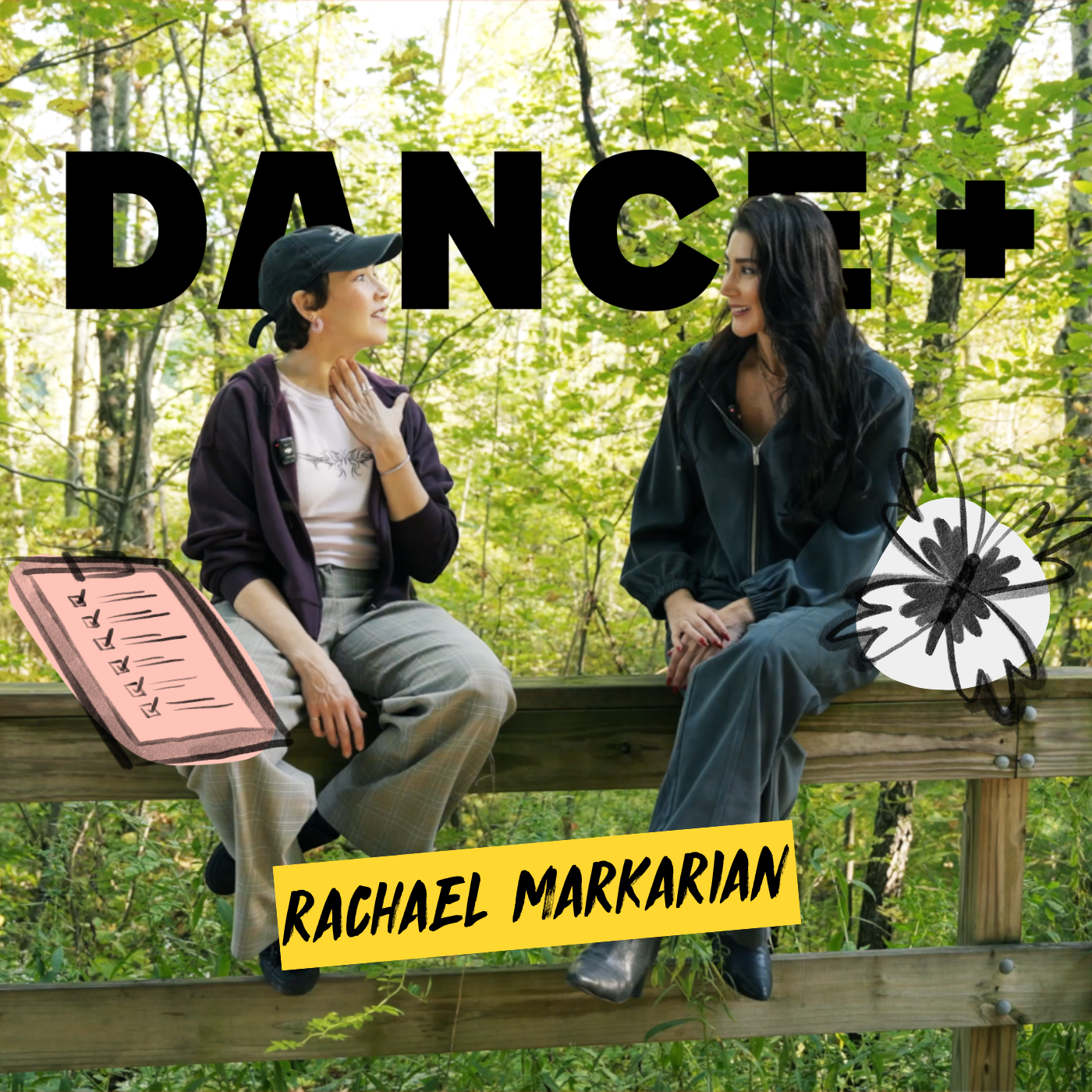
[00:00:01] Speaker A: Are we doing it? I see little red butt. I see little red light. I see little red light. I see lots of trees. We're in it. And by in it, I think you mean the wilderness.
[00:00:10] Speaker B: We are in full nature here.
[00:00:12] Speaker A: We are in elevated athleisure. Wear five minutes, post your class.
[00:00:17] Speaker B: I've been teaching, I think, six hours today.
[00:00:19] Speaker A: Oh, my God. Rachel, thank you for taking this walk.
[00:00:21] Speaker B: Oh, my gosh, I'm so happy to be here with you.
[00:00:23] Speaker A: I promise we will find a bench quickly.
[00:00:26] Speaker B: Yes.
[00:00:26] Speaker A: But I'm really excited that you are taking time to chat with me.
[00:00:29] Speaker B: Same.
[00:00:30] Speaker A: And I'm excited that we're doing it in the world because. Because it would be. Careful. There are tiny little ankle sprainers everywhere.
It would be sacrilege to not be outside right now.
[00:00:42] Speaker B: It's beautiful.
[00:00:43] Speaker A: You have been. Actually, the last time you and I crossed paths at cli, it was winter time.
[00:00:48] Speaker B: It was. And you thought it was summer, but the year has been flying.
[00:00:52] Speaker A: The year has been moving really fast. It gets really cold here, so I'm actually super enjoying, like, 69 degrees and sunny right now. It's amazing.
Okay, so you're officially a podcast guest now.
[00:01:06] Speaker B: We're officially so happy.
[00:01:08] Speaker A: We're officially doing it. You're gonna go that way. Good job.
[00:01:11] Speaker B: Thanks, sir.
[00:01:11] Speaker A: Good job. Can I get a high five?
Oh, I love it when strangers. Yes. And each other.
So tell the listener, viewer, anything you want us to know about you.
[00:01:21] Speaker B: Hello, everyone. I am Rachel Markarian. Dancer, hybrid, artist, actress, educator, choreographer, mentor.
[00:01:35] Speaker A: That man almost sprained his ankle.
He didn't, though. And that's why I'm laughing.
[00:01:40] Speaker B: Oh, my gosh.
[00:01:41] Speaker A: Okay.
[00:01:41] Speaker B: He almost went down.
[00:01:42] Speaker A: Okay.
[00:01:42] Speaker B: Should we do that again?
[00:01:44] Speaker A: I think we keep going.
[00:01:45] Speaker B: Okay.
[00:01:45] Speaker A: Yeah, he's fine.
[00:01:47] Speaker B: He's fine.
[00:01:47] Speaker A: We might zoom in. I'm sorry. We don't have permission. We're gonna keep going. Okay. Go.
[00:01:53] Speaker B: Yeah. Just artists all around. Dancer, educator, choreographer, mentor, actor.
[00:02:00] Speaker A: Yes. Yes.
[00:02:01] Speaker B: Author. We just got to add to the list. We're gonna talk about that. You have a book.
[00:02:04] Speaker A: I'm so excited to talk about it.
[00:02:05] Speaker B: I try to do everything I can creatively. Yeah.
[00:02:08] Speaker A: Gorgeous. That was tight.
[00:02:09] Speaker B: Yeah.
[00:02:09] Speaker A: I feel like you're a person. Oh, my God. Segue didn't plan that, but this is the segue. You can fit a lot into a little bit of space.
[00:02:18] Speaker B: I can.
[00:02:18] Speaker A: That was a gorgeous word economy.
Gorgeous example of word economy in your introduction.
Listener, viewer, probably knows that I'm the daughter of an airline flight attendant.
[00:02:31] Speaker B: Are you really?
[00:02:32] Speaker A: I am. My mom was a flight Attendant for United for 104 years. She would be pissed if she heard me say that. She listens to every episode. She's so mad at me. I'm sorry, Mom. Love you.
And so carry ons are the way that we fly because we fly standby.
[00:02:48] Speaker B: Yeah. Okay.
[00:02:50] Speaker A: Well, lately, everywhere I travel is on a ticket because it's for work, but we got really good at econors with the tight packing and. Rachel, you're so good at this. Tell me.
[00:03:01] Speaker B: Well, that's the reason is because, like, you have to stick with your luggage. And I'm a person that's like, if I get to the airport early and there's an earlier flight and I get on it, I'm getting on it, and
[00:03:11] Speaker A: I don't want to stop to Florence
[00:03:13] Speaker B: instead of getting on it.
[00:03:15] Speaker A: I have to be ready for those changes.
[00:03:17] Speaker B: That's right. And I just. I don't like lugging a big piece of luggage around. Yes. So I'm very strategic with what I plan.
Everybody's like, there's no way. I'm like, no, I have six pairs of shoes. I have 10 days.
[00:03:29] Speaker A: You're not a size six.
[00:03:30] Speaker B: No, look at me.
[00:03:31] Speaker A: So what. How.
[00:03:33] Speaker B: Because I.
[00:03:34] Speaker A: How do six pairs of shoes without. Without compromising the integrity of their structure?
[00:03:38] Speaker B: Okay, here's the thing. You got the sneakers. You put the heels in the sneakers, and then everything is molded in.
You said heels in the hole in the ankle of the sneaker.
[00:03:50] Speaker A: You know, the heel of the heel.
[00:03:53] Speaker B: And then you're going to get inserts
[00:03:55] Speaker A: of images of this. Would you take some photos for us?
[00:03:57] Speaker B: Yeah.
[00:03:58] Speaker A: Okay. We're going to be inserting some images of this. Okay.
[00:04:00] Speaker B: And then you lay the other things flat down. I also use packing cubes, which is essential.
[00:04:05] Speaker A: Game changers. Game changers. Zips that stuff right down.
[00:04:07] Speaker B: You zip it in. And I just plan everything, and everything is, like, very universal. So. And honestly, I don't wear half the stuff that I pack.
There's a lot that I still don't even use, but I have everything I need. And people are like, there's no way. I'm like, come watch me. And then I did a tutorial on Instagram. People are like, I literally got a photo from somebody today. She's, like, holding her carry on, and she's boarding her plane. She's like, the only reason I'm able to do this is because of your tutorial.
[00:04:32] Speaker A: It's amazing. Okay, we're gonna link to your tutorial. That's great. It is something you should pride yourself in.
[00:04:36] Speaker B: I think I do. I do.
[00:04:38] Speaker A: Also, being. How tall are you?
[00:04:40] Speaker B: Five seven and a half. Five eight. Yeah.
[00:04:42] Speaker A: So even your leggings are quite long.
[00:04:44] Speaker B: I know, I know. But you gotta roll.
[00:04:45] Speaker A: You wear a lot of leggings, though. I don't wear a whole lot of leggings.
[00:04:48] Speaker B: That's the thing, too, is, like, I.
I'm not big, baggy. I mean, I know right now, but, like, I'm really, like, fitted. Small things, especially in the summer, you can just roll everything.
But it's because I don't want to stand in line to check bags. I don't want to wait for my bag to come out. I don't want to worry about it getting lost. I got it all with me. Boom, we're out.
[00:05:08] Speaker A: Wow.
[00:05:08] Speaker B: Yeah. All right.
[00:05:09] Speaker A: Thank you for that. You're inspiring. Dude.
[00:05:11] Speaker B: I did just get the vacuum seal bags because I am going to Italy next week, and I was like, it's going to be cold, so let me see what I can fit in the vacuum seal. So I tested them out on this trip. They work. And you just have, like, this little square and you plug it in and it zaps the air and it works.
[00:05:26] Speaker A: So like a sweater or like a hoodie is, like, flattened, thin as a T shirt?
[00:05:31] Speaker B: Yes.
[00:05:31] Speaker A: And when you take it out. Here's the bigger question. Do you travel with a steamer?
Because after a vacuum seal, shit's going to be real.
[00:05:39] Speaker B: I wonder if there's a handheld.
[00:05:40] Speaker A: There is a handheld.
[00:05:42] Speaker B: Is there like a tiny.
[00:05:43] Speaker A: Yeah, yeah, yeah. I on Amazon had a pretty small one. It's kind of a clumsy size, but I bet it could fit in one of your sneakers.
[00:05:51] Speaker B: Do you know what I do travel with?
[00:05:53] Speaker A: Tell me.
[00:05:53] Speaker B: Only when I come here to cli. What is my pour over? Coffee? Yeah.
Because sometimes, depending on the room, I love a pour over. It's an important start to my day.
[00:06:05] Speaker A: High five.
Okay, I'll take it.
It's okay. He said no. I like it when they yes and. But sometimes they say no.
Okay. So glad you're here. Glad you're great at packing. Carry on. Let's have a seat and talk about the rest of it, because I have so many questions I want to ask you.
[00:06:22] Speaker B: Let's do it.
[00:06:24] Speaker A: Do you feel comfy getting up here? Is that a thing you're comfortable with?
[00:06:27] Speaker B: I feel pretty. I'm going to sit here where there's no, like, algae.
Oh, my God. One, two, three. Here we go.
[00:06:34] Speaker A: We're in it. Okay.
[00:06:36] Speaker B: Sick.
[00:06:37] Speaker A: Yes. Okay.
[00:06:38] Speaker B: I feel good now. I'm just. To you not To Canada.
[00:06:42] Speaker A: Epic. Yeah, Probably. Yeah. Okay, so now that we're settled on a wooden bench, I have been asking people this a lot lately, how they met dance. And I feel like I'm always very inspired when the story is not the same as mine, which is my mom put me in dance class when I was three. But I think that might be your
[00:07:02] Speaker B: mom, but there's a reason. Tell me, well, why did your mom.
[00:07:06] Speaker A: She put me in dance because my sister was already in it.
[00:07:08] Speaker B: She was in it. I was like, okay.
[00:07:10] Speaker A: I was like, one drop off and it is at Center Stage Dance Academy. Have fun.
[00:07:15] Speaker B: Yeah.
I started when I was three as well, but I was born with like a slight handicap, so my legs really were not even pigeon toed, but like really inverted. I wore leg braces.
Yeah. As a kid. And I was painfully shy. So my mom was like, the only way I'm gonna get her to correct her hips and get comfortable even being in front of people is to put her on stage.
Yeah. And I was bad and I hated it for years. I mean, I remember like screaming in the car, like, I'm gonna jump out of the car.
I mean, I hated going. I just did not because it was painful. It was hard for me. And, you know, I had to work extra hard because ballet has turned out. I had a hard time going parallel. It's painful. Exactly, exactly. So it's kind of like working double time to even just catch up to where people were anatomically. Exactly, exactly. And then feeling so far behind that you're like, I have to work extra hard. Yeah. But I mean, I'm so grateful for that journey because it got me to where I am today. And I think it gave me all the things that I need for this moment and for my career. But, yeah, that was how I got into it. And. And it was kind of like, you know, dance Studios were like, Mrs. Markarian, she's really sweet, but we feel like we're taking your money. Like, she's just not getting any better. And we don't want you to waste your money here and like. Yeah. And jokes on you. I know, I know. And my mom was just like, this is good for her to just be in this space. You know, I have two older brothers, they were in sports and dance was like, she was going to make it my thing.
[00:08:46] Speaker A: Yeah.
[00:08:48] Speaker B: So I struggled with it. We changed studios, finally went to a studio where the owner was like, it's rough, but I can do something with her kind of a thing. And I think when I was like 10 or 12 it finally clicked. Yeah. So it took a minute. It really took a minute for me, you know, so there's flies outside.
[00:09:04] Speaker A: Here's another overlap for us. I cried bloody murder. Going to dance.
[00:09:09] Speaker B: My.
[00:09:10] Speaker A: My nickname was I don't want to go to dance. And I said it as one sentence.
[00:09:13] Speaker B: I don't want to go to. Man.
[00:09:15] Speaker A: Apparently I had a problem with going to Dana.
[00:09:18] Speaker B: But once you were there.
[00:09:20] Speaker A: Yes. My mom apologized for me once. I'm sorry Dana is such a hard time. I'm sorry she's such a handful. She just. I promise she's a good kid, but sometimes she just like, she's just crying. And the teacher was like, what are you talking about?
[00:09:31] Speaker B: Like when you're there.
[00:09:32] Speaker A: I was fine as soon as I was in it. Which honestly for me is still kind of a problem. The getting there is half the battle.
[00:09:38] Speaker B: And then when you're done too, you're on that high of actual dopamine.
[00:09:42] Speaker A: The actual orphans. Yeah, totally. Okay. You had another. So that's a pivot at 12, going from being a person who thought that they couldn't to being a person who very clearly can.
[00:09:52] Speaker B: Yeah.
[00:09:53] Speaker A: When. When did you make the decision to do this for money? Like, there must have been a shift that was clear enough that, yeah, you had some confidence in.
[00:10:00] Speaker B: I just, there was nothing else that interested that I was interested in, you know, And I went to Performing arts high school. So the woman that owned my dance studio ran the dance department at the high school. And she was like a second mom to. From Wearing Worcester, Mass.
Yes.
And went to Performing arts high school. Trained there, did dance team.
You know, dance was life.
Yeah. And then started going to like, NYCDA and like West Coast Dance Explosion. Started to get a taste of the convention. There weren't very many conventions back then. I'm going to age myself. But like we're talking LA undergrad time ago.
[00:10:35] Speaker A: LA dance magician. There was a handful, maybe west coast nycd.
[00:10:40] Speaker B: Yes. That's. Yeah. Yeah. And I got like this, just. Joe took a liking to me and really helped me when I was a young teen. And then I went and worked the front desk at Steps on Broadway when I was 15. Yeah. I lived in a one bedroom apartment. My mom dropped me off. I lived with this woman. Her name is Carrie. She was an older dancer at my studio and she was a Rockette at the time. And she had a studio and she let me stay there and. And I lived there for like three months in the summer. Went and took, you know, the subway and the bus on my own to steps, worked at the front desk, got to train for free. And that's when I was in those studios and I was like, oh, my God, I'm taking class with Broadway stars. They're. They're taking class and then going to their Broadway shows. And that was when I was like, this is what I want to do for the rest of my life. And it was that moment. And then, you know, went to college for a couple of years and got opportunities in la. That's how I was introduced to la, was a convention that I went to when I was in college. I always wanted to go to New York and be on Broadway.
And then the convention world came into play on the west coast and I was like, oh, let me go there. Got a scholarship to edge. And then I was like, oh, west coast weather. Yeah, the whole thing. Love the people. And then I left college early and moved to LA when I was 20.
[00:11:53] Speaker A: Congratulations.
[00:11:54] Speaker B: Yeah.
[00:11:55] Speaker A: So you're a dropout.
[00:11:55] Speaker B: I am 100% proud of it.
[00:11:58] Speaker A: I am also a dropout.
[00:12:00] Speaker B: Are you? Where'd you go?
[00:12:01] Speaker A: Not of a college program. I'm a dropout of clown school.
[00:12:04] Speaker B: Oh, my God.
[00:12:05] Speaker A: I started clown school over the pandemic and never graduated.
[00:12:08] Speaker B: Did you? What is that process? How many years is it? I need to know.
[00:12:12] Speaker A: It was not even years. It was like, I think it was like a 12 week program. And it was like, go at your own pace. It was virtual at the time because everything was virtual.
[00:12:21] Speaker B: Yeah, I can't imagine a virtual.
[00:12:24] Speaker A: A virtual clown class. Yeah.
[00:12:26] Speaker B: But I'm sure you learned a lot.
[00:12:28] Speaker A: I did learn a lot. And it was really. It was really a good tool for processing at that time. The pandemic, obviously, was a lot of things for a lot of people, and I thought that clown school would really help.
[00:12:41] Speaker B: That would be it.
[00:12:42] Speaker A: That would be it. Okay, so a little bit of New York, little bit of la, which is still how it is right now. Although you live in Atlanta.
[00:12:49] Speaker B: I'm in Atlanta. I've been there for five years.
[00:12:50] Speaker A: What was the. I know you specialize in career strategizing and helping people through transitions.
What were the navigating tools that you used to decide to move, to decide to act? Like, are these things that had been part of your trajectory, were they surprises? Are you.
[00:13:09] Speaker B: Yeah, kind of. I mean, I always liked the idea of acting in theater, but dance always took the forefront. But I was in la for about 10 years and people around me were in this amazing acting class. Tina Landon, Jessica Castro, Melanie Benz, they were training with this. They were training with this one acting coach. And I was like, oh, what's going on over there?
[00:13:29] Speaker A: So I. P.S. everybody's acting teacher in LA is the best acting teacher.
[00:13:33] Speaker B: Yes.
[00:13:33] Speaker A: Everyone should know that. That it's this person. And also my.
Also your person. Every. They're all the best. We know this.
[00:13:40] Speaker B: I hope they are, because, you know, there's some train wrecks.
[00:13:42] Speaker A: There actually are some train wrecks. But I just said was a lie. But your guy was great. Yeah.
[00:13:45] Speaker B: Arthur Mendoza was his name. Actor Circle Theater. Yep. And he trained a lot of dancers and he was Stella Adler's protege. And I went and audited a class and I was like, oh, this is really cool. And I love dance still. But I found myself, like, looking at the clock during rehearsal, and I was never like that. Yeah, I could. I loved rehearsal. Like, I couldn't get enough. We'd be in there for nine hours. And I was like, we have to leave now. Like, I loved it. And as soon as that shifted, you
[00:14:12] Speaker A: had a finger on the pulse, you identified a shift. And you didn't make it mean that you are bad.
[00:14:15] Speaker B: No.
[00:14:16] Speaker A: Or that you should quit or be done, but you're like, oh, that's interesting.
[00:14:19] Speaker B: Yeah. And I was like, you know, I love my relationship with dance, and I don't if it's starting to change, I don't want to stay in it and then have a bad relationship with it.
So then it was almost like, what'd you say?
[00:14:32] Speaker A: That's important.
[00:14:32] Speaker B: Yeah. It's almost like teaching changed my relationship with dance and made me fall in love with dance in a different way.
[00:14:40] Speaker A: I buy that.
[00:14:41] Speaker B: And I started to love acting and I started to love being able to use my voice and not just my body and all of the baggage that came with that.
[00:14:49] Speaker A: Whoa. Using your voice?
[00:14:51] Speaker B: Yes.
[00:14:51] Speaker A: Yeah.
[00:14:52] Speaker B: Like, all of it in, like, the throat and the stomach and the. You know what I mean?
[00:14:57] Speaker A: Yeah.
[00:14:57] Speaker B: It's a whole other. It's a whole other thing.
[00:14:59] Speaker A: It's a whole other thing.
[00:15:00] Speaker B: All the emotions, verbally and emotionally, is so different than physical for me.
[00:15:06] Speaker A: You know, the amount of. I. Wayno over at cli, John Wayno, the voice teacher there, specifically focuses on training the voice for when you are auditioning, for when you are nervous because it will betray you. I do think as dancers, we can conceal or we can hide nervousness relatively well. But she will betray you.
[00:15:31] Speaker B: Oh, yeah.
[00:15:31] Speaker A: She will tell the world how nervous, sad, angry you are.
[00:15:34] Speaker B: Yes.
[00:15:35] Speaker A: Like, it is such a sensitive and a.
Like a tuning fork in a really big way that a small thing to begin with can really amplify and turn into something else.
[00:15:46] Speaker B: Yes.
[00:15:47] Speaker A: So in the acting class, you're learning how to use your. Your actual voice and your usual artistic voice.
[00:15:53] Speaker B: Yeah. And also just behavior and activities and how you.
You're not showing, but, like, how you're embodying your characters, just completely different, you know? And I loved it. I love the community. And then I got to that space of, like, I'm going to start saying no to dance jobs if it takes me out of class because I was so committed to the training.
[00:16:11] Speaker A: Okay.
[00:16:11] Speaker B: Yeah. So that was when it started. And then, you know, I went through ebbs and flows. I thought I was like, okay, I'm done performing. Then a tour came around. I was like, okay, maybe just one more tour.
[00:16:20] Speaker A: You know what I mean?
[00:16:21] Speaker B: It was like, let me go one more time.
[00:16:27] Speaker A: To not get to flex that muscle.
[00:16:29] Speaker B: Oh, my God. Exactly. But sometimes it's like, I had somebody say this to me once.
You know, you might be ready to let it go, but it's not ready to let go of you yet.
[00:16:39] Speaker A: Fair.
[00:16:40] Speaker B: You know, And I was like, I don't think, you know, I'm ready to say no to this just yet.
[00:16:45] Speaker A: You can act for your whole life. Ian McKellen has proved it.
[00:16:49] Speaker B: Oh, my God. I know.
[00:16:50] Speaker A: So, yes, you go on the store. Who is it for?
[00:16:52] Speaker B: This one was for Katy Perry. I had done Rihanna prior to in my 20s. Katy was in my 30s. Yes, sir.
[00:16:58] Speaker A: Epic.
[00:16:59] Speaker B: I love it. And did that for a couple years. Finished that out, Did a couple more bigger performances, super bowl stuff, award show stuff. And then I was like, okay, I think it's time to really pivot. I had a back injury, and that's when I was like, I think this is the universe telling me it's time because my body is starting to really reject. Yeah, yeah, totally, totally. I did two big jobs back to back, and it was like, you need surgery now. Yeah, okay. And then, honestly, that was like, 20, 18, 19.
I pounded the pavement. I mean, like, my transition into acting was very difficult. I mean, I really had to advocate for myself. Cold submission, like, you name it. Like, shooting my own stuff, putting my reel together. Like, just all of that coming from
[00:17:44] Speaker A: being a person who is at the top of your field and in demand in this other discipline.
[00:17:48] Speaker B: Yes.
[00:17:48] Speaker A: That must have been humbling to.
[00:17:50] Speaker B: Oh, my God. You have no idea. Yeah.
[00:17:51] Speaker A: How did you talk to yourself when you were navigating, like, feeling that much further behind than where you're used to feeling?
[00:17:58] Speaker B: Well, you know, I went into dance, like, oh, this is gonna be. I'm gonna be successful at this because I said so and because I don't know any other way. So I went into acting like that. That's pretty strong, my friend, right? It is strong, but that was, like, the absolute belief that I had in myself. Right. And I went into acting the same way, and I was clued in very quickly that it does not work like that.
So our friend Nick Drago.
[00:18:22] Speaker A: Yes.
[00:18:22] Speaker B: So I went to college with Nick. Him and I are like brothers.
[00:18:25] Speaker A: I am not shocked by this. Makes sense.
[00:18:27] Speaker B: We've known each other forever. He lived the next street over. And I said, well, if nobody's going to give me an opportunity, I'm going to create it. So I called him, I said, can I use your house for a day and film, like, four scenes in your house? I'm gonna hire my acting friends. I hired a director, a dp, some, you know, lighting guys. I wrote scripts for myself and characters that I knew I could play.
[00:18:48] Speaker A: And you acted?
[00:18:49] Speaker B: Hired my friends for a day. I did my scenes, four scenes edited together, and that was my reel.
[00:18:54] Speaker A: Amazing.
[00:18:54] Speaker B: And I shopped it around, and people thought they were from short films.
[00:18:57] Speaker A: Amazing.
[00:18:57] Speaker B: Yeah. And then I would get on the list and go and do AFI films with these amazing directors and just get footage. And I use that footage to get an agent, and those agents use that footage to get me auditions. And then we started to slowly take that footage off when I started booking. Yeah.
[00:19:11] Speaker A: Amazing.
[00:19:11] Speaker B: But it was. It was a journey.
It still is. It still is. I mean. Yeah.
[00:19:17] Speaker A: So I think actors know things that dancers don't know, and I think dancers know things that actors don't know. What have you learned on the actor side that you wish all dancers knew?
[00:19:25] Speaker B: The marketing aspect on the actor side is so important. And the positioning.
[00:19:31] Speaker A: Okay.
[00:19:32] Speaker B: For acting, it's just positioning yourself in a way that where you are and where you want the industry to see you as well, and so that they can actually see you at that level.
And that was something that I never really had to think about as a dancer. But actually, when we were coming up, too, social media was not really.
It wasn't really there. It wasn't as important. But nowadays it really is, in a way, to say you have to show people what you're capable of and what you can do.
And so I'm learning that in the. In the acting, in the acting world, for sure. And just also the consistency of it. I mean, there's been jobs, Dana, that I've booked because of auditions I did two years Prior that had nothing to do with.
[00:20:21] Speaker A: Yeah, that happens in dance way less often.
[00:20:22] Speaker B: It does.
[00:20:23] Speaker A: Cirque is good for that. Cirque will keep your table for a hundred years.
[00:20:26] Speaker B: Really?
[00:20:26] Speaker A: And call you out of the blue. Yeah, yeah. Their archive. I've seen their archives.
[00:20:32] Speaker B: Wow.
[00:20:32] Speaker A: It's a crazy, wild and amazing thing that's so cool. At their kind of mothership in Montreal. But yeah, they're good for that. But other than that. Yeah, we. We operate pretty quick turnaround and we Very rarely is somebody from two years ago still perfect.
[00:20:47] Speaker B: I mean, there's some old school. Like Tina Landon and Jason used to keep a binder like. Oh, the binder. Binder with the headshot. And they would go back like CD book. Yes. Oh, my God.
[00:20:57] Speaker A: I wonder if she still has it.
[00:20:58] Speaker B: I bet you she's.
[00:21:00] Speaker A: I'm pretty sure Tina Landon's coming to CLI for audition season, so I'm going to ask her in person.
[00:21:06] Speaker B: That's epic.
[00:21:06] Speaker A: What I'm starting to make this positioning thing mean is. Or tell me if I'm wrong. I think dancers are all too often asking the industry, please, please pick me and I'll be whatever thing you want. I'll. I'll bend and I'll change my hair and I'll break myself and I'll just like, I'll. I'll do whatever it takes to be the thing that you're looking for versus actors. Say I'm. This.
[00:21:31] Speaker B: Yeah.
[00:21:32] Speaker A: This is my position.
[00:21:33] Speaker B: Right.
[00:21:33] Speaker A: There's a certain way for the work to come.
[00:21:35] Speaker B: Is that.
[00:21:36] Speaker A: Is that crazy?
[00:21:37] Speaker B: I feel like. And this is. Listen, I'm constantly learning, but I feel like there is sort of like a wheelhouse where you live in, you know, and there's. I get the same types of women that I'm auditioning for.
[00:21:49] Speaker A: Definitely quit.
[00:21:49] Speaker B: Oh, my God. Tons of professionals. Tons of high society women. Lawyers, school doctors.
Yeah. Yes. But also like, you know, very wealthy and rich women and everything. And I'm always like, I want to play the stripped down blue collared worker. And they're like, Rachel, we don't really like. You don't really give that vibe. I'm like, but I can, you know, but here's the thing.
[00:22:09] Speaker A: Give me a chance.
[00:22:10] Speaker B: Here's the thing, everyone. You know, I got. I got a whole new thing of headshots. And even like my headshots with my reps, it was like, who are the actors that I look up to? Who are the women that I see myself playing?
[00:22:22] Speaker A: Like Julia Robbins as Erin Brockovich. You would.
[00:22:25] Speaker B: Oh, my gosh. Yeah, I love. She's incredible at that. I see those clips come up on Instagram and I'm like, she's so laser sharp. Yeah, I know.
[00:22:34] Speaker A: Yo, you just can't deny someone who's good at what they do.
[00:22:37] Speaker B: She's amazing.
[00:22:38] Speaker A: My favorite thing to see it.
[00:22:39] Speaker B: That role is incredible. She's amazing in that.
[00:22:41] Speaker A: Would you say that you are as comfortable acting as you are dancing?
[00:22:46] Speaker B: Oh, no. I mean, dance just feels so second nature.
[00:22:50] Speaker A: It's your native art language.
[00:22:51] Speaker B: But I light up with acting. I love it so much. And when I can just be free and, you know, do those out of the box roles and take big swings. That's what I'm learning too, in auditions is not trying to, like, do the right thing. Yeah. Not trying to be what they want. I don't know what they want. I'm just gonna show them what I can bring to that. And if it's right on that day, that's amazing. And if it's not, it's okay too, you know? Yeah.
[00:23:14] Speaker A: What's the. What's the playvir role you played?
[00:23:16] Speaker B: The playbird.
[00:23:18] Speaker A: What is the favorite role you have played?
[00:23:20] Speaker B: Oh, my gosh.
You know, there was a film I did.
It was a Dennis Quaid movie, mgm, Amazon. And I got to play this. She was like a blues jazz singer. This is very fun. This is an interesting booking story. Uh huh.
[00:23:37] Speaker A: Tell me, how'd it happen?
[00:23:38] Speaker B: So I auditioned for this part and I was put on a veil, and I was on a veil for weeks. And then I'm like, I think I'm gonna get this. But I don't know, it's been so long. And sometimes films take a while, you know what I mean? TV's a little faster.
And then I checked in with my agents and they're like, I'm sorry it went to somebody else. I was like, okay, that's a bummer. But, you know, we'll get the next one. That's always like, we'll get the next one. But two days before the shoot. The shoot, my agent calls. He goes, are you still as they want you to come in? I don't know if there was a mix up with the person that they had first chosen or whatever. So I said, oh my God, it's amazing. Great.
Yeah. And they're like, by the way, can you learn these two songs? She's also a jazzy blues singer. I said.
[00:24:21] Speaker A: He said, let me. Let me find a cliff that I can.
[00:24:24] Speaker B: No, but Dana.
Yes.
[00:24:27] Speaker A: Of the ditch that my bones are resting in and all. Yes. Yes, I can.
[00:24:31] Speaker B: The answer is yes, but the answer is always yes.
[00:24:34] Speaker A: I will have to resurrect myself.
[00:24:37] Speaker B: I'm like, well, send me the song. Are you.
[00:24:39] Speaker A: We talked about this. No, I'm not.
[00:24:42] Speaker B: I'm not fully singing, but I needed to know the lyrics of these two songs. Songs that are originals and the scene work.
[00:24:48] Speaker A: Oh, that's hard.
[00:24:49] Speaker B: Yes.
[00:24:50] Speaker A: Oh, that's hard. You guys. I struggle knowing the lyrics to, like, chart topping.
[00:24:56] Speaker B: I know. Songs I know.
[00:24:57] Speaker A: Yeah. Let alone something that 48 hour turnaround.
[00:25:01] Speaker B: Yeah. Two songs.
[00:25:02] Speaker A: How do you memorize scenes? What's your technique? Oh, hey, guy.
[00:25:05] Speaker B: Oh, yeah. I mean with scene, with sides and scenes. I read it a ton. I read it a ton. Then I voice record it. I listen to it on a walk. I listen to it while I'm doing something else in the house so I can hear. Hear story more.
And. And then I. I just rehearse it quite a bit.
[00:25:21] Speaker A: Cool.
[00:25:21] Speaker B: But, yeah, but with this, with the two songs, I, you know, I got the music, I got the lyrics and everything, and I'm. I'm learning and learning, and I thought to myself, I was like, if you. I know how to do this, you
[00:25:34] Speaker A: can remember what the lyrics are.
[00:25:35] Speaker B: Well, I'm like, I've. I've. I've spent 10 years touring with artists. I got this.
Yes. So I tapped into, like, the artist, you know, and I get on set and the director's like, we know this is very last minute. We'll shoot you from behind wide. We just need a little. I said, sir, you don't know who you hired.
[00:25:53] Speaker A: I'm ready for that close up. Bring it in.
[00:25:56] Speaker B: Yes. I was like, I got this. Don't worry. And he, he was like, okay, the camera guy is out. And then when I started to hit, like, word for word, I'm on the microphone and I'm like, going with the guitar. There was a whole band and I was just dancing around everything. He was like, where did you do this? I was like, well, fun fact about me. Fun fact.
I am a pop star slash in
[00:26:16] Speaker A: my dream for many, many years.
So you understood how to tap into that.
[00:26:22] Speaker B: I was like, oh, I. I've been doing. I've been watching these people do this for years. I can do this, you know.
[00:26:26] Speaker A: So I went in for you.
[00:26:30] Speaker B: That was a lot of fun. It was super freeing. Worked with some great people on that. And it was a. It was fast. Like, it was one of those directors that came in a couple of takes and you're moving on. So there was no, like, you know? Yeah.
[00:26:41] Speaker A: I also. I love acting. I love actors.
[00:26:43] Speaker B: I love working with them.
[00:26:45] Speaker A: We just did it in my class here at cli, an exercise that I had never done before.
Really simple combo, like the feet almost don't move at all. It's very gestural.
And then we play emotion roulette. I have a list of feelings that is three doc in 12 point font, three pages long.
And so while group one is dancing group two, or, sorry, group two selects out of this giant list the emotional state that group one will portray. And then we flip flop and group one chooses a feeling for group two.
We. It is so much fun. First of all, just an exercise in vocabulary and the difference between enraged and mad or ticked off or the nuance of that, or flirty or in love or desperate and needy. And we really were playing with some pretty advanced levels, toggling up and down of like, raising the stakes and playing the extreme choice or playing a more subtle thing. It was an acting.
[00:27:46] Speaker B: I want to take that class. It was really fun because those subtle differences can change an entire scene, can change anything.
[00:27:53] Speaker A: It is the difference between a dancer and an actor.
[00:27:56] Speaker B: Yes. Yes. I think what a great exercise to be.
[00:27:59] Speaker A: Oh, so much fun. Can we. Gentle segue. Talk about your book really fast?
[00:28:02] Speaker B: Yeah. Love it. I mean, it started as like a little baby, like kind of little baby workbook that I was for students. For students.
Yeah. I love teaching. I was teaching on convention, and I was like, God, there's so much that I want these young people to know that I feel like is missing in the classroom, just even as they're training, but also as they're transitioning.
[00:28:23] Speaker A: Yes.
[00:28:23] Speaker B: And so it was like this little workbook, and I would just get into my computer when I had a thought and start typing and writing and writing. And then it turned into like 10 pages and 20 pages and 30 pages. And then I. I had that made. And I had a little binder I had that made, and I would give that to the dancers that I was mentoring. Right. And then I was like, I think I need to go deeper on this. And I was talking about it.
[00:28:44] Speaker A: One of those pages.
[00:28:45] Speaker B: Yes.
[00:28:45] Speaker A: And give the story and give the hundred percent real live application of the thing. Yeah, yeah.
[00:28:51] Speaker B: Yep. I was talking to Liana about it, and I was just like. I mean, for years I was like, this has been on my heart. It's something I think I want to do. It was sort of like the time of year where things sort of slowed down teaching wise. I was like, if there's ever A time to do it. Now is the time.
So as I started writing, I was like, I want it to be interactive. I want people to be able to write down in it and not just be something that they're reading, but like, how can they apply it now? Here's writing prompts and checklists and all these things. And then I was like, well, the industry is changing so much AI the business, all these things. What I write about now could be obsolete.
So what are the things that I've.
[00:29:30] Speaker A: That are really true?
[00:29:32] Speaker B: Yes. That helped me as a young dancer and that I'm still refining as a working professional that I still need to. That I'm, you know.
So it, it became this book that I divided into four acts and it's mindset, auditioning, identifying your star power and your star qualities, and networking. And so I made. So I wrote that. It's called the Dancer's Edge. I had that.
I got like this beautiful template. I hired somebody, I wrote the whole manuscript, I gave it to them and we designed it together.
[00:30:05] Speaker A: Nice.
[00:30:06] Speaker B: And then I self published it. We got it on Amazon and other platforms and everything made digital copies that are interactive. And then as I started mentoring more and more, I was like, oh, we need something that helps them through the transition too. So then last year I added a bunch of chapters to the book. So now there's like a second edition.
[00:30:24] Speaker A: Nice.
[00:30:25] Speaker B: Yeah. So it's.
I know, I know. I was like, oh, what about like agencies and photo shoots and branding and, you know, so it's a, it's very like, it's a way for dancers to get closer to themselves.
Because we can be in the classroom and teach step after step after step, but if you don't know who you are, if you don't know how to use your relationships, if you don't know how to build your resilience and work through, you know, so it's a lot of that. It's, it's what I wish. Dancers new. Yeah, It's a book I wish I had when I was younger. But I also learned in writing it and I have access to a lot of dancers. I was like, the, the mentality of like, if you build it, they will come.
[00:31:06] Speaker A: Totally.
[00:31:06] Speaker B: No, I mean, not my experience.
You know what I mean? Yeah. And it wasn't until like, people started to look at it and be like, oh my God, this is so dense. Like, and I'm like, yes, it's deep work. Yes, it's deep work. And so where I'm finding that it's really helping is A lot of studio owners and a lot of directors are like, I'm gonna use this as part of the curriculum for the studio. Or a lot of dancers that are transitioning or younger students who's. Who are very hands on. But for me, I struggle with the promotion aspect of it. It's just very hard for me to, I mean, being fully transparent, it's hard for me to get on my Instagram and talk about.
[00:31:42] Speaker A: It's hard for you to take your own advice.
[00:31:44] Speaker B: Yes. It's hard for. It's hard for me to tell you why it would be so helpful. I just want you to say, hey, this is great. You should get it, you know, but that it takes more than that. And for me, it's been hard to do that.
[00:31:57] Speaker A: Understood. Yes.
[00:31:58] Speaker B: Yeah.
[00:31:59] Speaker A: Same. I think I go through ebbs and flows of feeling, oh my God, you have to care about this thing.
[00:32:06] Speaker B: Yes, yes.
[00:32:07] Speaker A: And also like, yo, take it or leave it.
And both feel true to me and I ebb and flow. And I think that is totally very. Okay.
[00:32:15] Speaker B: Yes.
Like the right people will find it. Yeah, yeah. And if I did a bigger push and when I do bigger pushes on it, I see, I see it in the sales, but a part of me is like, whoever's supposed to find it will find it. You know, it's available there and you know, guess what?
[00:32:31] Speaker A: Listener, viewer, it's in the show. Notes to this episode. That's for damn sure.
That sounds. I love a workbook. Yeah. Listen, were you a Julia Cameron artist way person?
[00:32:42] Speaker B: No. I have so many friends that loved it.
[00:32:44] Speaker A: Dropped out of the artist way. I'm a big old dropout.
[00:32:47] Speaker B: Oh my God.
[00:32:48] Speaker A: All I ever do is start things and drop out. I'm kidding. Says the woman with 280 podcasts.
[00:32:52] Speaker B: Oh my God.
[00:32:53] Speaker A: Yeah.
[00:32:53] Speaker B: You're killing me.
[00:32:54] Speaker A: I. I quit the artist's way. It did not resonate with me, but I know that there's a huge following. If you are wondering like who your people are, anybody who's artist weighed should pick this up and see if there's anything in there that is useful for them. That's awesome.
[00:33:07] Speaker B: Yeah, I. I mean I, I love it. I'm proud of it. I loved writing it. And my brother is a film and TV writer and I would, I would text him. I'm like, this is so fulfilling. He's like, isn't it the best thing ever? I'm like, yes. And I've written scripts before, but I'm like, I want to. Like when I have a break in my schedule, I Want to get back to writing because it is so fun. It's so. I found so much fulfillment with it.
[00:33:26] Speaker A: Nice.
[00:33:27] Speaker B: Yeah.
[00:33:27] Speaker A: I just have one more question, and I'm thinking specifically of. I have a community of people that I coach, and just the other night I was coaching on the subject of.
One of my coaching clients has a Pilates degree and they're creating their own Pilates program. They are afraid, although right now it is helping them pay for their dance, but they are afraid that it will become all or nothing. Because you're a person who seems very capable and able and good at balancing having two professional modes, or more like being a mentor, being an author, being all the things.
How do you negotiate time and effort spent between these worlds? How. What would you say to somebody who's worried about going all in on this will burn me out for the moment when I need to be here?
[00:34:18] Speaker B: What would you say? I mean, I think everybody's different too, because I can multitask, but some people are better with just being laser focused on that one thing. So I think knowing how you get things done best is the direction you should go in. I have learned that I can multitask and put myself on a schedule. And I will be on a schedule because it's like, I wake up, I have to work out, then I have two hours to study, then I have one hour to make up this combo, then I have two hours to tape, then I gotta edit. Yes. I mean, that's how I have to do that.
[00:34:49] Speaker A: There's another overlap.
[00:34:50] Speaker B: Rachel.
[00:34:51] Speaker A: I love my Google calendar so much.
[00:34:54] Speaker B: I mean, I don't. I'm just, like, in my. It's in my brain.
[00:34:57] Speaker A: Oh, it's an internal stuff.
[00:34:58] Speaker B: Yes.
[00:34:58] Speaker A: Sorry.
[00:34:59] Speaker B: Yeah, it's in my brain. But yeah. I mean, you want to write it down.
[00:35:01] Speaker A: Yeah.
I also, I like seeing that I'm having a balanced meal. Like, if, if in a day I can coach, teach, and train and perform.
[00:35:12] Speaker B: Yeah, you're hitting all the things.
[00:35:15] Speaker A: I'm immortal. I am a superhero. Get out of my way. I cannot be touched. I love days like that.
[00:35:21] Speaker B: I do, too. It can be a lot, though.
[00:35:24] Speaker A: Yeah. Mentally, I just, I, I, I, I think that if there is a will, there is a way.
[00:35:30] Speaker B: Yeah.
[00:35:31] Speaker A: If you are doing one thing solely in order to do the other, that's a different story. But if you genuinely have juice for both.
[00:35:41] Speaker B: Oh, yeah.
[00:35:42] Speaker A: I think it's the same. I think you find balance the same in business as you do in dance, which is to say, try anything. Right. You think that a forte works like this. Good. Try it. You're gonna fall out to your right. You're gonna see that on your hand. No, on your video. You're gonna film it, obviously, because that is how we learn these days. And then you're gonna correct, and you're probably gonna overcorrect. You're gonna fall out to the next.
And gradually, by making these micro adjustments, you find balance in life the same way that you do in dance.
Try. Take a look at what worked and what didn't adjust. Try again.
[00:36:15] Speaker B: Yeah. And that's it. And just keeping the sanity, because I do. I mean, do that. That is because, like, I am doing multiple. I am choreographing, coaching, auditioning, and rehearsing and studying every single day. I'm doing all things the majority of the time, truly. And like, this. This job that I just booked, I was. It's funny, because I was in Texas teaching. I had four classes that day. I taught two classes, ran to a TJ Maxx, got my wardrobe, went back to my hotel, taped my audition, went back to the studio and taught my two classes.
But that is just the. That is like, I never.
Yeah, it's. It's wild, Dana. It's crazy, but, like, years ago, I wouldn't have been able to love.
[00:36:59] Speaker A: The most about that story is the TJ Maxx of it all.
[00:37:02] Speaker B: Honey, I needed a business.
[00:37:04] Speaker A: Where am I gonna go?
[00:37:05] Speaker B: That's what I'm saying.
[00:37:07] Speaker A: And they had it.
[00:37:09] Speaker B: I was like, I'm going to the TJ. Where's the TJ Maxx?
[00:37:11] Speaker A: And it was 23.99. And it was birthday.
[00:37:15] Speaker B: The top was 16.99, and the bottom, I believe, was 12.99. And I looked exactly how I needed
[00:37:21] Speaker A: to look, exactly how you.
[00:37:22] Speaker B: Oh, my God. We are. We are balancing all the things, all
[00:37:25] Speaker A: the things all the time. And we're perfectly made for.
[00:37:27] Speaker B: Oh, my God. And here's the thing. I love teaching. And the people that I work with are so supportive of my acting career and my team that reps me, my agents, they're. They're very supportive, and they know that I'm acting. So it's like having the communication of.
[00:37:41] Speaker A: Oh, that's critical.
[00:37:42] Speaker B: Hey, guys, I'm also teaching. If I'm up for a job, I have a teaching job. Can we find out what's going on there? Can we be in communication? Hey, teaching company. I might not be able to make it. We might not need to reschedule. So there's a lot of, like, Tetris.
[00:37:53] Speaker A: Thank you for saying. But it's not all your will.
[00:37:56] Speaker B: No.
[00:37:56] Speaker A: To make that happen. It's also the will of your team and being a good communicator and making that happen.
[00:38:01] Speaker B: Yeah. And they will make it happen. This is. Yeah.
[00:38:04] Speaker A: You are an untapped although tapped well of resources.
[00:38:08] Speaker B: Oh my God. Thank you.
[00:38:09] Speaker A: Thank you for chatting with me. My butt is falling asleep on this.
What is this called?
What is railing, partition?
[00:38:17] Speaker B: Fence.
[00:38:17] Speaker A: Fence.
[00:38:18] Speaker B: The fence.
[00:38:19] Speaker A: Bridge. It's a bridge over there. It's not a bridge over here.
[00:38:21] Speaker B: It's beautiful here.
[00:38:22] Speaker A: Just ravine. You guys, fun fact. Riz is here with me at cli and we've been doing a little bit of off leash time every now and.
[00:38:29] Speaker B: Oh, really? He doesn't run.
[00:38:30] Speaker A: She does run.
[00:38:31] Speaker B: Oh, she doesn't run.
[00:38:32] Speaker A: But she will come back.
She got a thorn in her face, in her eyebrow that I had to get out with little tweezers.
[00:38:40] Speaker B: And I just felt like such a good mom.
[00:38:41] Speaker A: Cause I was like, come here, baby. And then I watched the. Zach, leave it.
[00:38:44] Speaker B: Oh, poor thing.
Was she like, what is this?
[00:38:47] Speaker A: She was like, what is this? We don't have thorns in the valley where I'm from.
[00:38:51] Speaker B: She's not in the wilderness here.
[00:38:53] Speaker A: And I think she learned she will be doing less.
[00:38:55] Speaker B: Oh my gosh.
[00:38:56] Speaker A: In the trenches, running.
[00:38:58] Speaker B: She's so cute. I saw that she was with you. I was like, I need a little snuggle. Snuggle.
[00:39:01] Speaker A: You can come by anytime.
[00:39:02] Speaker B: Yes, thank you for checking. Oh my gosh, thank you. You're amazing.
[00:39:05] Speaker A: Thank you, listener, viewer. Thank you, Johnny. Thank you, Bojan for manning the rigs while we have this gorgeous nature chat. That was really exactly where we should have had that conversation.
Thank you so much. Thank you all so much. Be sure to like, Review.
Subscribe. Leave a notification.
Leave a Leave a review.
Leave a click the. You know, it has been a long day, hasn't it? Good. Thanks for watching get out in the World. Keep it very funky. Bye.
Dance plus is produced by me with the help of many big, big, big, big. Love to our executive assistant and editor, Riley Higgins. Music is by Max Winnie. Logo and brand design by Bri Reitz. Our team consists of Ori Vajadares and Sydney Richardson. And we've got extra help from LMU intern Carly Clayton. If you're digging the podcast, please leave a review or rating. Also, if you want to connect with me and the many marvelous members of the Words that Move me community, visit danceplus podcast.com if you're curious to know more about me and all the stuff I do outside of the podcast, visit the danawilson.com.