Episode Transcript
[00:00:00] Speaker A: Hey, Theresa, what you doing? She's like, oh, I'm about to go to a battle. It starts at, like, 6, and it's 3.
[00:00:06] Speaker B: Oh.
[00:00:06] Speaker A: I'm like, hey, I want to come. She's like, do you want to enter? I'm like, yes, of course. But what does she mean by entering? I didn't ask.
[00:00:13] Speaker B: You don't know? Oh, my God. Amazing. Amazing.
[00:00:17] Speaker A: She's like, what's that?
[00:00:18] Speaker B: Ignorance is bliss.
Shut.
Shut up. Shut up right now. Welcome to the podcast.
Maybe.
Maybe.
Guys, this might be my favorite conversation that I've ever had in my life.
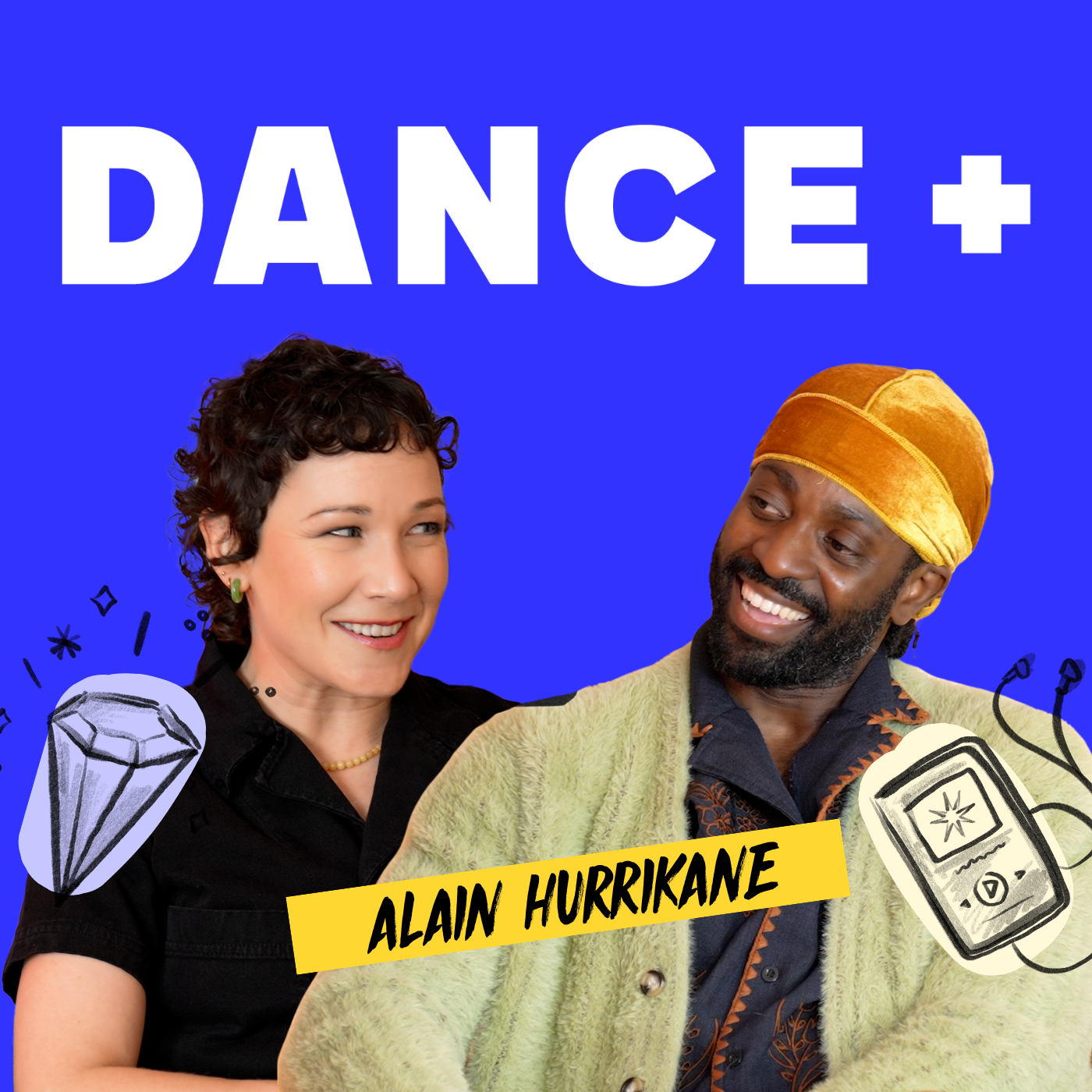
The joy, the learning, the story that you are about to receive from one of my dance heroes. Like, top. Top dance heroes. My guest today is Hurricane, and y' all are not ready for his story. I.
This episode, more than any other, is a story. It's not an interview. You just get the full. You just get the whole Hurricane story. And I'm so jealous of you. I'm so excited for you and what you're about to receive.
So let's just do that then. Okay. On the podcast, we do wins still, even though we have rebranded. Did you notice the rebrand.
Looks around the room?
The exact same room. It's the exact same podcast with a different title. The podcast is now called Dance plus Words that Move Me. We're keeping, obviously, the legacy title Words that Move Me, which is a mouthful. And let's be honest, I've got a separate podcast about the rebrand and my decision to pivot. That is not what we are talking about today, but welcome to Dance Plus. This is the best conversation I've ever had with a person.
I have a lot of great conversations with Riz, but when it comes to people, this is tops. Before we get into the conversation, wins, Today, I am celebrating the end of a mystery.
I applied for a new passport very recently. Then I got a mysterious email that was like, we don't have everything we need from you, so your. Your status is no longer pending. It's paused until we get what we need for you from you. You're getting something in a mail that will tell you more. And I'm like, that is so fishy. And then for, like, seven whole days, I got nothing in the mail until today.
On the other side of that wall there is the letter that will tell me what I need to give the passport office in order to get my new passport. Yes.
That's my wins for today. How about you? What's going well in your world? Did you get any mail? Tell me your win out Loud. That part is important.
Do.
[00:02:48] Speaker A: Yay.
[00:02:51] Speaker B: I'm not gonna clap, but I am cheering you on. Congratulations. So glad you're winning. Now let's get to the main event.
I almost had a spit take during this interview. I laughed so hard I almost spit all over my guest and the floor. And Riz.
Fucking buckle up, friends. This is a good one. Enjoy the one and only Hurricane.
This is a given. Easy one. Welcome to the podcast. Hi, I'm geeking out. I'm geeking out over here because I'm a really big fan of yours. And also partially because usually the guests that I have on the podcast are. Are friends of mine and people that I already know. But this is kind of our get to know you. This is our talk shop. This is our first time, like, one on one talking in front of Riley, who also.
And Riz, who will make herself known when she feels appropriate.
Okay. But thank you for being on the podcast. I know you're only in LA for a short time, so I feel very lucky.
Okay, first item of business. You have to introduce yourself.
I'm so curious to hear how this goes.
[00:04:05] Speaker A: Introducing myself.
Okay. My name is Hurricane.
I am a person that is amazingly in love with dance.
And the love simply grow and expands at all times.
And because of that love, I not. Somehow I ended up having an amazing journey. Since I fell in love with dance.
[00:04:34] Speaker B: Yeah.
[00:04:35] Speaker A: Since I physically fell in love with dance. Was 2008. Because before that I was just too shy to dance.
[00:04:41] Speaker B: Oh.
[00:04:41] Speaker A: And then 2008 came. I was like, oh, I can do this.
That's it.
[00:04:46] Speaker B: What? What changed?
[00:04:48] Speaker A: I made it to house dance conference and I saw dance.
[00:04:58] Speaker B: Okay. So seeing dance and probably being in dance, it wasn't just seeing dance, like on a TV or on a screen or outside of yourself, but you were inside of it and it was around you.
And you engaged.
[00:05:12] Speaker A: I engaged.
[00:05:14] Speaker B: You engaged.
[00:05:15] Speaker A: You did engaged.
[00:05:17] Speaker B: Okay. And then in the engagement, you found like, oh, I can do this, and I'm kind of good at it.
[00:05:21] Speaker A: I said, I can do this.
That's what I'm doing.
[00:05:25] Speaker B: Nice. And then full speed ahead, it was dance gone. Amazing.
We have different origin stories.
Very shocked to hear that.
But. But I do. I do think, like, I do think you posted something recently that had me feeling very engaged about Andre 3000 flute album. Yes. And you were like, I get it. I get it now because you've. Okay, so actually, sorry, let me just. Wow. Emergency break.
You talked about how you met dance. So that's how it started. How is it going now?
[00:05:58] Speaker A: Where.
[00:05:59] Speaker B: Where are you at in your dance relationship today?
[00:06:01] Speaker A: My dance relationship today I am deeply deeper in love.
[00:06:08] Speaker B: And
[00:06:11] Speaker A: the thing I wrote, I think it's. It was there since the start, the love for dance. Yeah. Because I was just watching it, and I'm amazed by it. I've been watching dance since a toddler. Yeah. Since I could. Since I was. Since I became aware.
[00:06:28] Speaker B: What do you remember watching the most?
[00:06:29] Speaker A: I lived in Haiti, and whenever I had a chance to be in front of a tv, we didn't. I don't know if we had specific channels. I was very, very young. I came here when I was eight.
[00:06:38] Speaker B: Okay.
[00:06:39] Speaker A: But I remember a lot. And there would always be operas and ballets and music videos, Haitian rap music videos. Dance, I know is compa. That's Hades dance, Compa, Zuk, and other traditional dances I saw all the time. I loved. I always want to. When the. When the adults take you and make you dance, I would freeze.
[00:07:04] Speaker B: Interesting.
[00:07:05] Speaker A: Yeah.
[00:07:05] Speaker B: I was socially scared or scared of the physical or the emotional.
[00:07:13] Speaker A: I just didn't know.
[00:07:14] Speaker B: Okay.
[00:07:15] Speaker A: And the thing that I felt, I didn't know, so I froze because I just don't know.
[00:07:23] Speaker B: Well, dang. If it's true that you live your life in balance, then all that freezing is paying off now because I don't see anything when I watch you dance. I do think you use stillness very well.
And I think, for me, anyways, when I freestyle, it's the urge to, like, spit moves out. Go, go, go, go. Is, like, so loud that to really honor stillness is still actively a challenge for me. It's something I have to think about doing. But I love the way you use stillness in your dancing. So it's very interesting that freeze was what happened first, and now you've thawed.
[00:07:58] Speaker A: You know what? The frizzness, the. The.
[00:08:00] Speaker B: The freezing.
I think you should commit to it, actually.
[00:08:05] Speaker A: No, the stillness.
The stillness is literally me battling all the insecurities in real time.
[00:08:14] Speaker B: There's a dialogue.
[00:08:15] Speaker A: There's a dialogue happening.
Why do you want to impress someone? Why do you want to. Why do you want to look good? Why do you want to be good? Why do you want to, like, you love dance, so just dance.
[00:08:26] Speaker B: And so you're answering those questions or you're having that negotiation. Riz.
Yikes.
This is important.
[00:08:35] Speaker A: Yes.
[00:08:36] Speaker B: We're trying to talk about his discussions without you making yourself the third wheel in the conversation.
So when you're freezing, when you're dancing now, or when you're using stillness, I should say it's because there's dialogue happening.
[00:08:51] Speaker A: There's dialogue happening.
[00:08:52] Speaker B: Okay, cool. Could you. Could you share. Okay, you shared a couple sentences.
Do you answer those questions first in your mind and then dance, or do you answer them with dance?
[00:09:03] Speaker A: They're being answered with dance sick. Yeah. Because the more I release them is the more I'm getting more relaxed. It's. The more things are just coming out. It's the more I'm remembering that I love dance. It's. The more I'm remembering that I. I just trust my movements and. And I just trust the music.
[00:09:21] Speaker B: I think the trust part is crucial and maybe has some overlap to the Andre 3000.
There is a trust and a freedom in releasing what people will think of you, in releasing the idea of being perfect.
And for me, especially, like, I've. I have never battled. This is. I've said it before on the podcast. This is not news to anybody who's a fan fan. But people listening to me for the first time with you are probably gonna look down their nose at me.
I have never battled, and there are several reasons for that. Namely, I'm terrified of the thought of being surrounded by eyeballs.
I perform mostly on stages and on camera, and one direction worth of eyeballs is enough pressure for me. The thought of 360 degrees of that is, dare I say it, paralyzing to me. And, um, I have a. I have a strong mind. I know how to talk to myself and I know how to negotiate in a similar way that you do, but I haven't practiced it in that way in that space. So I'm. I have a lot of questions about battle mentality, especially in what is probably my favorite style of dance. Campbell Locking, AKA Locking.
Because I think that dance.
I haven't met a dance more joyful. And it's funny you mentioned zouk, which I also admire so much. I love a lot of D also, I think similarly, I've not met a style of dance that I don't like.
There are dances that feel more native to me, and I think one of my primary outputs is joy.
And so I rest very well with the Campbellock. And I love it. Was one of the first street styles that I learned when I moved to LA. Left my dance studio when I was 18, came to LA and was aware of all of the things I did not know.
Got very lucky in my timing and placement.
Met Tony Basil when I was, like, probably 19 or 20 and started jamming with her, training with her, doing little trade swaps with her. She introduced me to Sugar Pop, who was Teaching a lot at the time.
And Lockadelic, who taught a weekly slot at Millennium that was an hour and 15 minutes long, I think. And she didn't speak like we were Dan. Like we were. We stop and go. We did not stop. We just goed.
[00:11:57] Speaker A: We just go.
[00:11:58] Speaker B: We just go. We stop and goed for probably 15 minutes straight.
And I. That's what kind of was required to get comfortable with this as a. As a vocabulary. But I really do love this dance so much.
Curious to hear about how you fell in love or when you found. How did you find the Campbell lock?
AKA locking.
[00:12:18] Speaker A: AKA locking. Wow.
[00:12:21] Speaker B: So.
Or was it at the. Or was it at the house?
[00:12:27] Speaker A: No, before that. So I. I dance alone.
Oh, I dance alone. I don't dance in front of people. My gosh. No. Absolutely not. So when I'm younger, I dance alone.
[00:12:40] Speaker B: Okay.
[00:12:41] Speaker A: And since I'm young, I love physical activities.
Play football, AKA Soccer. Soccer.
Not until I moved to America. That's when I played football. American football.
[00:12:51] Speaker B: Okay.
[00:12:52] Speaker A: But in. In Haiti, I played basketball. Soccer. Yeah, that was about it. Okay. And tag and all the things. Racing friends.
[00:13:00] Speaker B: Yeah.
[00:13:01] Speaker A: And the first time I saw someone flip, okay. My eyes was just locked.
And that's when I figure out actually have a very special eyes that when I see something, you can learn it. I. I see it, and I can do it.
And the first time I saw someone do a backflip, I was like, how does that work?
[00:13:22] Speaker B: Do that one more time.
[00:13:23] Speaker A: And the more they did it, the more I get it. And I just did it.
And then the. The person did a backflip off the wall, and I was like, whoa, I have to do that. I have to do that.
There was some tires.
And the gallery, huh?
[00:13:42] Speaker B: Yeah.
[00:13:43] Speaker A: So in Haiti, the house always have, like a.
A front porch.
It's like. We call it the gallery. Okay. It's like a Porsche, but not a porch because it's. It's a room.
[00:13:54] Speaker B: Ah.
[00:13:55] Speaker A: It's like there's a porch and then there's a room, and then there's the house. The entrance to the house. Yes. So it's like so many layers to get in the house.
[00:14:03] Speaker B: Buffers. Just.
[00:14:04] Speaker A: Just preparing you to be inside.
So there's some tires. And I just got on it, and I said, I. I know how to do this. And I. Boom. And then, my God, I was so excited. I call. Oh. I called my brothers and my friend. I said, look at what I can do. I can do what he just did. Let me show you. I did it. And bam. I fell Right on my back. And I said, well, I'm never gonna do that again. I'm gonna keep things to myself.
Oh.
[00:14:28] Speaker B: So there was an incident that was usually humiliating the people that you love and trust. And you were so excited.
[00:14:34] Speaker A: They were laughing, baby.
[00:14:38] Speaker B: Oh, that kills me. Okay, done. I get it.
[00:14:41] Speaker A: So alone, alone. Everything alone.
And I just enjoy music. My God. In Haiti, I didn't. I have to always remember that I came here when I was 8 years old, so the awareness I had. I remember everything. It's just. I didn't know. I was so young.
And.
And Haiti, we list, like, I didn't know about radio channels. I didn't know what channel. I'm realizing the things that I didn't know. So I just heard the radio, right? And they played everything, like, everything.
Classical, hip hop, jazz, compa Zouk, like, everything.
Enya. Josh Groban.
[00:15:22] Speaker B: Yes. Josh Groban.
[00:15:24] Speaker A: Haiti we love.
[00:15:25] Speaker B: I was Josh Groban One year for Halloween.
[00:15:27] Speaker A: You was Josh Groban.
We lost on Josh Groban.
[00:15:34] Speaker B: I was sexy Josh Groban for hours.
[00:15:38] Speaker A: You making my laugh. Come out.
[00:15:41] Speaker B: I will share with you photos privately.
[00:15:44] Speaker A: Yes, please. Privately.
I'm dead.
[00:15:48] Speaker B: I'm sorry. I'm so hot now. Okay, keep going. Josh Groban.
[00:15:51] Speaker A: Yeah, we here.
[00:15:56] Speaker B: I almost did a spit take just now. Oh, my God.
[00:15:59] Speaker A: We here.
[00:16:00] Speaker B: You were here.
[00:16:00] Speaker A: Okay, we're here.
[00:16:01] Speaker B: So they're playing everything, and your ears are like. And your mind is like.
[00:16:04] Speaker A: We love. We love Celine John and Haiti. My gosh. Everybody loves Celine John and she's the best. She's the best.
[00:16:10] Speaker B: Who doesn't?
[00:16:11] Speaker A: Oh, my God. Luther Vandross.
[00:16:13] Speaker B: Okay.
[00:16:13] Speaker A: And so I. I listen to everything, so I. I just enjoy great music. Got it. I didn't know about genres, right? I didn't know about genres, everything, right,
[00:16:23] Speaker B: because nobody had taught you. We learn genres of dance because we train and have to sign up for a class that has to be called something.
[00:16:31] Speaker A: But.
[00:16:31] Speaker B: But you trained alone, so you didn't know genres of dance, and you didn't
[00:16:35] Speaker A: hear genres of music.
[00:16:37] Speaker B: Genres of music. You heard the radio and you heard songs. You heard music.
[00:16:41] Speaker A: I just thought people's expressions were different.
[00:16:44] Speaker B: Yes.
[00:16:44] Speaker A: That's all. And that was music.
[00:16:46] Speaker B: And you were right.
[00:16:47] Speaker A: And that was dance.
My mind is being blown right now.
[00:16:53] Speaker B: Yeah, yeah.
It's true, though. That's very cool.
[00:16:58] Speaker A: You know, I don't know. I'm practicing. I'm just, like, moving.
Especially, like, compa Is varying. You know, it's very.
[00:17:05] Speaker B: Yeah, yeah, yeah.
[00:17:06] Speaker A: It's very. And then we just follow along with each other. And that was it. That was it. Until the end of my high school year.
[00:17:15] Speaker B: Okay.
[00:17:16] Speaker A: For some reason.
And parties, I'm usually just chill. I am the wallflower. Fair. And then for some reason, I. Shame
[00:17:25] Speaker B: for the party man.
[00:17:29] Speaker A: Yes. And then for some reason, I started dancing.
I just. I was not a wolf. I would be dancing, but, like, very unintentionally, in social. In social space.
[00:17:42] Speaker B: Okay. Wow. Yikes.
[00:17:44] Speaker A: I think I just.
I just started dancing. That's literally all I can say.
[00:17:49] Speaker B: That's fair. That's fine. That's how it went down.
[00:17:51] Speaker A: That's fine.
[00:17:52] Speaker B: Yeah. That's how it went down.
Yo. Yo. I'm learning more and more. I've got nieces. One of them is 12, 1 7. And sometimes there's not a reason for things.
Gradually, there were things. And then at one dance, you were like, I'm dancing now.
And what was the response?
[00:18:10] Speaker A: The response.
People were watching. And when people watch, I stop.
[00:18:18] Speaker B: Oh, interesting.
[00:18:20] Speaker A: Yeah.
[00:18:21] Speaker B: Because the reflex of like, oh, something bad might happen. Okay.
[00:18:24] Speaker A: I just stop.
[00:18:25] Speaker B: Okay.
[00:18:26] Speaker A: The freeze come back.
[00:18:26] Speaker B: The freeze come back.
[00:18:27] Speaker A: And.
Except it was happening less and less.
[00:18:31] Speaker B: The freeze was happening less.
[00:18:32] Speaker A: Yeah. It's not. It was just like, I started just dancing more even when people were looking.
It's just when they started engaging with. The only thing that made me stop now is when they started engaging.
[00:18:45] Speaker B: Okay.
[00:18:45] Speaker A: Like, oh, my God. Oh, what you doing?
[00:18:47] Speaker B: And then I'm like, totally.
[00:18:49] Speaker A: The freeze is back. Yeah.
[00:18:51] Speaker B: So because the sentence enters, what am I doing? And then you're like, what am I doing? I have to be doing all the sentences.
[00:19:02] Speaker A: And it was just like, now I'm like, the person. Hey, we're going to this party. You want to come? Hey, we're going to this party. You want to come? Oh, because I guess you can dance
[00:19:10] Speaker B: because you are the party. Turns out.
Turns out.
[00:19:14] Speaker A: And.
And I kept doing that, and then I started by 20. I'm starting to seek dance more now. I'm looking for it.
[00:19:24] Speaker B: Right. Instead of.
[00:19:25] Speaker A: Yeah.
[00:19:26] Speaker B: Instead of being dragged to it, you're finding it and getting yourself.
[00:19:30] Speaker A: I'm literally looking like.
And then there is a dance crew in Stamford City where I'm from, where I was raised. Stanford, Connecticut. Yes. And their name is Collision.
And I joined them.
[00:19:45] Speaker B: It was competitive or performing. They performed or trained or performed a lot. Cool.
[00:19:49] Speaker A: Perform. Like it's rehearsal.
[00:19:52] Speaker B: Yeah.
[00:19:52] Speaker A: Perform somewhere.
[00:19:53] Speaker B: Learning choreography.
[00:19:54] Speaker A: Choreography.
[00:19:54] Speaker B: Wow. What was that like for the first time?
[00:19:57] Speaker A: I was just at Joy. I don't know.
[00:20:00] Speaker B: And probably natural because of your mind and the way it sees things and can break them down.
[00:20:05] Speaker A: For me, it. It. I didn't even know, like, if it was choreography. I was just dancing. It was just, like, again, not knowing
[00:20:11] Speaker B: what it was was such a service to you.
You didn't think, I don't know how to do choreography?
Because it wasn't choreography. It was dance. And you were like, I know how to dance.
[00:20:20] Speaker A: I didn't have that thought until I started doing choreography.
[00:20:22] Speaker B: Yo, yo. That is so powerful. Okay, so you are on this company. You're learning choreography, you're getting to perform, and people are looking at you and reacting. But it's not just you.
[00:20:34] Speaker A: No.
[00:20:34] Speaker B: So you're weathering that storm. You're moving on, and you're like, holy, I might be able to do this.
[00:20:39] Speaker A: Plus, I don't know if I was good yet.
[00:20:42] Speaker B: Okay.
[00:20:44] Speaker A: So I was always in the back, so it was great for me, I think. I mean, everybody, you know, you want to be in front to me, and I just want to dance. I can dance back here. I want to be in this crew, though.
[00:20:58] Speaker B: I want.
[00:20:58] Speaker A: Absolutely. I. I. Put me in the performance. Please. It's just. I can be in the back, because then nobody sees me.
[00:21:05] Speaker B: Lower stakes.
Yeah, yeah, yeah, yeah.
[00:21:08] Speaker A: Okay. So that's. That's what it was for a very long time until they're like, oh, you can flip. Why can you?
[00:21:13] Speaker B: Oh, you can. And I'm like, you're like, no, I can't. Who told you I could flip?
[00:21:18] Speaker A: And then I'm like, okay, I'm gonna do it for y'. All. But it's all. The focus is on them, right? Not never the audience. It's just the purpose is to make this my team. This is beautiful.
[00:21:30] Speaker B: Yeah.
[00:21:30] Speaker A: The whole thing has to be beautiful. So I'm gonna do it for my team. That's it. And after, when people would come to the team and be like, oh, my God, you guys are so amazing, and I'm like, no, please don't. Please don't go away.
No.
[00:21:45] Speaker B: That's hard for you, huh?
[00:21:46] Speaker A: Yes.
[00:21:47] Speaker B: Oh, this is gonna be very awkward conversation then.
[00:21:51] Speaker A: That was no.
[00:21:52] Speaker B: Okay.
[00:21:53] Speaker A: Till this day, I'm now learning how to go in front of the room
[00:21:56] Speaker B: after shows to receive the flowers and. Yeah.
Yeah. Okay.
Wow.
[00:22:03] Speaker A: Yeah.
[00:22:03] Speaker B: Okay. So then how long after that was house dance Conference?
[00:22:07] Speaker A: So that was 2007, 2008. It's house dance Conference.
[00:22:10] Speaker B: Okay, cool.
[00:22:11] Speaker A: You have no idea about this. This dance journey is.
[00:22:15] Speaker B: Isn't it wild?
[00:22:17] Speaker A: Oh, my gosh. You see how you met Tony Bas at 19?
[00:22:19] Speaker B: Yeah.
[00:22:20] Speaker A: House Dance Conference. So I start 2007 more. I'm seeking dance.
[00:22:25] Speaker B: Yes.
[00:22:26] Speaker A: Dance with the crew.
And the crew doesn't perform all the time.
And then one night in 2008, I'm working.
I was working at Subway.
[00:22:39] Speaker B: I was like, I just tried based on the motion. I was like, you're. You're laying bricks.
No. You're a pilot. No. What is it?
[00:22:55] Speaker A: Amazing. What would you like to hear?
[00:22:56] Speaker B: You're a sandwich artist. Yes. Yes, I see it.
[00:22:59] Speaker A: Yes.
[00:23:00] Speaker B: Okay.
[00:23:01] Speaker A: And my brother's like, hey, come to this party with me and my friends. And I'm like, no, I'm making every excuses in the world to not go.
I'm at work, and I finished at 11, so the party will be over. No, we're going to New York. Finish at 5 or 4. Huh? Oh, I'm gonna be dirty. I have to shower. And it takes, like, oh.
[00:23:19] Speaker B: And I'm an hour and a half
[00:23:20] Speaker A: to get to New York. It's gonna be so late.
He's like, no, we're gonna come pick you up.
I'm like, huh? I'm like, but I have to go home first. Yeah, we're gonna come pick you up at the job. For some reason, whatever I said, it was just not happening.
And he literally comes picking me up at 11, and him and his friends, and they're all fly. And me, I'm in my work clothes. I said, see, you all are ready, and I'm not. So when you drop me home, it's gonna be too late.
[00:23:44] Speaker B: I'm staying at home.
[00:23:45] Speaker A: I'm not. He's like, we're going. You're gonna shower, you're gonna get dressed, and we're going to.
And that's literally what happened.
So I go to this club in New York.
That was not my first time in New York. That was just the first time I have the most memorable moment.
[00:23:59] Speaker B: Yeah.
[00:24:00] Speaker A: And we go to the club, and right away I see this girl dancing, and I just go up to her. Me, I don't go up to people. Are you crazy? Absolutely not.
And for some reason, I just go up to her. I'm like, wow, you dance very different than everybody in here. What do you do?
[00:24:18] Speaker B: Yeah.
[00:24:18] Speaker A: And then we just started talking, and then we started dancing. I don't do that at all. But for some reason, you were moved to do that. Yeah, I know.
[00:24:28] Speaker B: What was it that she was doing?
[00:24:30] Speaker A: Do I remember?
I knew she was locking for sure.
[00:24:33] Speaker B: Was she?
[00:24:34] Speaker A: Yes. But that was not the first time I saw locking. Locking. I saw. When I was in Collision. And I. The. Some of the dancers started talking about bdc.
So that's my entrance to the dance world. Yeah. And I wanted to go to bdc, and I was looking for dances, and I was. I'm always watching performances. My God. I'm always watching, like, tour videos and ask me how I got them. I have no idea. Because there was no. There was YouTube, but it was not like that.
[00:25:06] Speaker B: Yeah, Yeah.
[00:25:06] Speaker A: I saw the Usher performance where they were doing this thing, and I was like, wow, that's. That is an easy way of doing choreography.
[00:25:18] Speaker B: Wow, look at that. Boom, boom. Up, down.
[00:25:21] Speaker A: That's it.
[00:25:22] Speaker B: Cool.
[00:25:22] Speaker A: Done. I'm learning this choreography, and that's how it started.
[00:25:26] Speaker B: Okay.
[00:25:27] Speaker A: I'm learning this thing.
And now let's fast forward to the night my brother brings me to the club. And she's doing that and much more thing. I know. I know what popping was, and I. Everybody knows what breaking was and what popping is. Like, that's the things that everybody know. Popping and breaking or pop locking.
[00:25:44] Speaker B: Gross. But yeah.
[00:25:46] Speaker A: Yeah, everyone knows what that is.
And I'm dancing with her, and I'm like, oh, my God, where do you go? Where do you dance? And I'm asking all the questions.
[00:25:56] Speaker B: And she's like, bdc.
[00:25:59] Speaker A: And she. They have a foreign. Foreign exchange student program.
And so I'm gonna. Maybe I'm gonna snitch on everyone right now.
[00:26:06] Speaker B: Do it.
[00:26:07] Speaker A: So a lot of the dancers from not. Not the US they go to these programs, I guess. I don't know if I want to say this. They go into these programs.
Except it's not for the program. It's for street dance. Yeah.
[00:26:22] Speaker B: It's to. It's for the time outside the program.
[00:26:25] Speaker A: Yeah.
[00:26:26] Speaker B: Yeah.
[00:26:26] Speaker A: So they do the program. They do great. Because they.
[00:26:28] Speaker B: I think that's not a bad thing. Even a lot of people go to college. Yeah. For the experience of having a place to be that isn't the workforce and isn't home. I think that's normal.
[00:26:39] Speaker A: It is a good thing. So it's that she came. She went to the program so she can.
[00:26:46] Speaker B: So she could be at the club.
[00:26:48] Speaker A: Cool. And then she invited me to a club, and I'm excited to go. Of course I am. And her name is Teresa. Teresa Gustafson. She's from Sweden. Imagine. The person that introduced me to the dance world is from Sweden.
[00:27:02] Speaker B: Amazing.
That is epic.
[00:27:06] Speaker A: And she brought me to this club house dance conference. And now I know who does it now. I know who were there, but I had no idea about these people.
[00:27:17] Speaker B: Your whole World got rocked.
[00:27:19] Speaker A: Rocked. And I'm in here. Like,
[00:27:24] Speaker B: what?
[00:27:25] Speaker A: Everyone does this.
[00:27:27] Speaker B: It was like you were surrounded by the kid doing the backflip for hours on end.
So you were surrounded by all of these. Like this. Like, popcorn. Of firsts and. And exceptionally talented people.
[00:27:40] Speaker A: Exceptionally. Huh?
[00:27:42] Speaker B: Like, 1%. Like the top. The top of every field.
[00:27:45] Speaker A: Everyone there. Now I know. It was Stretch. It was a decimal, it was Doc, it was Specs, it was bright and green. It was Sekou, it was Khalifi, it was Ego, It's Firelock, It's. It's everyone that's anyone.
Even J Rock was there. A lot of the La Popper, Rashad. Oh, my God. Like, so many people that I didn't know, but now I know that they were there. I mean, everyone was there. People from the dmv, people from Boston, like Megatron and. And Shiloh. And so many dancers was there that I didn't know, but now I know.
[00:28:21] Speaker B: Yeah.
[00:28:21] Speaker A: And imagine all those people that are like.
And me, I'm just, like, getting rocked, and I'm just dancing.
[00:28:30] Speaker B: Yeah.
[00:28:31] Speaker A: I am dancing. It's. I'm fully engaged, and no freeze. Like, no freeze.
And it's like. It was a different feeling.
No one cares yet. They cared.
If that makes sense.
[00:28:46] Speaker B: It's that they care deeply about something and not about other things.
[00:28:50] Speaker A: So the feeling was so different.
It was the. Yeah. It wasn't like the yeah.
[00:28:56] Speaker B: If that makes.
[00:28:56] Speaker A: I don't. If that makes sense.
[00:28:59] Speaker B: I think it does, but try to explain it anyways. For the listener, viewer at home.
[00:29:04] Speaker A: What did I feel?
I'm there right now, though.
[00:29:08] Speaker B: Amazing.
Yeah. You're reliving it. That's such a rich experience.
[00:29:13] Speaker A: I'm there. I felt.
I felt the.
They're enjoying me just like I enjoy when I. I watched dance for years and never danced. Yeah. Except when I'm alone.
So I. I know, like, that I'm familiar with this thing that I'm receiving from them. I know it because it was not. I want to touch it. It was not. I want to be part of it. It was not. It was just wow.
And then they were just dancing, and I had the same feeling. It was just like, wow. I didn't want to interrupt it at all.
And when I danced, that's what I felt.
And it was like, okay, yeah, this is good.
[00:30:00] Speaker B: This is good.
It was an exchange. It was reciprocal. It was mutual. But it wasn't hot air. It wasn't gas. It wasn't. It was just.
[00:30:13] Speaker A: Yeah.
[00:30:14] Speaker B: Receiving and exchanging.
[00:30:16] Speaker A: It was like we were all enjoying the same thing and in the same way. Just. It doesn't look the same.
And.
[00:30:26] Speaker B: And that's dance.
And that's dance.
[00:30:29] Speaker A: And the thing about it, again, I didn't know what any style was.
And everyone was doing everything.
Everything that I saw, they were on the floor, they were doing this, they were doing this. They were doing other things that I've never seen before. So for me, they're dancing.
[00:30:44] Speaker B: Right.
[00:30:45] Speaker A: It's just dance.
So now I'm here doing all those things.
[00:30:49] Speaker B: Right. However, history and chronology and documentation and reverence is very important to you. Yes.
And that happened. Seemingly not seemingly. That happened after. That came after. So did you get the bite to learn? Were you, like, humble down, become a student, go take popping 101 or, like, what happened next?
[00:31:14] Speaker A: Absolutely. And it. And I don't know if it's about humble. It's about.
No, not about anything. It's. I. My desire to just learn dance. My desire to just.
[00:31:23] Speaker B: So it was. All of it. Teach me all of it.
[00:31:25] Speaker A: Yeah. Just please, please.
[00:31:27] Speaker B: Okay. And your pursuit led you to, in some cases, the source.
[00:31:34] Speaker A: The source, Right. Absolutely.
[00:31:36] Speaker B: Good timing.
Good timing.
[00:31:38] Speaker A: Very.
[00:31:39] Speaker B: I feel very lucky to be a dancer right now. The access that we have, the people that are still living, and obviously we have lost so many, but the sources are still with us in several of these genres that weren't genres that night because everybody was bilingual, trilingual. Everybody was using.
People use the metaphor of dances and language all the time when they're talking about how to use punctuation and how to make exclamatory sentences versus questions. And I do think analogy like that can be helpful, especially in this one way.
No sentence is made up of a, B, C, D, E, F, G, H, I, J, K, L, M, O, P, Q, R, S, T, V, W, X, Y, z.
Building blocks are not enough. It definitely helps to know the ABCs if you are trying to make a sentence, but nobody gets out there and says the ABCs as if it's a sentence.
[00:32:34] Speaker A: We speak and then we learn the ABCs.
[00:32:36] Speaker B: Yeah.
So I think what happened to you that night is you were dropped in the middle of. Not even.
Not even.
It was like some high art, like spoken word, beat poetry, Shakespeare, whatever. Like really artful linguists.
And then you were like the.
[00:32:56] Speaker A: Yes.
[00:32:56] Speaker B: What is that made of?
[00:32:57] Speaker A: Yes.
[00:32:58] Speaker B: And then you went and learned your ABCs. That makes a lot of sense to me.
That makes a lot of sense to me.
[00:33:05] Speaker A: I didn't know anything.
[00:33:05] Speaker B: You got really good at your ABCs. And now you also. I'LL tell you why I love speaking so many languages.
[00:33:10] Speaker A: Absolutely.
[00:33:11] Speaker B: Why did. Wait, what?
[00:33:12] Speaker A: What?
[00:33:12] Speaker B: There's. There's another key, another core life memory here.
[00:33:15] Speaker A: After this one, I went to step your game up.
[00:33:17] Speaker B: Okay. Yeah, yeah.
[00:33:18] Speaker A: Even I didn't. I didn't engage yet enough after that to know the styles, even.
[00:33:24] Speaker B: Okay.
[00:33:25] Speaker A: I just saw dance, and I kept
[00:33:26] Speaker B: dancing, and you were like, and I'm going to go to all the dance things that there are.
[00:33:28] Speaker A: I went to all.
[00:33:29] Speaker B: I want to be surrounded by that feeling all the time to all the
[00:33:31] Speaker A: parties, and I was just dancing again. And I was not asking question because the only person he talks to is Teresa.
[00:33:37] Speaker B: Right.
[00:33:38] Speaker A: When Teresa brings me to her friends, I'm.
And then one day she said to me, you have such a strong personality. You have such a good personality, and why you never show it. I don't like that. And I'm like, oh, no, my friend is mad at me. Oh, no, no, no.
[00:33:52] Speaker B: You froze as she's telling you. Why do you freeze? You were like, I'm frozen.
[00:33:56] Speaker A: Yes. Amazing. And it's. It's. It's her care. And we became very close. My gosh. Yeah. We're still close. We're still. We're still friends.
[00:34:06] Speaker B: Good.
[00:34:06] Speaker A: Step your game up.
I'm coming from work.
I'm laughing at the work.
[00:34:14] Speaker B: I was gonna say pilot.
[00:34:17] Speaker A: The work is acting. I was acting before dancing.
[00:34:20] Speaker B: Oh, my goodness.
[00:34:21] Speaker A: Yeah. And I'm coming from work, and I'm in New York, so I was in.
[00:34:26] Speaker B: So you had moved?
[00:34:27] Speaker A: Not yet.
[00:34:28] Speaker B: Okay.
[00:34:28] Speaker A: I'm upstate New York, and then I'm coming on a bus, and I'm like, hey, Theresa, what you doing? She's like, oh, I'm about to go to a battle. It starts at, like, 6, and it's 3.
[00:34:38] Speaker B: Oh.
[00:34:39] Speaker A: But it's gonna take me a couple hours to get to. I'm like, hey, I want to come. And I think I should be there by. By five. She's like, do you want to enter? I'm like, yes, of course. But what does she mean by entering? I didn't ask.
[00:34:50] Speaker B: You don't ask. Oh, my God. Amazing. Amazing.
[00:34:55] Speaker A: She's like, what's that?
[00:34:56] Speaker B: Ignorance is bliss.
You know what? If I didn't know what entering a battle was, I probably would have done it already.
[00:35:06] Speaker A: She said, what style? I'm like, what style, girl, I'm dancing. Let's dance.
[00:35:15] Speaker B: Amazing.
[00:35:16] Speaker A: And so she signed me up for
[00:35:17] Speaker B: everything in every category.
[00:35:20] Speaker A: Every category.
Everything. And I don't know what anything is.
[00:35:24] Speaker B: I'm writing her a special thank you letter.
She is getting a handwritten note from of appreciation.
[00:35:34] Speaker A: And I only know popping, locking at the time. Everybody calls it locking, Kimball locking and b boy.
[00:35:46] Speaker B: Right?
[00:35:47] Speaker A: Except your game up had b boying at the time.
And I go, you know, every time a category is called Alan. Every time a category is called Allen.
And I'm going, luckily, I was not first. My God. And I would see.
[00:36:05] Speaker B: You're watching.
[00:36:05] Speaker A: I'm watching. I said, oh, I can do that. House.
House comes. And I'm like, oh, they're. They're only dancing with their legs. Okay.
[00:36:15] Speaker B: And I'll do legs dancing.
[00:36:16] Speaker A: I'll do leg dancing.
They go to the floor from time to time. Okay, I could do that. And now I'm moving my legs, and then they're doing popping. But I know pop locking. I don't know popping.
And I'm like, oh, they're literally hitting their muscles. Okay, I could dance like that. So I'm just dancing, going like this.
I'm just dancing, going like this. And then logging comes. I'm like, oh, I know that one.
So I'm like, hi.
[00:36:46] Speaker B: Because that Usher video.
[00:36:47] Speaker A: That Usher video got me ready.
I'm ready for this one.
B boying. I knew the dude.
[00:36:57] Speaker B: How. How did you survive this day?
[00:37:02] Speaker A: I was just dancing. I was just so excited. And then they didn't call my name for anything, of course, and.
But for some reason, they didn't call my name for lock in. And I'm. I was like, ow.
[00:37:15] Speaker B: You felt a sting?
Yeah.
[00:37:17] Speaker A: And I was like, I know that one.
[00:37:20] Speaker B: Oh, dang. Okay.
Okay. So then desire to be good was showing up also
[00:37:32] Speaker A: camel locking. My gosh. No dance is easy.
No dance. There's no such thing as an easy dance.
And this camel locking dance, I'm just pointing, rolling, holding something, and that's it.
And everything else I have, I can do anything.
But in this dance, why are people only doing these things?
[00:38:02] Speaker B: Some people are speaking with ABCs.
[00:38:05] Speaker A: I don't know how to dance with that, because if I'm only doing that, I don't feel like I'm dancing.
And I love dancing.
[00:38:12] Speaker B: Expression.
[00:38:13] Speaker A: Yeah, Sentences, sentences.
And so it was difficult for me because I had to find my dance in it.
[00:38:21] Speaker B: Well, you surely pretty sure you have.
[00:38:26] Speaker A: And then, oh, my gosh, there is a name that I'm not gonna say.
And for amazing reasons, harmful person.
And he had asked me to be his. He's like, hey, you're very good at this.
[00:38:42] Speaker B: Let me teach you.
[00:38:44] Speaker A: And I'm like, yes. And already he's like, hey, this is my new student, Alan. Hey. This is. I'm like, he didn't teach me anything yet.
[00:38:52] Speaker B: Oh, wait, wait. Yeah.
[00:38:54] Speaker A: Okay. So already I'm like, observe.
[00:38:58] Speaker B: Huh?
[00:38:59] Speaker A: My. I always go into observation first.
[00:39:01] Speaker B: Yeah.
[00:39:02] Speaker A: So I'm already like, okay. But you say you won't teach me, so it's okay. But I'm not your student yet because you didn't teach me anything.
So that actually made me reluctant to go to him every time he's like, hey, can you practice today? I'm like, no, I'm busy.
No, I cannot. No. But it's that I didn't feel something. Good.
[00:39:22] Speaker B: There's a word for what that person did.
A book that I recommend mostly to women.
Anytime I know a person who's about to go on tour, I will gift them this book. It's called the Gift of Fear. And it explains how to listen to that moment that your gut is telling you something's not quite right.
And how to give names to that feeling so that, you know, it's not just, oh, they came out of nowhere with a knife. It's like, no, actually, when I turned the corner, I saw a car that I didn't recognize. And then I heard something in this place, like, there. There. Very few things actually come out of nowhere, basically. And you had a gift of fear.
[00:40:05] Speaker A: I was terrified. And then me and Omar, AKA Firelock, we became friends.
And we just became friends because he loved how I dance. And I. My God, he was already so good.
[00:40:17] Speaker B: So good.
[00:40:18] Speaker A: One of my faves as well, that man, so.
And also, whenever he doesn't go out much, he just loves dance. He's the. He's internal. Yes. So am I. Except I. I can go out. The thing. The thing with me, it's not.
I love the atmosphere of dance, people dancing, but I don't have to be part of it.
I can dance in my corner.
Actually, I have a hard time dancing alone on my own.
And when I'm around a lot of people.
[00:40:52] Speaker B: In your room?
[00:40:53] Speaker A: Yeah, when I'm around a lot of people, it just falls out. When I'm. And myself. Myself in a room, it's not falling out.
[00:41:01] Speaker B: It's.
[00:41:02] Speaker A: It's very static.
So whenever he want to go out, he would say, hey, are you gonna go out today? If I say no, then he doesn't. And then he would say, hey, are you going to go out today? I said, yes. And then he's like, oh, I'm coming. Okay. And then he would just be dancing.
My God.
So we were.
This. The thought of Partnership?
No, because for me, I just got here. You are.
Whoa. I just feel lucky that I can dance witness this.
And so they would have performances. He. That was. That's his teacher.
He was part of the crew of that. And then whenever they would have performance, they would invite me to perform with them. And so I would perform with them. And that's when I would be engaging with the person.
And I would always be like, I just.
Things he would say just didn't align with me at all because I didn't dance for those things. Like, he would give me advice. Like, whenever you step onto the floor dates is your floor. You are the star. And I'm just like, I just to dance, man. Like, I just.
I just want to dance.
[00:42:11] Speaker B: Yep.
[00:42:11] Speaker A: And so it would be like, not aligned.
[00:42:13] Speaker B: Not aligned in values.
[00:42:15] Speaker A: I have a block in my ear that is great. I don't know when I learned that, but I learned it somehow. And I know. Hurry. I learned that.
You know, I do.
[00:42:25] Speaker B: Y.
[00:42:26] Speaker A: And when he would be talking, it's like I go.
And then all I hears, like, when
[00:42:33] Speaker B: you turn the noise canceling on your headphones.
Nice.
[00:42:37] Speaker A: Because I didn't want to hear it. I didn't like what he was saying.
[00:42:41] Speaker B: I appreciate this, by the way. This is massive. This is huge. And I do think wildly important for people to hear.
Especially this day and age when everybody has a mentorship program, everybody has a training thing.
It is really important for people to hear that. It is okay and important. And you should silence even voices that have maybe been here longer, that have maybe won more than you have or worked more than you have, whatever.
If their North Star is not the same as your North Star, you don't have to subscribe to that.
[00:43:16] Speaker A: Me, I had no idea what I wanted.
I just know I just wanted to dance. And I'm just dancing for now. And so we're performing. We're performing one day, he's like, we're performing one day, he's like, yeah, we have hurricane coming to the stage. I'm like, whoa.
And I said, that's my name.
And then I said, absolutely bad from you.
Absolutely you.
[00:43:37] Speaker B: And you had no idea until that moment that that was. It was. It dropped anywhere before. And you.
[00:43:45] Speaker A: He said it. And then I was like, absolutely not. And then I was like, hurricane plus hurricane is affecting Haiti every year for like, whoa. Three times a year. I don't want a name like that.
[00:43:55] Speaker B: Destruction, please.
[00:43:56] Speaker A: I don't want that name. And it's 2009 now. This is like 2009.
And then, because I'm performing with them, I.
I get a call from Omar. He's like, hey, the creator of Locking is coming to town, and they're gonna honor him in the dance parade of New York, and he's gonna be the marshal, and we don't have anybody to take care of him because I work and they work. What about you? Are you free? I'm like, yes, I am. And so now, for the next 10
[00:44:30] Speaker B: years, literally, Don Campbellock actually fell in your lap. Literally.
And you were his handler. Amazing.
[00:44:38] Speaker A: But for 10 days.
I've literally done every day for 10 days for a great amount of hours of, like, since morning to, like, evening.
[00:44:49] Speaker B: Incredible.
[00:44:50] Speaker A: And I'm listening to everything, and I'm hearing stories. Everything.
[00:44:54] Speaker B: Yeah.
[00:44:55] Speaker A: Like, wow. But, like, everything.
And he can tell me a story three, four times. It doesn't change.
[00:45:09] Speaker B: Oh, amazing.
[00:45:09] Speaker A: And that's when I know it's like, oh, you live this and you saw this and you. Yeah. So he's telling me, like, everything. And he's also, you know, protecting me, warning me about things, and I'm like, I don't have no idea what you're talking about, sir.
Now, I know, you know, it was a lot of warning, a lot of protection, a lot of sharing about his history, and it's always about his history. And, like, what he saw, it was never, this person did this. This person did this. This person was doing this because of this. No, it was just about, like, I saw this.
I did this.
I felt like this, and I was like, wow, okay. And I'm listening. I'm listening, I'm listening. And then he tells me how he created his dance.
He's like, I don't know why people call it like this. I was just doing this. I don't know why people call it pointing. I'm just pointing because this person was pointing at me and laughing at me. And then I point back at them, and then they jumped, and then I started pointing at everybody because everybody started laughing.
[00:46:08] Speaker B: And.
[00:46:09] Speaker A: And he's like, I was not wrist rolling. I don't know what that is. I was just. I was just turning my wrist. I picked up moving my.
[00:46:15] Speaker B: Yeah, moving my tissue, literally.
[00:46:18] Speaker A: And then he's just explaining everything like that.
And then I'm just like, okay, what
[00:46:26] Speaker B: do I do with this information?
[00:46:28] Speaker A: What do I do with all this information?
And so now when I'm dancing. Now I'm dancing now when I'm doing this thing now, it's not abc. No.
[00:46:42] Speaker B: It's context. It's history, but it's Also personal. It's also yours. It's not Don's. Yeah, it's yours. It's an evolution of a thing.
[00:46:51] Speaker A: He keeps saying, take my dance and make it yours.
[00:46:53] Speaker B: Yeah.
[00:46:54] Speaker A: What happened, why I was able to dance now is because he said, I don't want it structured.
And I said, oh, likes it free. Yeah.
And so then I was able to
[00:47:06] Speaker B: dance because you had permission to be free.
[00:47:09] Speaker A: Yeah.
[00:47:10] Speaker B: Which is what you were in Legs dance.
[00:47:12] Speaker A: Yeah.
I love my God.
That's why I dance House too.
[00:47:21] Speaker B: Yeah.
[00:47:21] Speaker A: But legs dance.
[00:47:22] Speaker B: Legs dance is pretty good.
[00:47:24] Speaker A: Les dance is my reason for being free. I have such a relationship with legends, which is House.
[00:47:29] Speaker B: That's great. That's great.
We can start using legs, AKA House.
No, that's. That's remarkable, my friend. What brilliant timing and what a riveting story. A journey of, of exposure to things and a great example of how not knowing is a strength and so is pursuit of knowing.
[00:47:57] Speaker A: It really is. And then that was. That same time was the first time I've been in the final because they had a battle after the. After the parade and they did it. If they did an event and it was a couple of lockers that entered and then it was a three way final between myself, Firelock and Mikey and Mikey P.
Great locker. My God. So creative.
Sometimes I'm like come back to dancing and I was just.
This is when I started blacking out when I dance.
Just.
I
[00:48:34] Speaker B: untethered.
[00:48:35] Speaker A: I don't know what's going on.
[00:48:36] Speaker B: Okay. Is that still your mode?
Other than the moments when you have sentences and you're doing the negotiation?
[00:48:42] Speaker A: Even then it's just me and me. Yeah, it's just me and me. Like I'm having these negotiations. So it's just I'm still in the void. Yeah.
And so when did that. It didn't. It doesn't stop.
It just. I became aware and avoid. And I remember when the first time that happened, I was so freaked out.
It was like, I'm here and literally I'm like, I'm choosing what to do. I never chose what to do before, ever. I'm just doing go, go, go. And now I hear everything. Like everything.
And I hear everything. I don't know what I'm trying to explain. I hear everything.
So I can choose what you're going to do. And you have.
[00:49:30] Speaker B: Yeah. This is. Yo. You know the.
So there's this amazing science fiction writer.
That's where I went.
Named Ted Chang. And he wrote the story. Story that the movie Arrival is based on. Have you Seen that movie. This like big monolith of a thing come. Amy Adams is in it.
It's so good. And they. The alien creatures that live aboard this giant egg looking monolith thing are what they call heptapods. They've got five legs and hands that are kind of like squid like. And they speak in these ink blots that are circular, not linear. And there's a moment in the movie when Amy Adams character starts dreaming in their language and she becomes able to speak their language. And I think what you're talking about is being able to speak with dance the same way that you can speak with words. Which is. Before I get to the next one, I'm choosing what the next one's going to be intentionally.
[00:50:26] Speaker A: Yeah. And the thing is, like, what did you say? You said, then I can know what to do. Yes, I know what to do. Yeah.
[00:50:36] Speaker B: Ish, right?
[00:50:38] Speaker A: I know this. I hear the sound. Yeah.
[00:50:41] Speaker B: And you also, by this point, know music.
[00:50:43] Speaker A: Yeah. Oh, my gosh. Music is some. Is. I know music before dance. Yeah, I know music before dance. Actually, all this conversation about musicality interrupted that relationship with music.
[00:50:55] Speaker B: Oh, okay.
[00:50:56] Speaker A: Yeah, it interrupted it. And one day I said, stop this.
Let's go back to how we used to listen to music. Not even go back. Actually, we have these knowledge of what
[00:51:05] Speaker B: music did you mean the conversation with dance or. You said, you said all this conversation with music stopped the conversation with music.
[00:51:12] Speaker A: Once I started getting more seasoned, growing and dance, then, you know, everybody have. Oh, my God. Musicality is this. Musicality is that. Musicality is like, you should do this, you should do that, you should do that. Yeah, yeah. And I'm like, oh, okay. Something to learn. But that interrupted my love for music.
[00:51:29] Speaker B: Got it.
[00:51:29] Speaker A: Because I was not just listening anymore.
[00:51:31] Speaker B: Yep.
[00:51:32] Speaker A: I was dissecting. I was.
Which is not bad because it did do something good for me. It gave me awareness to the way.
[00:51:40] Speaker B: You don't want to do it.
[00:51:40] Speaker A: Yes.
Yes.
So then I just, I. I stopped practicing that and I just started just enjoying music again and just listening and not touch it. I don't touch it. I just listen. I don't touch it at all because I know it gives me everything I need because that's what it did before. And so cool. When I'm in that moment, what happens is it's like I see all the sounds, but not, not see. It's just. I hear it so clearly that it's like something I physically see, but I don't see anything.
[00:52:16] Speaker B: You're. It's the void.
[00:52:17] Speaker A: Yeah. And I, it's like I know where everything is. And if I go here, my movement is going to become that when I do this. That's my movement when I do this. This is when I go. Not do. When I go here. This is my movement when I go here. So I don't have a plan of a movement. It's. I know the sound will create the movement.
[00:52:40] Speaker B: And when you say here and here and here, are you talking about sound spaces or emotional spaces?
[00:52:45] Speaker A: Rhythm.
Rhythm.
[00:52:47] Speaker B: Got it.
[00:52:48] Speaker A: Rhythm.
[00:52:48] Speaker B: If I dance here, I do this. If I dance here, I do this.
[00:52:52] Speaker A: It's. It's gonna look like that.
So whatever the, the. The sound sound like, look like, that's what my movement is gonna be. And I fully trust that.
[00:53:02] Speaker B: Cool.
You're so cool.
I. You're doing a great job of explaining what it feels like to be dancing.
And one of the things I wanted to talk to the most is battle mentality. And you're explaining this void, this like making decisions without deciding, but with knowing and being able to see places that aren't actual places.
It does look like to me when you are dancing that you are somewhere else, but not in the way that I feel when some people dissociate. I feel very specifically with you that you are deeply connected to some, some. Some source or something.
But that I don't have access to it. I don't get to know what it is. That's how I feel when a lot of. When I watch a lot of freestylers, I'm like, you're talking, you're connected to a thing and I'm just here on the outside.
But I. It's very cool to hear you explain the experience of being in the dance.
[00:54:10] Speaker A: How I got over the crowd thing is, I didn't get over the crowd thing. I didn't get over the eyes. I didn't. It's just what I learned to do is give my complete attention to music.
Cool. Like when I. I know I'm gonna. I sign up for a battle. I know I'm gonna battle.
[00:54:27] Speaker B: I signed up. I'm aware.
[00:54:31] Speaker A: You know, it's just. I give my complete attention to the music and there's somebody in front of me that I honor because I love. My God, I love watching dance.
[00:54:40] Speaker B: Right.
[00:54:41] Speaker A: I love watching dance so much. And, and you have a front row
[00:54:44] Speaker B: seat to somebody performing for you. At you.
[00:54:48] Speaker A: Yes.
[00:54:48] Speaker B: Against you right there. Do you see it as against?
[00:54:52] Speaker A: No.
[00:54:52] Speaker B: Okay. It's with. It's for.
[00:54:54] Speaker A: It's ah, with.
With.
I can say with. It just won't it won't. It won't do what? I.
[00:55:04] Speaker B: It's something else.
[00:55:05] Speaker A: I'm enjoying this person. My God, I love dance so much. I love watching it. I love. It's just when I found out I could do it, I.
Nothing. Do you understand? How many gifts. How cool is that to, like, love
[00:55:18] Speaker B: something and then find out it loves you back?
That's sick.
Lucky.
[00:55:26] Speaker A: So when I'm battling, I'm literally just like, there's this person, and I get to watch them dance, and I allow them to inspire me because dance inspire me all the time. And they're just sharing their world, and I'm excited to just watch and observe and learn and. And be inspired and. And then here I am. I'm gonna do the same thing, and it's gonna be my world, and it's gonna be your world, and I'm just gonna enjoy you. My love.
My God. And the competition thing, I love every time you say, you know the battle mentality. When I read it, I'm like, I'm laughing because I'm like, she gonna find out that I don't have any of that.
Perfect.
Because I'm just enjoying. The thing that I do have is
[00:56:20] Speaker B: playfulness, which is why I'm attracted to your dancing, period.
[00:56:25] Speaker A: That's why I'm attracted to your dancing.
[00:56:27] Speaker B: Thank you.
[00:56:28] Speaker A: I love your creation.
[00:56:29] Speaker B: Partners in. In that. In. In the appetite for play and, of course, and appreciation as a child.
[00:56:38] Speaker A: I love to play. That's why I do sports.
[00:56:40] Speaker B: Right?
[00:56:40] Speaker A: And my God.
And so when somebody's. Let's say when the people that loves to battle, like, I, I, I learned acceptance through battling, because how anyone come. That's how they come. Really. I. My love, I never want to interrupt.
I don't want to interrupt this thing. And I know they are. They are being who they are. They are dancing the way they dance. When they come to my face and play with me, I'm like, oh, you know, game. Yes. It's just a game. Like, not the game that people say, but for me, no, no, not the game.
A game. And I'm just playing, and I'm like, yeah, why not? Yeah. And even when they're aggressive, even when they're touching me, even. Even when they're really aggressive, I'm just like, oh, let's go. That's what you want today. Okay. But it's just. It's never gonna make me do that. But it might look like I'm doing that because now I'm gonna play with you.
[00:57:36] Speaker B: Yes. Yes. I'm Thinking of one.
I don't remember. This is, like, one of my earlier exposures to you. I learned about you through Tony. And we always just watch battle. Whenever I'm over there, we're just watching battles endlessly. Or tennis battles. Or tennis. Sometimes both at the same time, which is hard for me.
But you were battling Flo, and there was just some. He did something with his hat, or he, like, threw his hat, and you caught his hat.
I don't remember what battle this was or what year it was. Do you. Do you have a good memory?
Maybe? Oh, is it?
[00:58:14] Speaker A: Yeah.
[00:58:15] Speaker B: And I was just like, yo, this guy is so sharp, so present, so game. And I know the adrenaline of being in that situation can help that, but it was more than that. I was like, this guy's playing the game. Like, you were at the chessboard, like, strategizing. It's so.
That's the word. You were so game. And it. It read so powerfully. And I was just like, yeah, that guy's pretty good.
[00:58:43] Speaker A: And, you know, I love. I love, love, love. Flowmaster's dancing. My God. He's. He's playful, and he's aggressive too. Yes. And I really. I. I love expression. I love. However someone decides to express themselves. It's just. I'm not gonna do that, and I'm just not gonna do that. But I really love this world that I get to experience. My God, why would I want to see it? I love dance. And so whenever he did something or whenever anyone I'm battling do something, I get to play with that. Yeah, I get in my friends. I'm so blessed with the friends that I've acquired through dance. My God. And we would spend countless hours in a living room just dancing. And the way we practice was playfulness. We would say crazy things like, okay, you're only gonna dance with your left side.
If you want to use your right side, it has to go to the left.
We would play games like that, and then we just. Nobody. And none of us know what we were talking about. We just had to figure it out. Yeah. And we. And the more someone figured out, and you're like, oh.
So whoever goes first was like.
But then they would figure it out because we're so. Like, yeah, yeah. Because we want to see you figure it out so we can figure it out.
So we would play.
[01:00:05] Speaker B: That's a good. Crazy games.
[01:00:07] Speaker A: Crazy games. And then we would play games like, okay, you're gonna say. You're gonna. Your movement is gonna say everything that this person is saying in the song.
Oh, that's what got me the.
And then we would play games like that. And really. And none of us was focused on the style at all at the time.
[01:00:27] Speaker B: It wasn't like, let's do come over. We're gonna do drills. We're gonna do wrist rolls for an hour and a half. That's what Riley and I do.
But not now. Sometimes we do.
[01:00:39] Speaker A: Yeah.
[01:00:40] Speaker B: Not for an hour and a half, but we'll do drills. I kind of fell out of love with dance during the pandemic.
Your story of meeting and loving dance, by the way, is very thorough and very consistent. Mine has been more ebbs and flows. Very love. Very out of love. Very in love. Very out of love. And during the pandemic, it was definitely out of love. And I would have stopped entirely if it wasn't for watching Instagram. Like, people would post drills. Like a crazy, ridiculous polyrhythm. Right side, left side, bullshit that Luna, Luna, Luna. My favorite lun that. I was like, oh, I have to try that. And I didn't have to have fun. I didn't have to express my feelings. I didn't have to have someone else like it or even see it. It was just like a mechanical thing that kept me in conversation with my body and with the form that felt right at that time. And so, yeah, I. You know, different seasons, man. Different seasons.
[01:01:41] Speaker A: Staying in love, staying, staying in love, staying. And I just love dance.
[01:01:46] Speaker B: So it's not been a. It's not been a challenge for you? Have you ever. Do you think you've ever been out of love?
[01:01:53] Speaker A: Not out of love. I was so heartbroken with Don's passing.
I was so crushed. And I didn't know. I was.
I just didn't feel anything.
And then I was having the hardest time dancing.
I know. I love. I know I'm in love, just not feeling right now at all.
And what happened next, I fight for it.
I fight for it, and I was also fighting people for it, because whoever was not kind to Don, and whenever I saw them now being kind to Don, it triggered this pain that I was feeling and
[01:02:50] Speaker B: still, still, still, still some feels in there.
That's what happens, my friends, when we care deeply for people and for their legacy.
That's important.
That explains a lot, what his friendship and guidance meant to you and the way that you've taken the torch in honoring his legacy and in the way that you teach, including context.
I think with a lot of.
With a lot of dance class, period, even outside of street styles, it's a lot of Dance and not a lot of talk.
And I think when the dance has something sticky to latch onto, enter context, enter history, then it grows better when it has. When it has roots. Imagine that. Absolutely. So thank you for taking that on. It doesn't sound like it's a light load for you. No, but important. And a love yo.
Love hurts sometimes.
Love hurts sometimes. It's a lie that it feel good all the time. We accept this with other forms.
Oh, you're a classical ballerina. Great. You're going to be in pain all the time. And also hungry.
[01:04:16] Speaker A: Mm.
[01:04:17] Speaker B: Oh, you have. It's just a different. A different version of a different load that we carry. But how lucky are we to be carrying that weight when they're in the world of all the other weight that there is to carry?
My friend, I really could talk to you for a very long time. I have. I've only gotten through two of my bullets, and I do think we might need to do a part, a part two, too, because I, I, I think we need. There's way more to unpack here. But I do want to ask you one more question. I am curious about how you would define funk. What is funk? What is funk to you?
[01:05:00] Speaker A: Funk is a feeling that's the easiest because that's the truth. The truth. The truth. The truth. The truth. I used to. So I have mentors that I've never met before, like Ms. Maya Angelou. Whenever. Whenever. If I'm going through a time, there are things that I do, like watch a bunch of her interviews and others so I can feel grounded, so I can get grounded, so I can come back to my grounding. And I remember there was an interview she was doing, I think she was on Oprah, and this young lady asked her a question.
What was the question? She. The young lady asked her a question, and then Maya, Ms. Maya Angelou said, you have to be able to see the truth at all times.
And then she says, the facts are not truth. They're simply perspective. They're loud. They're big. Sometimes they're. Sometimes they're so big that they hide the truth.
Facts are real. You can touch them.
It's not that they're real, it's just that they're physically here. You can touch them. You can see them. You can touch them.
[01:06:07] Speaker B: You can measure them.
[01:06:09] Speaker A: You can measure them so they. They look like the truth. Sometimes they're not the truth.
And I was arguing with her, I think, at least for four years in my head. What are you talking about? Facts are truth. What are you Talking about facts are true. That makes no sense. What are you talking about? Facts are truth. That make no sense.
I remember I was dancing and
[01:06:35] Speaker B: you
[01:06:35] Speaker A: know, when I'm dancing, especially when I started being known in the dance world, hurricane is not locking. Hurricane is not locking. Hurricane is not looking. It's not looking.
And that never bothered me.
I watch it bother a lot of people, which made me like.
And because I knew the truth, and I think that was the first time it finally hit me.
Don told me the truth.
The fact is. What? Because Don said, wow.
And Poland 2010.
No, I think 12.
Me and Flocky was there and it was Don judging and Bugalu. Sam judging. I remember Don talking to us. It was like one of those when, you know when you get a sit like this and you get to talk to them.
And he said, yes, everybody's doing my dance. It's just they're not doing my dance.
And then he said, you can't imagine creating something. And I'm not saying they're doing it wrong, but they're doing it wrong.
It's not that they're doing it wrong. It's just they're not doing my dance.
And then that's when that thing that Maya Angelou, Ms. Maya Angelou. I was arguing in my head about her clicked.
Because the fact is all of this is correct.
That's the fact that there. It's correct.
This is also correct.
This is also correct.
Like, this is also correct. It doesn't have to be anything.
[01:08:22] Speaker B: Yeah.
[01:08:23] Speaker A: It's just what it is.
[01:08:26] Speaker B: So do you think he was saying that they're not doing my dance in the sense that it was uniquely and individually his.
[01:08:32] Speaker A: It was uniquely. Individually his. And it's uniquely. Individually, everyone's.
[01:08:37] Speaker B: Everyone who can embed themselves in it.
[01:08:42] Speaker A: Take my dance and make it yours. And that's the truth.
And when he said he doesn't want to structure it.
And this is the structure.
It's just the movement. Are it.
That's it. The truth is the movement.
Henborn. That's. We know we're making music with our body. There is no how.
It's not which we do. That's the only thing everyone does.
Because that's what we learn.
The truth is you making music. That's why he's always.
[01:09:17] Speaker B: All of it.
[01:09:18] Speaker A: Always.
The truth is.
You're pointing.
There is no how.
But we learned this in class, so we think this is how point.
[01:09:29] Speaker B: But is there how not?
[01:09:31] Speaker A: No, there just is.
[01:09:35] Speaker B: But I swear, I swear there is a way not to do it.
[01:09:41] Speaker A: No There is. There's no knots. There's just.
[01:09:44] Speaker B: Now it's me butting heads with you.
[01:09:49] Speaker A: Oh, it's. It's. It's. It's one of the best things ever to know that. And to.
And then I learned. Oh, my God, you're gonna have to grow.
[01:09:59] Speaker B: Yeah. You're gonna have to release some shit and grow.
[01:10:02] Speaker A: Like, just grow.
[01:10:03] Speaker B: Cool.
[01:10:03] Speaker A: Just grow. And since I decided to grow, nothing affects me because I said, huh. If I try to be amazing, then I'm gonna reach for amazing. If I try to be great, I'm gonna reach for great. If I try to be. Huh.
But. No but. And when you grow, all those things are available to you.
Amazing's in growing. Great. Isn't growing good? Isn't growing anything that you could ever think is in growth. And so is the bad things, too.
Okay, let's grow.
[01:10:33] Speaker B: So we're growing.
[01:10:34] Speaker A: So we're growing.
[01:10:34] Speaker B: So we're growing. Instead of grading or gooding or perfecting or writing, we're growing.
[01:10:42] Speaker A: And I knew every time someone says, hurricane's not locking, I said, I'm learning how to speak.
[01:10:48] Speaker B: I'm growing.
[01:10:48] Speaker A: I'm growing.
And.
[01:10:50] Speaker B: And in that way, you're locking more.
More in alignment with.
With the vision, the original vision, which also was an accident.
[01:11:03] Speaker A: Yeah.
[01:11:04] Speaker B: So it's not like you're the vision up and the.
[01:11:08] Speaker A: The person that created the vision says, just do.
[01:11:13] Speaker B: Just do.
[01:11:14] Speaker A: Just do. Here's those things. Now play with them.
[01:11:16] Speaker B: Cool, cool, cool.
Love that. Thank you for that.
[01:11:19] Speaker A: Of course.
[01:11:20] Speaker B: Thank you for being a phenomenal example of what it looks like to defy genre and honor it at the same time. Both can be true. It's. It's totally okay. And a lot can be gained by not knowing. And having a huge appetite for knowing is also great. Thank you for embodying both. You are.
[01:11:39] Speaker A: Thank you.
[01:11:40] Speaker B: A gift.
[01:11:40] Speaker A: Thank you.
[01:11:42] Speaker B: So are you. Listener, viewer. And as a gift, you know what you can do. Since you're a gift, you can click that bell for notifications. You can subscribe, leave a review or rating and leave a comment. Yeah, and keep it funky.
Dance plus is produced by me with the help of many. Big, big, big, big. Love to our executive assistant and editor, Riley Higgins. Music is by Max Winnie. Logo and brand design by Bri Reitz. Our communications team consists of Ori Vajadares and Sydney Richardson. And we've got extra help from LMU intern Carly Clayton. If you're digging the podcast, please leave a review or rating. Also, if you want to connect with me and the many marvelous members of the Words that Move Me community, visit danceplus podcast.com if you're curious to know more more about me and all the stuff I do outside of the podcast, visit thedanawilson.com.