Episode Transcript
[00:00:00] Speaker A: Birds or snakes?
[00:00:01] Speaker B: Birds.
[00:00:02] Speaker A: Big birds. Fan over here. If it has more than four legs or less than two, I'm lukewarm at best. I really can't get on board.
[00:00:10] Speaker B: Less than 2?
[00:00:10] Speaker A: Yeah.
[00:00:11] Speaker B: You mean like a fin? Yeah, what about fins?
[00:00:15] Speaker A: What's your position on fin?
Rolling, rolling, rolling.
Wow.
[00:00:25] Speaker B: My.
[00:00:26] Speaker A: I've got like a faux polar bear, a folar bear, if you will, rug here in the podcast zone. If you are not watching. And it seems very slippery today. It's moving all over the place.
Anyways, I'm Dana. Welcome to podcast. How you doing? What kind of surface are you standing seated on right now? I'm jacked, you guys.
What a gift this podcast is to me and what a gift this guest is to all of you.
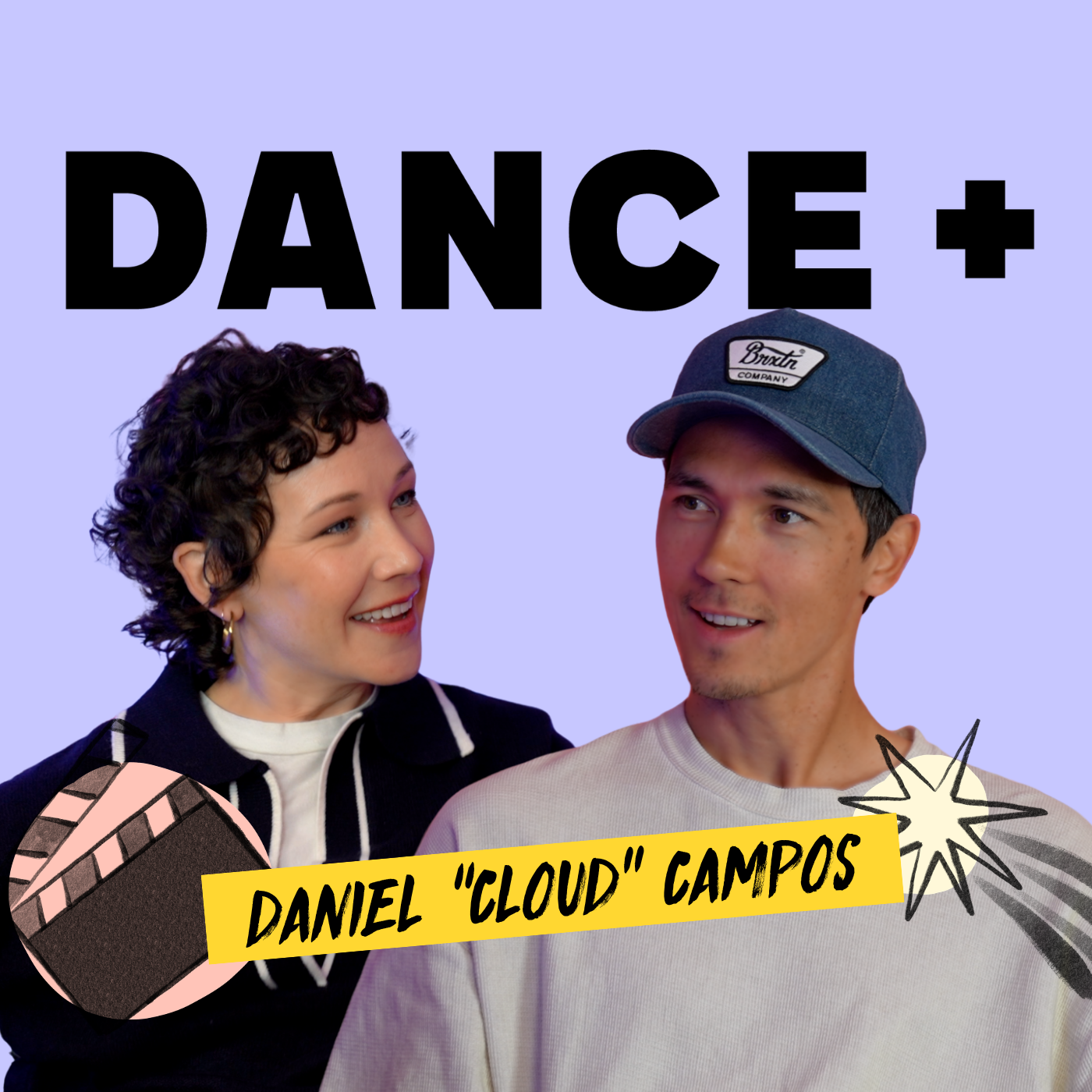
Today we are talking to one of my biggest art heroes, Daniel, AKA Cloud Campos. And we're diving in, friends. We talk budgets, we talk tough lessons learned, we talk teams, we talk feelings.
And why it's so great to make your own work. Why it's so important to make your own work, no matter the cost.
We are talking about clouds. Very recent as of the recording of this podcast, Cloud fest, which is when he screened, premiered, screened. Probably should have asked about that detail.
Four of his recent works that had been shelved and not shared. So we're also talking about how important it is to share your work. Not just make your work, but share it. I will put a gentle trigger warning on this episode for discussions of suicide and the importance of mental health. Also, as of the date of the release of this podcast, happy release of one of the films that was screened called hey, that is the one that is a heavy lift, my friends. And I'm so excited to talk about it and excited to share this win.
We do wins on the podcasts.
Oh, my God.
Are you ready for this win?
Riley came over to my house today with an empty peanut butter jar. Almost empty. You know the kind, the spooned out kind, not knifed out. I knife out my peanut butter jars because I'm telling you right now, I'm getting all of the peanut butter. I love peanut butter. I put it on everything. Try me. Literally try me. The only thing I have not put peanut butter on is a hard boiled egg. That sounds to me like I would vomit on contact.
But I love peanut butter. Riley brought a jar over so I could fill it with cold brew and I just had a delicious peanut butter cold brew.
So top that.
Congratulations. I'm glad that you're winning. I'm glad that you're curious about peanut butter. Cold brew.
Okay, let's get into this conversation. The one and only cloud. A person of many talents, a wearer of many hats, and a maker of many incredible things, several of which we will share and show little pieces of during this episode. So buckle up, get ready, enjoy the one and only cloud.
Here. We can do that one more time if you want to. Nope. Okay.
[00:03:36] Speaker B: No.
[00:03:36] Speaker A: Baby freeze.
I did a baby freeze. Welcome to the podcast Cloud. We're doing it. This is the living room. Yeah.
[00:03:44] Speaker B: It is nice. Real nice. You got puppets up there.
[00:03:48] Speaker A: We do. We've got. What are those called? The. The wooden form guy. There's a name for the form for.
[00:03:53] Speaker B: They're. They use for sketches. Yes.
[00:03:57] Speaker A: So I mentioned my mom is an artist, and she has done a lot of pieces around the house, but I. There was a short time where I really. Oh, I want to talk to you about this. It's not even on my list.
[00:04:06] Speaker B: Here we go.
[00:04:07] Speaker A: This is how we do the podcast. I wanted to be better at storyboarding because in my creative life, there's a lot of times where I cannot do something all by myself. I need to communicate that to a team, and I want to show them very quickly. Like, this is what I see. This is what's going on. So somewhere over here is a how to draw. Oh, here it is.
Figure it out.
[00:04:33] Speaker B: Good name, right? Figure it out. Figure. Drawing.
[00:04:36] Speaker A: That's what it is. Okay. Figure it out. Beginner's Guide to Drawing People. Which is usually the subject of my work, so.
[00:04:43] Speaker B: Yeah.
[00:04:44] Speaker A: Yeah. Like circles. Bodies. Circles.
[00:04:47] Speaker B: Circles is the main thing.
[00:04:48] Speaker A: Circles is the main thing. Okay, so you. Do you always storyboard your own stuff? Have you ever hired out for that part of the process?
[00:04:56] Speaker B: No, only one time for a commercial that they just. It was a blessing.
[00:05:00] Speaker A: Yeah.
[00:05:00] Speaker B: Usually I have to do it myself, but there was one commercial I did.
[00:05:04] Speaker A: Learn from a book, or did you just pick up a pencil?
[00:05:06] Speaker B: My brother.
Gifted. Yeah, my brother draws. He. Okay, well, we all drew growing up. I have two brothers. I have a sister. She didn't draw as much, but my two brothers. My oldest brother Kevin was, like, an incredible artist, and he's the one. Like, I grew up watching.
[00:05:19] Speaker A: Cool.
[00:05:20] Speaker B: So he. He's the one who. He could have been a comic book artist, but chose a different path. Get it? I don't. Yeah. It's weird because I. I did it as a kid, and there was a long gap. I didn't do it. And then when I came back, I was actually. I understood it way more. I think it's because of everything else that I did with art that you just kind of naturally understand. I think being a dancer, you kind of know you're connected in your body in so many different ways that you just know lines and all that stuff. So it was. It. That's what.
[00:05:48] Speaker A: It came kind of natural.
[00:05:49] Speaker B: Yeah.
[00:05:50] Speaker A: Dang. There used to be a time when I felt kind of competent in this space.
[00:05:55] Speaker B: Yeah.
[00:05:55] Speaker A: And it was when I was in school when we took art class. But I haven't played with that skill at all since then. If anything, it's like an actual pencil on a piece of paper to show a proof of concept, but.
[00:06:06] Speaker B: Yeah. Yeah, yeah, yeah, yeah.
[00:06:08] Speaker A: What is your favorite medium to. Not to work in or to create in, but for the storyboard phase specifically. Are you a pencil napkin, anything that's close by, or are you an iPad?
[00:06:19] Speaker B: I'm an iPad.
[00:06:20] Speaker A: You're an iPad?
[00:06:20] Speaker B: Yeah, totally. IPad. Because a paper napkin, like, it's gotten to a point where like, I'll start drawing and my mind doesn't want to mess it up. Uh huh. So I, I just kind of like, I go, ah. And I get hesitant. But with an iPad, you, you can just keep undoing double tap. And like, you're just crazy. It helps my brain because I have this stupid, stupid perfectionist brain that I'm like, oh, it's looking really good. I don't know if I should keep going. I mess it up, you know? So like, it's the, the risk part of it, but this part just makes me go, all right, that didn't work. This didn't work. Here's another layer.
[00:06:51] Speaker A: It gives you permission to keep going.
[00:06:52] Speaker B: Yeah. And it's getting.
[00:06:53] Speaker A: You even copy the page.
You could copy different things, fuck it up, and then go back to the original if you want.
[00:06:58] Speaker B: Yeah. It's so, it's so safe to just be free and creative. And I think that's why I like it. Well, to go back to storyboard because this is what you. You want to get into more storyboard. I have tips for.
[00:07:08] Speaker A: You want to be good enough? Okay, yeah, go, go.
[00:07:10] Speaker B: I got great tips for. I tell a lot of people this. There's a. There's a program called Magic Buzzer. It's old. Like they, they take. They take some time to update it. But like, I don't like when they update because it takes away the original way. But pretty much it's like this. You have these type of guys and they're in there and you move them around and you can pose them any way you want. You could bring in More people. You could have set pieces to do, like, perspective. Like, I'll make, like, rooms. I'll do, like, a rough room of light so I can know. And then I'll pose them, and then you can move the camera around to find your angles. So then you find your angles, and then you just export the picture. Go on that. And you storyboard already drawn top. Even if it's just rough, you know, you just. You don't even need to draw it. But if you want to do the process of drawing, which I love to do, I just like to, like, paint it more. Like it's nothing more. It's nothing more satisfying than actually drawing, seeing the shading and all. I actually learned how to shade because of this.
[00:08:05] Speaker A: Sick.
[00:08:06] Speaker B: Because you have a lighting in there, you can move around too.
[00:08:09] Speaker A: So you start learning how light move, how light works by kind of playing God a little bit and being the
[00:08:15] Speaker B: director of it in the most basic way. Yeah, it's really easy. I'll show it to you and.
[00:08:20] Speaker A: Okay. Yes, please.
[00:08:21] Speaker B: It's. You change your life. Because even if you want to do it really fast, you want to be like, I need to get this angle. I'll set the camera.
I'll do the pose first, and I'll do. Here's a shot 2, or 1, 2, and a Y, 2, 3. And then in editing, you just put those shots together, add audio to it, and it's just.
It paints a picture for you.
[00:08:41] Speaker A: Yo. Thank you for this.
[00:08:43] Speaker B: Yeah.
[00:08:44] Speaker A: Yeah.
[00:08:44] Speaker B: I feel really fun.
[00:08:46] Speaker A: I feel like that might scratch an itch for me. That's the play itch. There's a lot of times when I can see it, I know what I want to do. And for me, it feels like the fastest way would be like, mind hand do it. But there's a lot of times I don't know exactly what I do I want to do. I want to try a thing or see if moving of this. Like, I can imagine getting lost in that for hours.
[00:09:07] Speaker B: It's fun.
[00:09:08] Speaker A: Cool.
[00:09:09] Speaker B: It's so fun.
[00:09:10] Speaker A: Okay, so actually, this is a good segue. I. I was gonna do this a little later, but I. The short that you shared at Cloudfest.
[00:09:19] Speaker B: Yes.
[00:09:19] Speaker A: Which was the last time I saw you. And I'm so sorry I didn't get to hug you that night.
[00:09:22] Speaker B: Cause I was moved.
[00:09:24] Speaker A: I was rocked to my core. That was a very special container for some very special work. I really loved how that night went.
Before I ask some specific questions, which I did not ask in the Q and A because I could not decide which questions?
Could you talk a little bit about shorts that you screened that night?
[00:09:46] Speaker B: Each of them?
[00:09:47] Speaker A: Yeah, short. Like elevator pitch on all of them.
[00:09:51] Speaker B: So Macho man was a music video. It was meant to be a 3 minute music video from my friend Mao. And it just evolved into this like crazy, chaotic love story with this like, luchador guy. He's like the taco guy. He's trying to, like, he's in love with this girl.
And I was like, man, we got to keep going because, like, it's not going to pay off unless we keep going. And like, just. So it got past, it got past his song and I just kept telling him to add more songs and like, it just turned into this, you know, 10 minute action packed love story, handmade with Barbie dolls. And it was supposed to be really less like stress free. Like, I was like. But I left there with a bad.
[00:10:31] Speaker A: And then it turned into your life for a year.
[00:10:34] Speaker B: It was like, it was like 12 days shooting, but just, you know, like a couple hours a day, just, just motivating to get together and just, you know, get it done. But yeah, so there was that one. And the second one was a, this was a proven concept for just something that I wanted to pitch to animation studios.
I had this concept for a song era rose called into the Cosmos. And it's just about an orphan boy who believes his parents are up in the stars and he kind of hijacks a rocket to go up there and like reunite with him. And, you know, it's like a bittersweet. Like you could take it the wrong way, but it's just your perspective of life, you know, and like, kind of how a lot of people are like, whoa, that's, that's terrible, you know, but in my mind it's, you know, it's just kind of a way of returning to the most purest place of where we come from, which is stars.
So that's that one.
And that one was done complete.
[00:11:27] Speaker A: Well, it's fully, it's fully animated.
[00:11:30] Speaker B: That one's all storyboarded.
[00:11:31] Speaker A: Oh, okay, okay.
[00:11:32] Speaker B: And it was with that, that, that program I told you about.
[00:11:34] Speaker A: Oh my God.
[00:11:35] Speaker B: Yeah.
[00:11:37] Speaker A: It was beautiful. Cloud. It was so beautiful. It didn't feel.
I, I, I did. I like asking people this question, like, how do you know? Especially the perfectionist.
[00:11:48] Speaker B: Y.
[00:11:48] Speaker A: How do you know when something is done?
[00:11:50] Speaker B: I, it's never done.
[00:11:52] Speaker A: I Exactly. It's never done when the deadline is like, that's when it's done. Is whenever somebody says, I need that in my hand right now.
[00:11:59] Speaker B: Yes.
[00:12:01] Speaker A: You mentioned that it was a proof of concept that night, and I was like, no, there's no bigger. This shouldn't be bigger. If it was bigger or more final, I might explode.
[00:12:10] Speaker B: Oh, man, it felt. That's good to hear.
[00:12:12] Speaker A: Yeah. I don't know. And you never know where art will land on someone, right? Like.
[00:12:16] Speaker B: Yeah, yeah, yeah, yeah.
[00:12:17] Speaker A: The time of my life, the time of yours that you made it intersecting and the choices that you made. But I really felt that exposed and hand. Handmade was the way that should have been received. And so, yeah, that had a huge impact on me. And I. Oh, that's amazing because I. I do know that you wear many hats, but I did not know that you were this gifted with a. Oh,
[00:12:45] Speaker B: you know, I drew, I guess.
[00:12:47] Speaker A: I don't know how I missed that.
[00:12:48] Speaker B: Oh, man.
Yeah. Well, not. I don't share that. That side much. Which was wild. Like, everyone, you know, especially Krista, she's always like, you need to share your art, my love. And I was like, yeah, no, I got like a. My iPad is just filled with thousands of just drawings and illustrations, detailed stretches like it. But it's just. I use it as a. As the process to get to, you know, what I. The stories I want to make.
[00:13:12] Speaker A: Yeah. The one day, the closer to final stories. And actually, before we talk about the other two, what was the impetus to have this festival?
[00:13:25] Speaker B: You know, it's.
[00:13:26] Speaker A: Well, voices like Crystal who are like, yo, you got to share.
[00:13:29] Speaker B: Yeah, that's. That's one of them.
Sharing stuff, putting so much work into these things and then putting them on the shelf for so long that it was just like, you know, I was trying to explain this at the festival, but, you know, I just feel like there are these neglected children that were just sitting on the shelf, and every time I came into the house, they're just like, looking at me just so mad.
[00:13:53] Speaker A: Just like while they're.
[00:13:55] Speaker B: Yeah, yeah. What you working on? Like, nothing. It's just cool.
[00:13:59] Speaker A: Looks like you're having fun over there.
[00:14:00] Speaker B: New, you know, and then that one joins the shelf, you know, so.
[00:14:04] Speaker A: Toy Story vibes.
[00:14:06] Speaker B: Yeah. So I was just like, you know. Yeah. It's like the constant battle conversation. I'm gonna release you guys. You know, I'll. I'll post you up and you. No, you're not going to post us. You're going to do something big, you know, I don't know.
[00:14:16] Speaker A: You're going to throw us a party.
[00:14:18] Speaker B: You're going to invite everybody, you know,
[00:14:20] Speaker A: there's going to be popcorn.
[00:14:22] Speaker B: Yeah. We're going to make popcorn. Like you're going to get very bonfire. You're going to go up on stage and present us like. Yes, you know, it was. But it was also, you know, when I first moved to la, it was.
There was a lot of community, there was a lot of live events that I like was excited to go to and like.
And I think, you know, over the past 10 years we lost a lot of that. And you make these. The reason why I wanted to make these things is to share them in front of people, not in a screen where, you know, I get to experience it through some digital words and some lights and stuff like that. So I just wanted to at least feel an audience and give them a moment, give this. All this work and all the people who worked on it too, you know, just to have them experience what it used to be like and feel the energy and like have people laugh and like hearing that and the energy. Like it's. I saw. I mean, I want to do more of those. Let's go a lot more of those. Like I don't know what it is.
[00:15:17] Speaker A: Yeah, we should create a circuit. It's called Festival reject circuit.
[00:15:22] Speaker B: Yes.
[00:15:22] Speaker A: And it's everybody that is not accepted into a film.
[00:15:25] Speaker B: That too.
[00:15:26] Speaker A: Because that was another one of the things I wanted to talk to you about.
Is that one of my least favorite questions after like a seaweed sister thing goes out or a short that I've worked on goes out is when people ask, have you tried the festival circuit?
[00:15:42] Speaker B: I hate that.
[00:15:42] Speaker A: I hate this question so much. And you mentioned it first and foremost, like before the Q A even started, you were like. And yes, I did try the festivals and most of the time they're rejected for not neatly fitting into one of their genres or the like lengths or the silly ways that.
[00:16:03] Speaker B: And then you go to the festivals and you see some of the films and you're like.
But you start to see the pattern. You start to see where like okay. You're like okay, yes. Then you understand why your film didn't fit into that.
[00:16:13] Speaker A: And then you get jacked that your film didn't fit into that.
[00:16:16] Speaker B: Cuz you're like yeah, it's not that. It's not that.
[00:16:18] Speaker A: Correct. It's not that it didn't fit there. But we make a. Let's, let's do the oddball remake of that. All the films that don't fit into
[00:16:26] Speaker B: those, the oddball films, the ones that just have something different to say. Yes, yeah.
[00:16:31] Speaker A: Like for example, the other two that you screened that Night. That was a good segue. Talk about Astray. And is it hey, hey, yeah, Carry
[00:16:40] Speaker B: on, which is all those films. Except for Macho man, all of his films got rejected.
[00:16:44] Speaker A: Really?
[00:16:45] Speaker B: Yeah, I submitted all those films.
They all been reject the same similar thing.
[00:16:51] Speaker A: Like, I laugh, but that does madden me a little bit. It's.
[00:16:55] Speaker B: Yeah, me too. Me too. I just, you know, even if it's different, it's like, it's.
It has something to say and you. And you feel something from it.
[00:17:05] Speaker A: I would have been thrilled to see any one of those four at the last film festival I went to.
[00:17:11] Speaker B: It's. I.
I've done the film festival route. Like, I've done films into festivals and.
And, you know, when you get there, you. There's an excitement about it. You show. Like, I've been to Sundance, I've been to Tribeca, and, like. And I've had a film in both, and I get there, and it's just really anticlimactic.
[00:17:30] Speaker A: Oh, shit.
[00:17:31] Speaker B: And a bit, you know, like, it's. It's weird because you're really.
It's how your film is curated with others, you know, like, today's the Day was in Tribeca, and it was against really heavy, dramatic movies. And then Mike comes out, and it's like this musical, like, Today's Good Thing, and it's just like, people are like, whoa. I just completely shifted the energy of the room.
[00:17:54] Speaker A: Right, right.
[00:17:54] Speaker B: And it comes back and it ends with something heavier.
[00:17:57] Speaker A: Okay. That probably.
[00:17:57] Speaker B: So it just disappears, you know, and then you go up there with the Q A, and then everyone's just like. They kind of don't know how to ask questions because they don't know where to go from what they just watched. And that's been my experience. I haven't been to many festivals, but I only been to, like. I've been to, like, three or four of them, and every time, it's always been the same outcome, which is. I don't know if I'm really the feeling. The festival route.
[00:18:21] Speaker A: That's cool.
[00:18:22] Speaker B: Yeah.
[00:18:23] Speaker A: Where do things go, Cloud? If not on the shelf and if not on YouTube, and if not on a festival circuit, like it is. It's in person screenings.
[00:18:31] Speaker B: It's in person screening.
[00:18:33] Speaker A: Yeah, yeah, yeah.
[00:18:33] Speaker B: It's getting your. It's like, you know, you. As artists, we get to experience the art in ways that nobody ever will because we get to go through the process of, like, creating the idea and feeling what that feels like. Oh, man, that's gonna be amazing. Then you start making it and you go through that and then you start putting it together and it battles and you're like, damn. You know, and then like at the end of it, you're just gonna suck. I suck.
[00:18:55] Speaker A: Everything sucks.
[00:18:56] Speaker B: Yeah.
[00:18:57] Speaker A: And then, and then you finish it
[00:18:58] Speaker B: and you're like, oh, man, that was a lot. I did it. Okay, now I want to share this with.
That's it. The next step is like, I just want to share it with people I love and people who do understand me and stuff like that. And you share it with them and then you get that experience. So you go through all these different experiences that just an audience watching a film doesn't get to experience.
[00:19:18] Speaker A: Right.
[00:19:19] Speaker B: And then at one point you just go, okay, cool, now it's not mine anymore. I'm let it go. You know, and then however it plays out, I'm not a, I'm not a promotional, like, watch my movie type of guy. Like, I don't have the energy for that. After I did all that work. I don't want to go. Like, I need to go. It's a whole push this thing out now process. Yeah.
[00:19:39] Speaker A: A whole other job.
[00:19:40] Speaker B: Yeah. And you throw out, I'll put it out and hopefully you'll find the people who it's meant to find. And you just let it go. And you let go. Unless I have somebody who's going to push it for me, I'm just let it go, you know, so in any way I can. But I try to experience all the things I want to get out of it. And that's why I had Cloud Fest and that I was satisfied with that. And I was just like, okay, cool, I'll just release it, you know, and
[00:20:04] Speaker A: it was an excellent party, an excellent send off, like a going away party. Go ahead, you're now free. Yeah, it was so much fun. It was so cool. I'm sorry, we keep getting sidetracked. You didn't talk about Astray and hey, just the, the quick nutshell of each of those.
[00:20:19] Speaker B: Oh, okay. So Astray was another proof of concept turned into a proof of concept. It was just going to be a music video that I had a song for and I was like this, I can't put this much work into this for a freaking song. It has to be something, you know, so we, we turned it into this feature film concept and we did it during the pandemic. So it was like seven months, like just incubated into this, you know, church. And it was a small team of 15 people not knowing what the hell we're doing. And we Just figured it out. Like, Danny's never built a miniature set, Morgan's never lit a miniature set, and I never animated, like, you know, a dog before everything. Yeah, first for everything. So.
Yeah. And it just, like, you know, it's been this ongoing thing to. To finish the. The story and the script for that thing, and it's just, like, been sitting there for, like, five years, six years now. And, you know, that. That's the thing I'm not going to release yet because we're still. That's our proof of concept.
And then that's a feature.
[00:21:26] Speaker A: It's a feature. I need to know what happens.
[00:21:29] Speaker B: Yes.
[00:21:29] Speaker A: With these characters.
[00:21:31] Speaker B: And it's a great story. It's a really great story.
[00:21:33] Speaker A: It's so good. Yo. Okay, so I have to know because there's a moment in Astray when.
Oh, I don't know their names, the dogs.
[00:21:44] Speaker B: One of the Lucy on stage.
[00:21:46] Speaker A: Okay. Okay. Yeah. There is a Sly. A skid, a slide skid.
That's real. There's no way, like, there's no way
[00:21:56] Speaker B: you meant when he falls. Yeah, and he goes like. Yes.
[00:21:58] Speaker A: Yeah, yeah, yeah, I've seen my dog.
[00:22:01] Speaker B: No, that's.
[00:22:01] Speaker A: How did you. How did you animate that?
[00:22:03] Speaker B: That's my proudest light shot for sure.
I don't know a video.
[00:22:08] Speaker A: Did you go frame by frame of an actual dog? That's not an actual. That's from memory.
[00:22:12] Speaker B: I'm gonna throw everyone who saw it, they're like, what? This looks like a real dog falling and getting. Not. Yeah, I. I. Even me, I was like, I don't know how this is working, but it's, like, working really well. And, like, just. I mean, I. I acted all out. Yeah. I had to. I opt out the scenes and, like, you know, I know the motions coming from and, like, what. The shoulder and then the head follows and just trying to get up. And he's trying to look, but it's like, also staying focused, like a dog does, like, or something. So he's just, like, looking, but his body's trying to get up and, like, you know, So I was like.
I was like, wow, that worked out. And I didn't have to repeat it. I didn't mess up. I was just, like. It just kept going, which is, you know, that's always a fear when you're animating. You're like, oh, man, I hope I don't mess up, because I gotta go back.
[00:22:57] Speaker A: Wait, explain that.
[00:22:58] Speaker B: Well, in stop motion, when any animation would have to.
[00:23:01] Speaker A: You would have all the way from the beginning of the sequence or from
[00:23:04] Speaker B: when you lost it. Just sometimes you lose it and you're like, I don't know where he is now. I don't. I lost a. Oh. Because you're doing this. You're toddling back and forth and you're
[00:23:14] Speaker A: getting from frame from one frame to the next frame.
[00:23:17] Speaker B: Yeah, yeah. And you're kind of. And you're doing this one and then you play the sequence and sometimes it goes like that. But then when you lose it, it'll go like this.
You're like, oh no. And you're trying to find. And that takes like come time, sometimes an hour just to find that one frame. And you're like. And you're just going back and forth and you're like, oh my God.
And you're like, oh no. And you had to just step away and walk away from it.
[00:23:41] Speaker A: Have a cool down with self.
[00:23:43] Speaker B: It's just you working in 3D space. Yeah. You know, you're working in like you move this thing and you look in the camera and it's all from perspective and angle. So the head starts to. You're like, dang.
So luckily I didn't have any.
[00:23:59] Speaker A: My heart rate is actively elevated just thinking about that pressure. But this is kind of gorgeous thing. A, it's fun. B, when you're your own boss, when you're doing it for you, when you are the source of the pressure, there's a little bit.
[00:24:14] Speaker B: Yeah.
[00:24:14] Speaker A: You're like, I choose this totally say all the time. We're like, it's the summer equinox. It's the hottest day of the year. We're shooting something in the desert wearing inflatable trash bag suits and rubber.
[00:24:26] Speaker B: Yeah, yeah, yeah. And it's for you.
[00:24:28] Speaker A: We chose this. Yeah, it's us. And it always turns into a good story.
[00:24:33] Speaker B: Yeah. Because it's hard. It's really, really, really hard. Like, I mean most.
A lot of people would say that if you want to be a filmmaker or anything, do a stop motion film. Because it's the process of what you have to do to actually make it is a lot. You have to like storyboard. You think about it. You have to like trial and error it. You have to like, do you make
[00:24:54] Speaker A: it things one frame at a time?
[00:24:56] Speaker B: One frame at a time.
[00:24:57] Speaker A: So there's no, like you have to be deliberate.
[00:25:01] Speaker B: You learn a lot.
[00:25:01] Speaker A: So careful.
[00:25:02] Speaker B: You learn a lot of discipline and patience and it's.
[00:25:05] Speaker A: Yeah, it sounds like people say to start with Shakespeare. Because it is the hardest. Like if you're learning to be an Actor. Because you have to find out what it's about first. You can't just say the words on the page. You have to learn what they mean.
[00:25:19] Speaker B: Yes.
[00:25:20] Speaker A: And I think what I'm hearing you say is that the same is true for stop motion. You have to know what the story is. Cause you're going to spend an insane amount of time, one frame at a time, looking at it. And you have to be so deliberate with all of your moves, with all of your choices.
[00:25:35] Speaker B: Yep, completely. And also, like, it changes as you go too, especially with stop motion. Like, you can. I can create a path for the thing I'm animating. And then once it gets to like, you know, frame 50 and I'm like, oh, man, he's going off his path.
Like.
But there's a beauty in that, that I could be like, oh, but if I start shifting him this way, he'll land like this and then, like, I'll turn around.
[00:26:00] Speaker A: There still is room for improvisation in there.
[00:26:02] Speaker B: There's a lot of room for improv. Like, it's like prep, prep, prep. And then let it wing it, wing it. And when you get there, like, it's.
[00:26:08] Speaker A: Is that a golden principle for you? Prep, prep, prep, wing it.
[00:26:12] Speaker B: I like to do that because, you know, as.
As how I work.
I, you know, I grew up freestyling. You know, I come from the, the whole dance world, where you're just improving a lot. So being in the moment is.
Is how I create at my best. When I prep, I, I overthink it, I over analyze it, and it takes forever just to get it started. But, but prep, prep, prep. And then I. It depends. It. Depending on your.
What the, what the job is. If you're doing a music video and there's. You have a day to shoot it. Prep, prep, prep. Get that, get that done.
[00:26:49] Speaker A: Execute the plan.
[00:26:50] Speaker B: Execute plan. Yeah. And if you, if it's. If you have time to take, take your time, like, just try to show up and just be in the moment. You know, I think most, most of the greats work like that. Yeah, yeah. But nothing I wanted to tag on was the, was the process.
Things are hard to do and you don't. Everyone just wants convenience. They want to make it faster, they want to get there quicker. They want to get their, their ideas out really fast. And which is, you know, which is what AI is doing today, you know, and that, you know, that's an AI is amazing. It's a tool. All the technology is a tool to help you just get to your idea quicker. But there's something about really making the thing and going through every process of the thing and learning what that thing is to become a better creator. And that's why Stop Motion is a masterclass. Yeah. For me, I just.
[00:27:46] Speaker A: Yeah.
[00:27:47] Speaker B: Have her teach.
[00:27:47] Speaker A: Because there's no shortcuts. You can't.
[00:27:49] Speaker B: No shortcuts.
[00:27:50] Speaker A: You can't skip steps. You. Yeah, it's no shortcuts. That is abusive. Oh, my God.
[00:27:55] Speaker B: Abusive. It's really abusive. But it's. You know what else you can do? Your life.
[00:27:59] Speaker A: Right. I'm thinking about. I'm thinking about Hawk right now.
[00:28:02] Speaker B: Also.
[00:28:03] Speaker A: Past another guy who loves that kind of abuse is.
[00:28:08] Speaker B: Yeah.
He gets, like, something.
[00:28:11] Speaker A: I guarantee Hawk is sitting somewhere right now doing something arduous with an exacto knife. He's prepping.
[00:28:17] Speaker B: He couldn't hang out. He couldn't hang out with me. Like, past three times. Invite him out. He's like, I'm still stuck in the cave.
I'm still doing this thing. Like, he just cut in. He's like, yeah, just cutting. Just cutting these days.
[00:28:28] Speaker A: But he. But he.
That's the life. He's breathing into the thing. And breath is there.
[00:28:34] Speaker B: It is so beautiful. Like, it's.
[00:28:36] Speaker A: I. I don't have that, I think charm in hard and fast. Yep. Like, my. My favorite artists have raw edges and glue melting out from the. From the side of a thing. And it's. I. I really love a fingerprint that says a human was here and a human was here. Fast.
[00:28:58] Speaker B: Yeah, yeah, yeah, yeah. Got messy as messy. That's you.
[00:29:02] Speaker A: But I do think, oh, man. Especially. I mean, it's all that style that's signature. But when you start working with a team, fast can be really destructive.
If my fast decision fucks with the thing that you've been spending weeks building towards. Yeah, that can be really, really tough. So I guess. I guess my question about collaboration is, do you have any hard lessons learned on working with teams? It's okay if you're just like, you know, actually, my team is great. Nothing was crunchy. That's good, too.
[00:29:38] Speaker B: Hard lesson. I mean, it's never with the core.
Just, you know, my. My team always trusts me, and they always, you know, and also add a lot to what I do. But it's. It's always the client. It's always client. It's always working with a team that, you know, as soon as money comes into the picture and it's not your money, you have to collaborate in a way that it just. You know, you're working with two multiple visions of what they think it needs to be. And that's the hard part. But being able to take their ideas and step back and go, okay, I know how to make that idea mine.
And how I make, how I can make it feel like how I would do it. They make them feel validated because they don't know how to bring it to life. But it's, that's, that's kind of the hardest challenge. But sometimes you, your hands are tied in these situations and, and you become
[00:30:34] Speaker A: the custodial caregiver of the thing instead of the parent of the thing.
[00:30:39] Speaker B: Oh, yeah, yeah. No, it's, it's, it's sometimes very soul killing. And which is why I always gravitate just to do my own stuff and, and do it enough to the point where, like, I get hired to do that.
[00:30:51] Speaker A: Right.
[00:30:52] Speaker B: That's the goal.
[00:30:53] Speaker A: Oh, that is the dream. I got hired for a commercial once, and one of the Seaweed sisters works was a reference for that commercial. And I was like, oh, that had never happened. I've never been referenced in my own. And they didn't know.
[00:31:06] Speaker B: Right.
[00:31:06] Speaker A: It was like, yeah, to me. And I was like, oh, yeah, that,
[00:31:11] Speaker B: I can do that.
[00:31:12] Speaker A: That, that's me, actually. So, yeah, sure, we could definitely do that.
[00:31:15] Speaker B: Yeah, yeah, yeah, yeah, yeah.
[00:31:17] Speaker A: To be hired for what you do best is a very, very cool thing.
[00:31:20] Speaker B: That is a goal, I think, for anybody wanting to make a career.
[00:31:24] Speaker A: Yeah.
[00:31:25] Speaker B: Keep working on your stuff and making people go like, okay, we gotta hire them and do what they do.
[00:31:29] Speaker A: Okay. But I, I, I've heard agents telling people, yo, get out there and make your own stuff. Make your own stuff.
Because content media give me, give me
[00:31:39] Speaker B: jobs so I can make my own stuff. Yes, I see you say your age.
[00:31:42] Speaker A: Yes. But it does cost money. So it's so mysterious, right? It's mysterious how things get made. It's mysterious how much things cost. But I do know that it gets cheaper when you can do things in house and when you are as talented as you are and you don't need to hire a this, that and a this, that, and a storyboard artist and a this.
It gets more possible, but it also can take fucking forever. So what you're not paying for in labor, you're paying for in your own time.
[00:32:10] Speaker B: Yep.
[00:32:10] Speaker A: Um, but for the Seaweed sisters, roughly for like the past eight years, the first ones were very low key, low budget, super favors. But after the first couple years, we're like, spending usually on average of $7,000 per short. For. Per short.
[00:32:28] Speaker B: Yes. Do you guys all Pitch in together. That's great.
[00:32:30] Speaker A: I'm curious.
Give us a like ballpark or help me understand how much a passion project if I don't really like the term.
[00:32:38] Speaker B: But I mean, they, they cost. They cost obviously astray cost.
That one was roughly right. 60, 70. Okay.
And most of it was out of my pocket and it was just through. You know, I'm still paying off loans for that and like it's. You know, it. But you know, how else, how else do you live your life too? With just taking rest and like going, okay, I'll figure it out. But I gotta get this thing made.
[00:33:08] Speaker A: I have to remind myself sometimes because I'm a saver.
[00:33:11] Speaker B: Same.
[00:33:11] Speaker A: I'm like, what are you saving for if not spending money on making art?
[00:33:14] Speaker B: I know.
[00:33:15] Speaker A: Like, what are you saving all that for?
[00:33:16] Speaker B: And you're fine.
You're still fine.
[00:33:19] Speaker A: I'm so fine that I'm drinking peanut butter.
[00:33:20] Speaker B: Exactly.
But in the moment you're just, you know, I always have to remind myself of that too. I'm like, damn, I freaked out. You know, I had my biggest year a couple years ago. I'm going to say, whoa, I'm like about the. Have to move out and sell everything. Like, it's like. And that was the first time I had a scare. Like, fortunately, you know, I was been able to stay at a certain comfortable level for a while and still create. But then I hit this thing and then, then I felt the, the trauma of that.
[00:33:45] Speaker A: And you're like artist.
[00:33:47] Speaker B: And now it's in there and I'm like, oh, now everything is like money. Oh man, I shouldn't spend that. But I'm like, no, but I've been doing this for so long, you know. So anyways, Australia was around 70.
Macho man was 3.
[00:34:02] Speaker A: Amazing.
[00:34:03] Speaker B: 3k amazing. And it was paid by his parents too. Like his parents was like, yeah, yeah, yeah, we'll help you. Just do whatever you want. You know, we got all that stuff off Facebook market and like, you know, into Cosmos. Nothing, just myself, you and, and hey. Hey. Was 35 okay?
Ish.
[00:34:22] Speaker A: Yeah.
You know, it all looks much more expensive than that, my friend. I'm.
[00:34:28] Speaker B: Thank you. Yes, thanks.
[00:34:29] Speaker A: I.
I think it's important for people to know the cost of things because we don't talk about it so often. And I don't know why that is.
I don't know why that is, but
[00:34:42] Speaker B: the process of it.
[00:34:43] Speaker A: You mean, why don't we talk about how much things cost? How much a production like that really costs? Yeah, yeah, we're Encouraging people to go make their own work and. But also, you're gonna need a loan to do that.
[00:34:54] Speaker B: Yeah.
[00:34:54] Speaker A: Should be a caveat.
[00:34:56] Speaker B: Perhaps, but it just depends on how far you want to take and how much. What are the next challenges you want to do?
[00:35:02] Speaker A: That is the true truth. To learn, we could all do a 1.0 of whatever our idea is right now, full free.
[00:35:08] Speaker B: And it'll still work.
[00:35:09] Speaker A: Yes. But you'll find out if it'll work or not.
[00:35:11] Speaker B: You'll find out. Work and. Because at the end of the day, people would watch it like, you know, they, they just, if the story's working and it's engaging, they're not going to tell the difference if it's a million dollars or two dollars. Like, it, it's really about the story every time.
[00:35:25] Speaker A: I bought your proof of concepts as though they were the final product.
[00:35:29] Speaker B: Yeah.
[00:35:31] Speaker A: Take my money. This is it. This is great. I love this.
[00:35:33] Speaker B: Yeah.
[00:35:34] Speaker A: Riley just brought up a really good point that a lot of the times we don't talk about budgets until they're crazy big.
And I think that I, I, we talked a little bit about, like, my middle, my new middle. I'm really good at making stuff for $0.
[00:35:49] Speaker B: Yep.
[00:35:49] Speaker A: Really good at working on major motion pictures and commercials and things like that with insane budgets. But this middle zone is such a mystery.
[00:35:57] Speaker B: Yeah.
[00:35:58] Speaker A: And I would love to demystify that for more people. So I think that's where, where my curiosities come from on this front is like, let's demystify the middle. I understand that Dune had a budget of this. I understand that you did that for free, but how does everything else happen?
[00:36:14] Speaker B: Yeah.
[00:36:15] Speaker A: I'm so curious. That big middle.
[00:36:17] Speaker B: Yeah.
[00:36:17] Speaker A: Have you ever received a grant? Have you ever written for a grant and received a grant?
[00:36:22] Speaker B: Me neither. No.
[00:36:23] Speaker A: You ever successfully fundraised?
[00:36:25] Speaker B: Yeah.
[00:36:25] Speaker A: Okay.
[00:36:26] Speaker B: Or today's the day. Oh, that's fundraised. Yeah.
[00:36:28] Speaker A: That's right to the starter.
How much?
[00:36:32] Speaker B: Might have been 52.
[00:36:33] Speaker A: Okay.
[00:36:33] Speaker B: 52K. Yeah.
No, it was, it was a, it was like, really, it was a shocker. I asked for 25, and then we doubled it. So it was just like, it was like a massive A word that I
[00:36:45] Speaker A: that keeps coming back for me that you've said only one time or maybe more, is trust. I think our community trusts you. And we're like, oh, yeah, that guy's capable. That guy makes great stuff. Take my money. And I want to do that more often. Like, I, I, I'm not great at asking for money. I'm Learning so hard right now with this.
It's so.
[00:37:08] Speaker B: It's so hard because it's because of us.
[00:37:12] Speaker A: Because of our.
[00:37:13] Speaker B: Yeah, it's. It's our owning.
[00:37:14] Speaker A: I know some people, like, actually, it's very easy for me to fundraise for other people.
[00:37:19] Speaker B: Yeah.
[00:37:20] Speaker A: Like, for me, about your show.
Oh, my God. Can you just not eat out for the rest of this month? Because there's this project happening, and you're going to absolutely sh.
[00:37:30] Speaker B: Your friend.
[00:37:30] Speaker A: I.
I'm looking for a way to do that for myself that still feels authentic.
[00:37:35] Speaker B: Yeah.
[00:37:36] Speaker A: But, yeah, the sisters are deep in. In that mix right now, learning a lot. There are people who are great examples of how to do it. And I think, like, one of the things that comes naturally to me is enthusiasm. I get really. I.
Naturally. And genuinely excited about.
[00:37:54] Speaker B: Yeah. And the best energy.
[00:37:56] Speaker A: And if you lead with that, like, when somebody tells me about something they're excited about, I'm like, oh, I should also be excited. And I think that's.
[00:38:05] Speaker B: Yeah.
[00:38:05] Speaker A: That's the part that a lot of people don't bring to fundraising because they think that this is the serious part, and they think that they're asking for a feature versus offering something that you want to care about.
[00:38:16] Speaker B: Yeah, yeah, yeah.
[00:38:16] Speaker A: So it's like remembering that power balance is actually that I have something exciting to share. And you love exciting shit, right?
[00:38:24] Speaker B: Yeah, yeah, yeah, yeah.
[00:38:24] Speaker A: So, okay, listen to this.
I think that's. It's gotta be the rewire for me.
[00:38:28] Speaker B: That is the rewire for sure. I'm with you on that same boat, pitching. I hate pitching. I hate going in a room and be like, all right, so it's.
I hope you like it.
[00:38:37] Speaker A: It's.
[00:38:38] Speaker B: I put a lot of work into this thing. Yeah, yeah, yeah.
I had some terrible, traumatic pitches. Yeah, they're just. Yeah, they're. And it's jarred me since. And I'm like, why? I. I love.
[00:38:50] Speaker A: You're a performer.
[00:38:50] Speaker B: I love telling. Yeah, yeah, I know. It's just like, it made this scar me. That messes me every. It just stirs up when I know somebody says, yeah, do you pitch it to me? What is it? I'm like, yeah. So it's a. Suddenly I become a, like, robot.
[00:39:06] Speaker A: Interesting.
[00:39:07] Speaker B: It's really weird.
[00:39:08] Speaker A: Okay, we could work on that. For sure.
[00:39:10] Speaker B: Yeah.
[00:39:10] Speaker A: There are tricks for that. For sure.
[00:39:12] Speaker B: For sure. There are tricks for that.
[00:39:14] Speaker A: You already pivot. We're talking about. Hey.
[00:39:16] Speaker B: Okay.
[00:39:16] Speaker A: That's the one we haven't talked about. And I think you. You shared this one last at the festival. And it's a heavier note.
[00:39:24] Speaker B: Yep.
[00:39:25] Speaker A: I cannot think of a better way to wrap up a festival than with something so personal and so powerful. I also can't imagine showing anything after that. So I'm like, how do you. How do you end after that?
[00:39:38] Speaker B: It's a lot.
[00:39:38] Speaker A: It's a lot. It's heavy.
Thanks for your help.
It's personal, but it's also global.
And so I feel like I'm watching my friend go through a thing.
But what I'm actually feeling is so many people going through a thing.
And that was super heavy. But what I was reminded of in that moment, the deep cut coming at you.
So I moved to LA in 2005, and I learned of you pretty quickly after that. When. When did you get here?
[00:40:15] Speaker B: 2004. Ish.
[00:40:17] Speaker A: Okay.
[00:40:18] Speaker B: Yeah, around the same time.
[00:40:19] Speaker A: Yeah. And I remember seeing concert footage from Madonna's Live to Tell, and it's you doing a solo on some reinvention. You're doing a solo on some bars, scaffolding.
[00:40:33] Speaker B: That's professionals.
[00:40:35] Speaker A: Wowza. I have watched that probably like 100 times maybe.
[00:40:41] Speaker B: Okay.
[00:40:41] Speaker A: Yeah. Because I. I had never seen somebody so emotional in this. Discipline, like breaking, to me, is always funky. Or when it's good, it's funky, it's soulful, it's raw. It's raw. Thank you. That's the word.
But I had never felt poetic until I saw that piece. And it had never felt spirited in a way that was really light, like Gravity Defying, but also heavy.
[00:41:15] Speaker B: Yeah.
[00:41:16] Speaker A: It's a solo done over some spoken word. And as I was watching, Hey. I was reminded of that because part of me was like, yo, I'm surprised that we're seeing this. But then a part of me was like, totally not surprised.
[00:41:26] Speaker B: Yeah.
[00:41:26] Speaker A: You've been doing heavy the whole time.
[00:41:28] Speaker B: Yeah, yeah, yeah, yeah. So, wow. How about you?
I mean, Internet did that, but thank you for saying all that.
[00:41:35] Speaker A: Yeah, you're welcome. Yeah, you make. You make cool shit. And that's very dynamic and very rooted in feeling. That's the other thing. I think.
I think a lot of technical work, like the Spielbergs, the Nolan's, they're very good at story, they're very good at drama. But I am more concerned with emotion than I am with a spectacle.
[00:41:55] Speaker B: Yeah.
[00:41:56] Speaker A: And I think he was like, really zoomed in on emotion, and it was feelings first.
[00:42:03] Speaker B: And they're hard to do.
[00:42:05] Speaker A: Yeah.
[00:42:05] Speaker B: That's why there's that many of them. You go through a lot. You go through a lot to make those things. And Sometimes. And, you know, some of the greats, like, you know, Spielberg, he's made stuff that's really heavy, you know, like. And really think. But at one point, you're just like, okay, I did that. I want to go make something fun and just freeing and this, like, you know, that's why I made Macho man too, because I was like, all right. I just came off that.
[00:42:27] Speaker A: It was like, kind of just right after hey.
[00:42:29] Speaker B: Right after hey. Like, it was kind of like, you know, I was like, I got to do something that's just going to be like, get me back to my inner child and let me just have fun again. Because I was exhausted from that because doing. Hey, I was. I mean, obviously I was directing it, too, and trying to switch hats during making all that stuff.
[00:42:46] Speaker A: So it was really added level of complexity.
[00:42:49] Speaker B: Yeah.
[00:42:49] Speaker A: To be inside it and performing so emotionally. And then bounce out and talking about light.
[00:42:55] Speaker B: Yeah, bounce out of light. You came too close, like, and being aware that I know, you know, the camera is there and what it's trying to do, and I'm just trying to bounce back and forth between being in the moment of feeling these things. And. Yeah, it was really, really.
Yeah, it was devastating to do.
[00:43:14] Speaker A: But did you find a technique for that? Or was it always a negotiation of, like, in, out, in, out. Did you find a way to do that that was felt functionally, like, good?
[00:43:24] Speaker B: Luckily, it's very.
[00:43:26] Speaker A: It's.
[00:43:27] Speaker B: I'm very connected to it, so it was very easy for me to get there.
My sets don't usually run like that because they're mainly with energy and, like, we're laughing and we're doing stuff, but, like, this. This is the first time I was like, nobody, everybody needs to give me space and walk away. And it was like.
It took me, well, three years to finish because every shoot was, like, probably five, six months apart from each other because I just needed that much time to recuperate from. Yeah. To recoup after the last shoot.
And it just kept, you know, getting lost in it. Not. Not wanting to finish it, just saying, ah, I don't need to do this.
[00:44:05] Speaker A: Maybe I've explored all I need to explore with that.
[00:44:07] Speaker B: Yeah, I don't want to go back there. I don't go back. I don't want to go back down there. Because every time it was like a.
Coming back to that place.
I don't know. I mean, but I had to.
Had to see it through for. For many reasons.
Not for myself anymore.
For a lot of people.
A lot of people were Going through this. Yeah.
[00:44:31] Speaker A: And this. Meaning contemplation of suicide.
[00:44:34] Speaker B: Yeah.
[00:44:35] Speaker A: For the. For. To put it as plainly as possibly plain.
And I think it's a.
A beautiful representation of the conversations that happen when you're inside of it.
But it helped. It felt like a facilitator so that conversations could happen around it a little bit more directly.
[00:44:56] Speaker B: Yeah.
[00:44:57] Speaker A: Which I was grateful for and felt really special.
I did think, much like the audience, I think there's a twi. There's a shift in it, and it becomes.
Almost music video.
[00:45:09] Speaker B: Yeah.
[00:45:09] Speaker A: Almost a pop music video. Can you talk about your choice?
[00:45:12] Speaker B: Yeah, yeah, yeah, yeah. No, I'm gonna pull up a quote
[00:45:15] Speaker A: from the Q and A while.
[00:45:15] Speaker B: You're saying that. Okay.
Yeah. No, you're. You're. It's.
It's one of those things that you can't really control.
It came out the way it came out. We wrote that song, me and my friend Mao, during a time where, you know, in. It was the day after I heard about Twitch, and I was like, damn, no one knows this about me either.
And I'm going through it and damn, it was a wake up call. It was like this thing that. And then he came over and I was like, let's write this song.
[00:45:50] Speaker A: And
[00:45:52] Speaker B: I don't know, I was feeling a lot. And it was like this driving, like, pulse that was just like. It was like a.
Anxiety, but, like. So he started with this. This beat and he had this bass and he brought over and he was like, is it something like this? And, like, I was like. It sat right there and, like, it was just a doom. Boom, boom, boom, boom, boom, boom. Like a banging on the door or something like that. Like, trying to get out. Like, you know, it was like this feeling. And then this song came out, and it. You know, it's. It's a pop song. It's, like, very dancy. It's like, into other people when they hear it. It's like, very, like, oh, I want to groove to this. This is, like dope. Like. But for me, it's heavy when I. When I experience, like, seeing it. And, like, it's angry, it's aggressive, and it's. It's a storm, you know, and that's what it's like in the brain. Like, there's a. There's a storm that's happening in there. And, like.
And I didn't have a concept for the video or anything like that. It was just this song, and I was like, I feel like I should do something this. And then a concept came Up. And then it evolved and it turned into a short film. I said, oh, sure, zoom out. Maybe see me shoot that scene. And then there was a scene in the apartment that was a completely different tone. I'm like, if I'm gonna go there, I gotta go there. I gotta show myself in that. In that place. Come down and my connection to music in my mind. There's always, you know, like, there's always music going on in my mind. And this was a fight, you know, And I wanted to feel like I'm getting my power back.
You know, I think the song was.
It's driven dance, and my power is dance, and it's always been movement. So I think I wanted to represent it in a way that gave me the most strength as a fighter inside my mind to get past this.
[00:47:37] Speaker A: Yeah. If you had to choose your weapon in the fight that mattered the most. You would choose dance.
[00:47:42] Speaker B: Dance and music together. You know, I didn't want to make it this, like, heavy thing because everything else about it was so heavy already.
[00:47:48] Speaker A: Yeah.
Somebody at that Q and A asked, like, why pop? Why not something heavier? Why not grunge? Why not metal? Why not? Or they didn't say those words. But why pop something that is so universally kind of candy and to that. And in that energy.
[00:48:06] Speaker B: Yeah.
[00:48:07] Speaker A: And you said, not to quote you, but I will.
[00:48:11] Speaker B: Oh, you have. Oh, wow.
[00:48:12] Speaker A: Yeah. I was like, that was brilliant.
You said, pop is about the world's problems. Pop is the global.
[00:48:22] Speaker B: It's. Yeah.
[00:48:23] Speaker A: Answer to. Yeah. And so why not pop? It has to be pop. Kind of.
[00:48:27] Speaker B: Yeah, yeah, yeah, yeah, yeah.
[00:48:30] Speaker A: Pop is about global ideas. Right. Joy, desire, anger.
[00:48:40] Speaker B: Yep.
[00:48:41] Speaker A: Pop is a global idea. And so in that way, it did feel like it is the perfect puzzle piece for this globally important and serious thing.
And it felt like, yes. So not what I expected. That it shook me and woke me up when I could have been tuning out, like, oh, this is a little bit much. I might just tune out.
[00:49:03] Speaker B: Yeah, yeah.
[00:49:03] Speaker A: No, but you won't get.
[00:49:05] Speaker B: You're going to watch this.
[00:49:09] Speaker A: I really was moved by that. I loved everything about it.
[00:49:12] Speaker B: Thank you.
[00:49:12] Speaker A: Just wanted to give you some flowers and reinforce you making all sorts of things. The things that you don't want to make that would be easier if you didn't. And also the things that are so fun and filled with laughs that you make in your backyard.
[00:49:26] Speaker B: Same to you.
[00:49:27] Speaker A: Both are important and both.
[00:49:28] Speaker B: Same to you. Same to you.
[00:49:30] Speaker A: Thank you, my friend.
[00:49:31] Speaker B: Yeah.
[00:49:31] Speaker A: I do have the feeling that we could talk.
[00:49:33] Speaker B: We could talk a long time.
[00:49:35] Speaker A: I know.
[00:49:36] Speaker B: I know. I feel like there's, like, not even scratching the surface. I know of talking.
[00:49:40] Speaker A: Okay, ready for rapid fire burnout round?
[00:49:42] Speaker B: Oh, yeah, sure.
[00:49:44] Speaker A: We call it wrist roll with it.
[00:49:45] Speaker B: Oh, that's cute.
[00:49:48] Speaker A: I think I already know the answer to this first one.
Coffee or tea?
[00:49:52] Speaker B: Yeah, coffee.
[00:49:54] Speaker A: Peanut butter. Coffee.
[00:49:55] Speaker B: Peanut butter. Coffee.
[00:49:56] Speaker A: Now, dogs or cats? I also think I know the answer to this one.
[00:50:01] Speaker B: Yep, dogs. But I love cats.
[00:50:02] Speaker A: What if it was, like, birds or snakes?
[00:50:06] Speaker B: Birds.
[00:50:07] Speaker A: Big birds. Fan over here. If it has more than four legs or less than two, I'm lukewarm at best. I really can't get on board.
[00:50:15] Speaker B: Less than 2?
[00:50:16] Speaker A: Yeah.
[00:50:16] Speaker B: You mean like a fin?
[00:50:17] Speaker A: Yeah.
What's your position on fins?
[00:50:21] Speaker B: You're my one, lady.
[00:50:23] Speaker A: I love a dolphin. Yeah, but I cried. When I tell you, like, vacation stopping tears. When. When my parents. We went to Hawaii when I was young for a dance thing, and we went snorkeling and I threw a fit. I could not be under the water with the fish. I was terrified. I hated it.
[00:50:41] Speaker B: Oh, hated it. You hated the water legs.
[00:50:45] Speaker A: I don't like things without legs.
[00:50:47] Speaker B: It's when they're just squirming at you. Yeah, they're like, predict.
[00:50:51] Speaker A: Can't trust you very sh.
[00:50:52] Speaker B: Yeah, because they shoot like. Yeah. So you don't like snakes?
[00:50:55] Speaker A: I don't like snakes. I don't like spiders.
[00:50:57] Speaker B: I don't like unicycles.
Well, that's too lazy. I just operated them.
[00:51:03] Speaker A: Wow. We're back. Rapid fire. Do you prefer.
Is your most creative time in the morning or late at night or high noon?
[00:51:11] Speaker B: It's.
I guess it's change. If I get up early morning. If I could get up early morning, then it's morning. But if I. If. But I mainly stay up late, so.
[00:51:20] Speaker A: Okay.
[00:51:20] Speaker B: Okay. That's fun.
[00:51:22] Speaker A: You sing?
[00:51:23] Speaker B: Yeah.
[00:51:23] Speaker A: What is the last song that you like? Full voice belted.
[00:51:28] Speaker B: On my own.
[00:51:29] Speaker A: From Les Mis.
[00:51:31] Speaker B: Huh? No, I said from Les Mis.
Yes, that one.
[00:51:40] Speaker A: Oh, my God.
[00:51:41] Speaker B: That's so funny.
I didn't know that was a song from Les Mis.
[00:51:47] Speaker A: You're a musical theater kid.
[00:51:48] Speaker B: Without.
Oh, man. Yeah.
[00:51:50] Speaker A: You will hear Les Mis in sentences.
That is so embarrassing. Yeah.
[00:51:56] Speaker B: On my own.
[00:51:57] Speaker A: I'm. I love musicals.
[00:51:58] Speaker B: Yeah.
[00:51:59] Speaker A: On your own. Last time you sing on your own.
[00:52:02] Speaker B: Earlier today.
[00:52:03] Speaker A: What was it?
[00:52:04] Speaker B: Just a song I'm writing.
[00:52:05] Speaker A: Oh, your song?
[00:52:06] Speaker B: Yeah. That's cool. On the piano.
[00:52:07] Speaker A: Nobody's ever been able to answer this question that way. Final Rapid fire question. Answer fast Desert island album. You only get one. You have the one album in the desert island. And that's all you have?
[00:52:17] Speaker B: Desert island album. Oh, probably a France notcher one.
Yeah.
Yeah, because it's just soothing.
[00:52:26] Speaker A: Like greatest hits.
Or is there like an album I'm not that familiar, like discography.
[00:52:32] Speaker B: He has this one album called Only the Lonely that would be perfect. It's. I mean, it's, you know, it's pretty heavy. It's like a darker side, but it's like, it's beautiful. Like the beautiful album.
[00:52:44] Speaker A: Dark and heavy and beautiful. And I think that that's perfect.
[00:52:48] Speaker B: That does sum me up a bit.
[00:52:49] Speaker A: Cloud, thank you for being here. Thank you, Dan, talking about your work. I know sometimes it's not fun or easy, but I love that you shared all that you did today. Thank you again for coming. Thank you listener, viewer, for being here.
Like subscribe Leave a Review or rating Click the bell for notifications. Get out in the world. Keep it funky.
Dance plus is produced by me with the help of many big, big, big, big Love to our Executive assistant and editor, Riley.
Music is by Max Winney, logo and brand design by Bri Reitz. Our communications team consists of Ori Vajadares and Sydney Richardson, and we've got extra help from LMU intern Carly Clayton. If you're digging the podcast, please leave a review or rating. Also, if you want to connect with me and the many marvelous members of the Words that Move me community, visit danceplus podcast.com if you're curious to know more about me and all the the stuff I do outside of the podcast, visit thedanawilson. Com.